Reviewed by Josh N · Updated August 26, 2026 · How we verify
Reported Phenomena
- Phantom nun sightings
- Unexplained footsteps
- Disconnected servant bells
- Writing on walls
Reported by visitors & local legend. Stories, not verified claims.
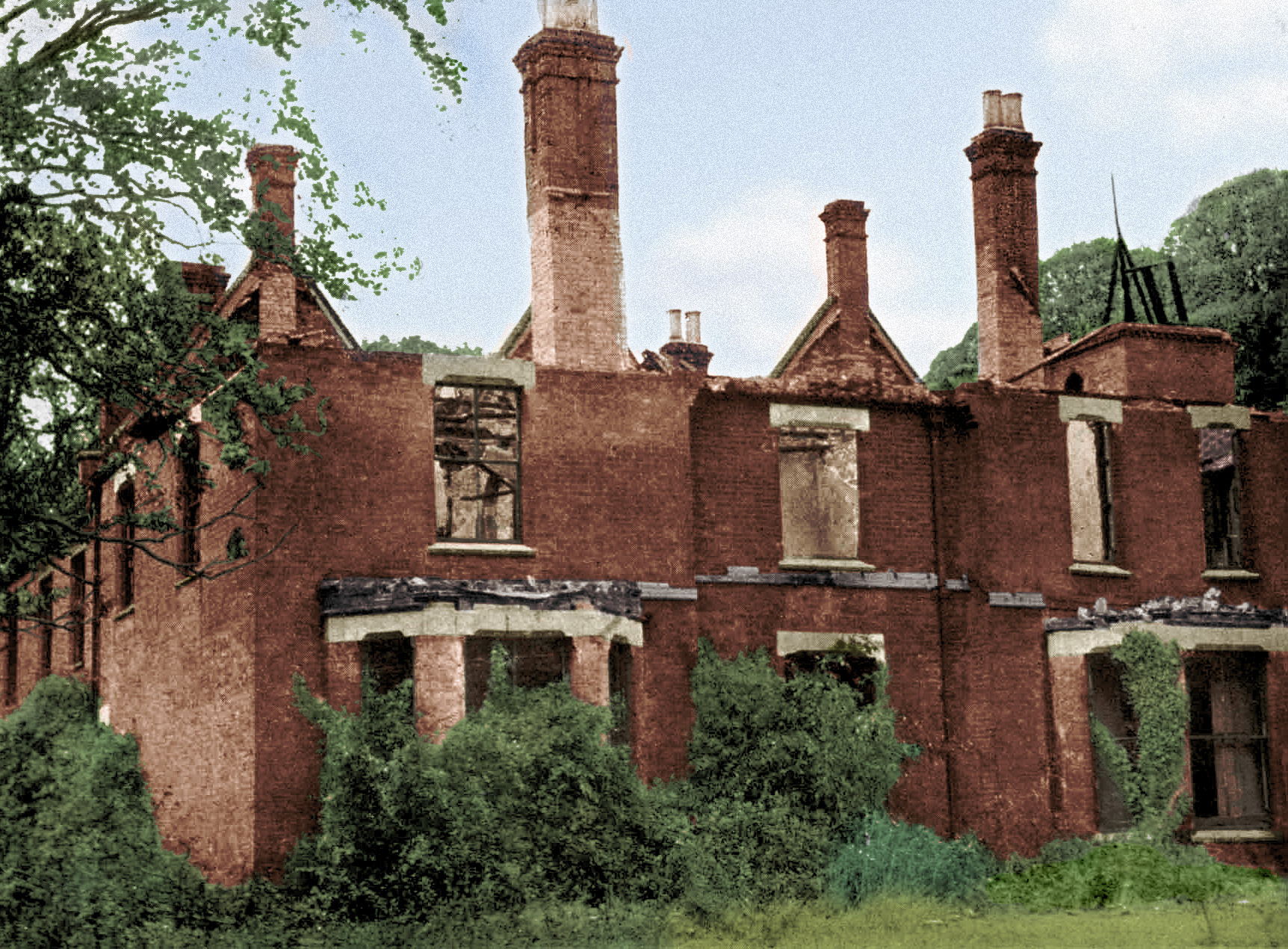
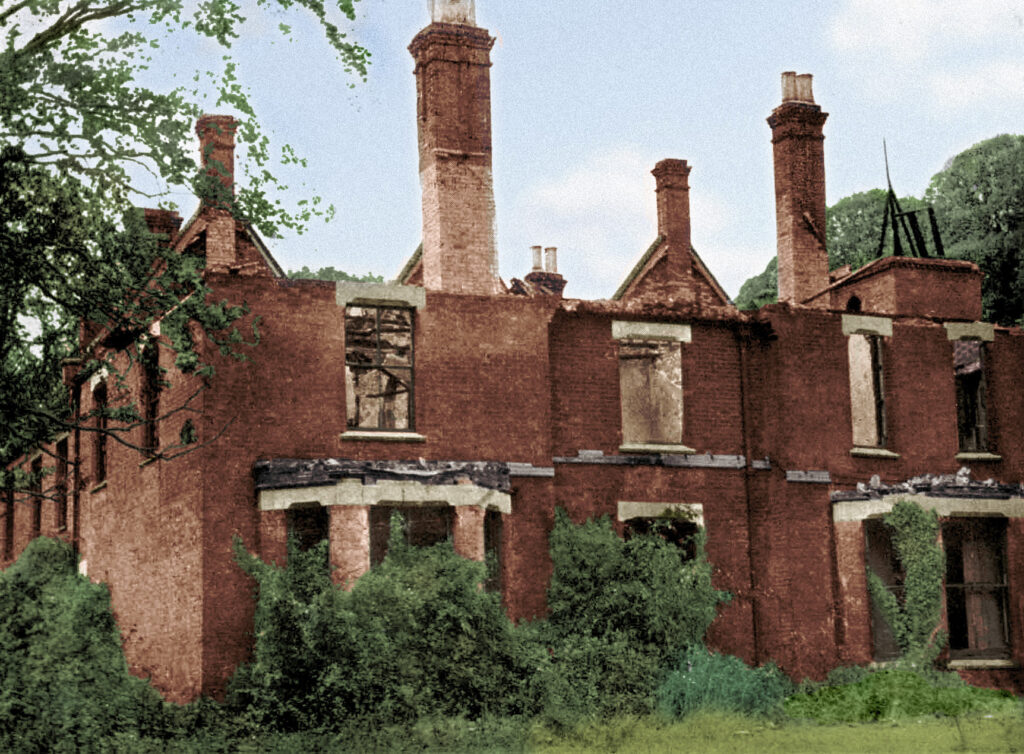
Every Borley Rectory ghost story has one awkward feature in common: the house is not there any more. The large Gothic parsonage that psychic researcher Harry Price called “the most haunted house in England” stood on Hall Road in the village of Borley, in Essex, from 1862 until fire gutted it in 1939. What was left was demolished in 1944, leaving a reputation with no walls to hang on.
Quick orientation. Built in 1862 for the rector of Borley and his family. Badly damaged by fire on 27 February 1939. Demolished 1944. Never connected to gas or electricity, with water drawn from a well in the courtyard. The nearby church, whose nave may date from the 12th century, still serves a scattered rural community of three hamlets.
The Bull Family and a Rectory Built for Fourteen Children
The house was put up by the Reverend Henry Dawson Ellis Bull, who moved in a year after being named rector. It replaced an earlier rectory on the same site that had burnt down in 1841, which is worth noting: fire is part of this plot from the beginning. The building was later enlarged with a wing to accommodate Bull’s family of fourteen children. Bull died in 1892 and his son, the Reverend Henry “Harry” Foyster Bull, took over the parish.
Reports of something wrong in the house are said to reach back almost to its construction. A few locals later recalled hearing unexplained footsteps inside at about 1863. On 28 July 1900, four of Bull’s daughters said they saw the ghost of a nun at twilight, roughly 37 metres from the house, and that it vanished as they walked towards it. The local organist Ernest Ambrose later said the Bull family were “very convinced that they had seen an apparition on several occasions”. Over the following four decades others claimed a phantom coach driven by two headless horsemen.
The Monk, the Nun and the 1938 Debunking
The romantic backbone of the legend is a Benedictine monastery supposedly built in the area around 1362, a monk who conducted an affair with a nun from a nearby convent, the monk executed and the nun bricked up alive in the convent walls. It is a good story and it is not history. The legend was debunked in 1938, when it was confirmed to have no known historical basis and may have been invented by the rector’s children to romanticise the rectory. Suggested literary sources include Rider Haggard’s novel Montezuma’s Daughter and Walter Scott’s poem Marmion.
1929: the Smiths, the Daily Mirror and Harry Price’s Arrival
Harry Bull died on 9 June 1927 and the rectory stood empty. The following year, on 2 October, the Reverend Guy Eric Smith and his wife moved in. Clearing out a cupboard, Mrs Smith reportedly found a brown paper package containing the skull of a young woman. The family then described servant bells ringing although they were disconnected, lights appearing in windows and unexplained footsteps, and Mrs Smith believed she had seen a horse-drawn carriage at night.
The Smiths wrote to the Daily Mirror asking to be put in touch with the Society for Psychical Research. On 10 June 1929 the paper sent a reporter instead, and the first of a run of articles appeared. The paper also arranged for Harry Price to visit. He arrived on 12 June, and phenomena of an entirely new type promptly began: stones, a vase and other objects thrown about, and “spirit messages” tapped out from a mirror frame. As soon as Price left, they stopped. Mrs Smith later said she suspected Price, an accomplished conjurer, of faking them. The Smiths left Borley on 14 July 1929.
The Foyster Years and Marianne’s Confessions
On 16 October 1930 the Reverend Lionel Algernon Foyster, a first cousin of the Bulls, moved in with his wife Marianne and their adopted daughter Adelaide. Foyster’s account, sent to Price, listed bell-ringing, shattered windows, thrown stones and bottles, writing on the walls and Adelaide being locked in a room with no key. Marianne told her husband she had been thrown from her bed. Foyster attempted an exorcism twice without success, and during the first attempt he was struck in the shoulder by a stone the size of a fist.
The researchers who came to look were unanimous in suspecting that the incidents were caused, consciously or unconsciously, by Marianne. She later admitted a sexual relationship with a lodger named Frank Pearless, and that paranormal explanations had been useful cover for her liaisons. Later still she admitted she had seen no apparitions at all, and that the ghostly noises came from the wind, from friends she invited to the house, and from her own practical jokes on her husband. The family left in October 1935 because of Lionel Foyster’s ill health.
Forty-Eight Observers and the Séance That Predicted a Fire
In May 1937 Price took a year-long rental agreement on the empty house from Queen Anne’s Bounty, its owners. Through an advertisement in The Times on 25 May 1937 he recruited 48 “official observers”, mostly students, who spent weekends there logging anything odd.
In March 1938 Helen Glanville held a planchette séance in Streatham, in London. Price reported contact with a young nun calling herself Marie Lairre, a Frenchwoman said to have left her order, travelled to England to marry a Waldegrave, and been murdered in an earlier building on the site, her body buried in the cellar or thrown down a disused well. The wall-writings were said to be her appeals, one of them reading “Marianne, please help me get out”. A second spirit gave the name Sunex Amures and announced that he would set the rectory alight at nine o’clock that night, 27 March 1938, revealing the bones of a murdered person.
The Fire of 27 February 1939 and the Bones in the Cellar
The prophecy missed by eleven months. On 27 February 1939 the new owner, Captain W. H. Gregson, was unpacking boxes when he knocked over an oil lamp in the hallway. The fire spread quickly and the house was severely damaged. The insurance company, having investigated, concluded that the blaze seemed to have been started deliberately. A Miss Williams of nearby Borley Lodge said she saw the ghostly nun at an upstairs window as the house burned and, according to Price, asked a guinea for the story.
In August 1943 Price dug briefly in the ruined cellars and turned up two bones he took to be those of a young woman. They were given a Christian burial in Liston churchyard after the parish of Borley refused the ceremony, local opinion holding that the bones came from a pig.
The Borley Report and What Is Left of the Case
After Price died in 1948, the Daily Mail reporter Charles Sutton alleged that on a visit to the rectory in 1929 he had been hit on the head by a large pebble, seized Price, and found his coat pockets filled with stones of various sizes. In the same year Eric Dingwall, K. M. Goldney and Trevor H. Hall of the SPR, two of them formerly among Price’s most loyal associates, began reviewing his Borley claims. Their 1956 book, The Haunting of Borley Rectory, concluded that Price had fraudulently produced some of the phenomena, and attributed much of the rest to fakery or to natural causes including rats and the strange acoustics of the oddly shaped house. Their verdict: “[W]hen analysed, the evidence for haunting and poltergeist activity for each and every period appears to diminish in force and finally to vanish away.” The children of Harry Bull, who had lived there before the Foysters, said they had seen nothing and were surprised to learn they had grown up in England’s most haunted house.
Price has had defenders, among them his literary executor Paul Tabori and the researcher Peter Underwood, but Michael Coleman concluded in a 1997 SPR report that they had not convincingly rebutted the criticisms. Price’s claims are now generally discredited by ghost historians. Public appetite is a different matter: a BBC programme about the manifestations due in September 1956 was pulled over the threat of legal action by Marianne Foyster, widow of the last rector to live there, and in 1975 the BBC broadcast The Ghost Hunters, which included a late-night psychic investigation of Borley Church. Feature films appeared in 2017, 2021 and 2025.
Going to Borley Now
There is no rectory to see. The house was demolished in 1944, and what remains is the village setting: Hall Road, the church next to the old site with its possibly 12th-century nave, several substantial farmhouses and the fragmentary remains of Borley Hall, once seat of the Waldegrave family. This is a working rural parish of three hamlets, not an attraction, and the church and its churchyard deserve to be treated as such. Visitors hoping for a haunted house will find instead the most thoroughly dismantled ghost story in England, which is arguably the more interesting thing to stand in.
Address: Hall Road, Borley, Essex
See Borley Rectory for Yourself
Sources
- The Ghost Hunters
- Borley Rectory: The Most Haunted House in England (2017), EOFFTV, the Encyclopedia of Fantastic Film and Television
- The Ghosts of Borley Rectory (2021)
- Bull. The Bulls at Borley Rectory
- Haunted Houses: Opposing Viewpoints
- Wikipedia: Borley Rectory
Frequently Asked Questions
Where is Borley Rectory Most Haunted House located?
Borley Rectory Most Haunted House is located at Hall Road, Borley, Essex.
Can you visit Borley Rectory Most Haunted House?
Borley Rectory Most Haunted House is no longer standing, only its history and stories remain. Always follow posted rules and respect private property.
Reader sightings
Nobody has reported anything here yet. If you have been, you would be the first.
Report your own visit to Pockets Full of Pebbles: the Borley Rectory Ghost Story
How haunted is this place?
Be the first to rate
Leave a Reply