
Reviewed by Josh N · Updated August 31, 2026 · How we verify
Reported Phenomena
- Figures on security cameras
- Reported cold spots
- Claimed residual forces
Reported by visitors & local legend. Stories, not verified claims.
Few pieces of British ghost footage have travelled further than a short clip recorded outside a red brick house in Leicestershire in 1999, and few have been so thoroughly picked apart. The Belgrave Hall ghost owes its fame to a security camera, a pair of pale shapes on the garden path, and an American investigation team who eventually put the whole thing down to a falling leaf. What the cameras did not explain away is the house itself: a Queen Anne merchant’s home older than the railways that made one of its owners rich.
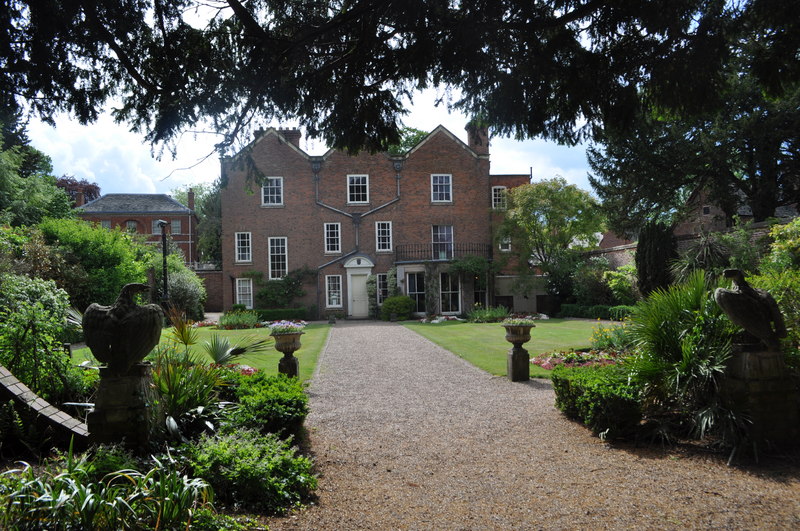
Belgrave Hall is a Grade II* listed building in Belgrave, on the northern edge of Leicester. It was built between 1709 and 1713, sits behind two acres of walled gardens, and is now run by the city council as a heritage site rather than a full museum, open only at certain times during the summer months and available for private hire, weddings and ghost watches included.
Edmund Cradock’s Mansion House, 1709 to 1713
The Hall went up as a substantial family home for Edmund Cradock, a Leicester hosiery merchant, on a site next to St Peter’s Church. Belgrave was then a small village three miles from Leicester, sitting between the roads to Loughborough and Lincoln, and Cradock’s house set a fashion among wealthy businessmen for out of town residences.
He barely lived in it. Cradock and his wife Anne moved into what was then called “The Mansion House” by 1713, and he died while visiting Bath on 21 April 1715, two years after completion. The executors agreed the sale of the house in February 1716 for £1,350 to John Simons, a figure that badly disappointed the family, who had expected the estate to realise around £5,000. In 1718-19 the younger daughter Anne and her new husband, James Holwell, filed a petition to the Court of Chancery challenging the executors. The outcome is unclear, but the house stayed with the Simons family.
Chequered Brick and an ‘EC’ Monogram
Fronting onto Church Road, the Hall is a three-storey building in an unadorned classical style, built from blue and red bricks laid in Flemish bond to create a chequered pattern. A brick parapet hides the three hipped gables of the roof, giving the frontage a flat, rectangular look, and the wrought iron gates carry an ‘EC’ monogram for Edmund Cradock. The lead rainwater heads bear the Cradock family crest, some dated 1709 and others 1713. That unusually long build, together with irregularities in the brickwork and ground plan on the south side, may point to a redesign or a halt in the works partway through.
Knitting Frames, the Vanns and Belgrave House
Ownership changed hands repeatedly: the Simons family held it for 45 years, the Vanns for 78, the Ellises for 76 and Thomas Morley for thirteen. When John Simons died in 1750 the Belgrave estate passed to his younger son Nicholas, who had mortgaged it within seven years, moved to Gumley in 1757 and let the Hall to a family friend, Sarah Boothby. After her death in 1766 the mortgage caught up with him and the property was sold to William Southwell, a linen draper from Nottingham, who with his brother-in-law William Vann based their framework knitting business at the Hall, using the outhouses as warehousing and offices.
Southwell died in 1767, leaving the Hall to his nephews William and Richard Vann. In 1776 William built himself a new house across the road, Belgrave House, and the gardens on that side were divided between the two properties. William served as High Sheriff of Leicestershire for 1785 and died in 1794; his brother James held the same office in 1803 and died in 1812, leaving the Hall to his wife Hannah for her lifetime. She survived him by 32 years and died in 1844. By then the estate was heavily mortgaged, and in 1845 her heirs sold it to John Ellis, a railway entrepreneur.
John Ellis, the Midland Railway and the Belgrave Sisters
Ellis took possession in 1847, aged 58, with a wife and seven daughters. He was already one of Leicester’s leading men: a Quaker and reformer, a town councillor from 1836, an attender of the World’s Anti-Slavery Convention in 1840, and the figure who persuaded the Stephensons to build the line from Leicester to the Swannington coalfields, finished in 1833. In 1849 he became chairman of the Midland Railway, and he represented Leicester in Parliament between 1848 and 1852.
After his death in 1862 his wife and five daughters stayed on. The “Belgrave sisters” hosted literary and social gatherings, supported the suffragette movement, and Charlotte Ellis spent nine years on the Leicester Board of Guardians, administering the town’s poor law relief from 1892. Gertrude Ellis later wrote that “For more than sixty years the Belgrave garden gave a very special kind of pleasure to all those connected with the Belgrave home.” Margaret, the last of the daughters, died in 1923, 76 years after the family arrived.
The Hall then went to Thomas Morley, a Leicester hosiery manufacturer, and in 1936 it was sold again for £10,500 to the Corporation of Leicester, which opened it as a museum and public gardens. A refit in 2005 added detail on the servants’ quarters, setting the life of an upper-middle-class family against that of its domestic staff.
What the 1999 Security Camera Actually Caught
In 1999 staff at Belgrave Hall reported that two ghostly figures had been recorded on security cameras outside the building. The clip drew international coverage. The International Society for Paranormal Research examined the footage and concluded the image was environmental rather than paranormal, most likely a falling leaf passing close to the lens, though the same investigation went on to “identify” a number of cold spots and “residual forces” in the house. A DVD, The ISPR Investigates Ghosts of Belgrave Hall, followed.
Later teams were blunter. Ghost Hunters International concluded that the figures were most likely people in reflective jackets walking around the grounds. None of that dented the Hall’s reputation with ghost hunters, and the building remained a fixture of paranormal television: Living TV’s Most Haunted filmed here in 2003 with Vic Reeves and his wife Nancy Sorrell, and Belgrave Hall appeared in the episode of Fact or Faked: Paranormal Files broadcast on 26 June 2012.
It is worth being clear about what the record supports. There is a documented camera recording, a documented explanation for it, and decades of interest from investigators. The cold spots and residual forces are claims made by investigating groups, not verified findings, and the Hall’s own long history of deaths and reversals is ordinary for a house of its age.
Visiting Belgrave Hall and Its Two Acres of Gardens
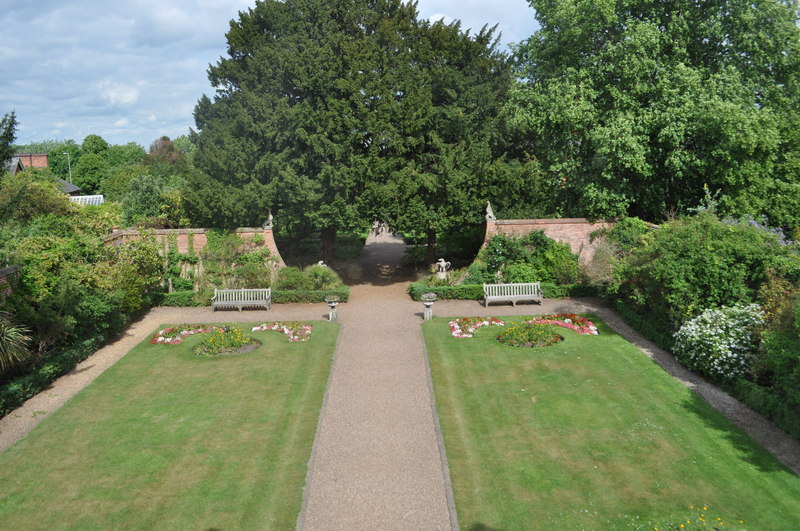
The Hall is no longer a conventional museum and opens only at certain times during the summer season, so check with Leicester City Council before setting out. The two acres of gardens behind the house are open on Wednesdays and the first full weekend of every month from April to September. They keep features first laid out by John Ellis in 1850, including formal beds, walled kitchen gardens and glass houses, and former outbuildings now hold a small craft village of six workshop units.
Across Church Road, the parkland running down to the River Soar is open to the public as Belgrave Gardens. Look for the statuary: four survive of sixteen bought by the Vanns before 1790, two standing in the formal gardens and two inside what were once the gates to Belgrave House. Twelve of the collection went to Enderby with Hannah Vann’s heirs, where they were known locally as the “Twelve Apostles”, and have since been dispersed and mostly lost. The formal gardens also gather monuments rescued from vanished Leicestershire gardens, among them the memorial to Edward Holdsworth from Gopsall Hall.
For anyone hoping to spend a night with the cameras, the council does let the house for private functions, ghost watches included.
Address: Church Road, Belgrave, Leicester
See Belgrave Hall for Yourself
Sources
- From Italy to Belgrave and Enderby: The Statues of Belgrave Hall
- The Supplementary Volume to the Leicestershire Views: Containing a Series of Excursions in the Year 1790, to the Villages and Places of Note in the County. By John Throsby. To which are Added, in Notes, the Most Valuable Parts of Burton, Nichols, and Other Antecedent Writers on Leicestershire
- Museum gives up the ghost
- Ghost hunters Episode 3 synopsis
- leics.gov.uk
- Wikipedia: Belgrave Hall
Frequently Asked Questions
Where is Belgrave Hall Leicester Ghost located?
Belgrave Hall Leicester Ghost is located at Church Road, Belgrave, Leicester.
Can you visit Belgrave Hall Leicester Ghost?
Belgrave Hall Leicester Ghost is open to the public. Always follow posted rules and respect private property.
Reader sightings
Nobody has reported anything here yet. If you have been, you would be the first.
Report your own visit to The Falling Leaf on the CCTV: Belgrave Hall Ghost
How haunted is this place?
Be the first to rate
Leave a Reply