
Reviewed by Josh N · Updated August 31, 2026 · How we verify
Reported Phenomena
- Groom with candles
- Girl in grey slippers
- Apparition in gallery
- Spectral servant sighting
Reported by visitors & local legend. Stories, not verified claims.
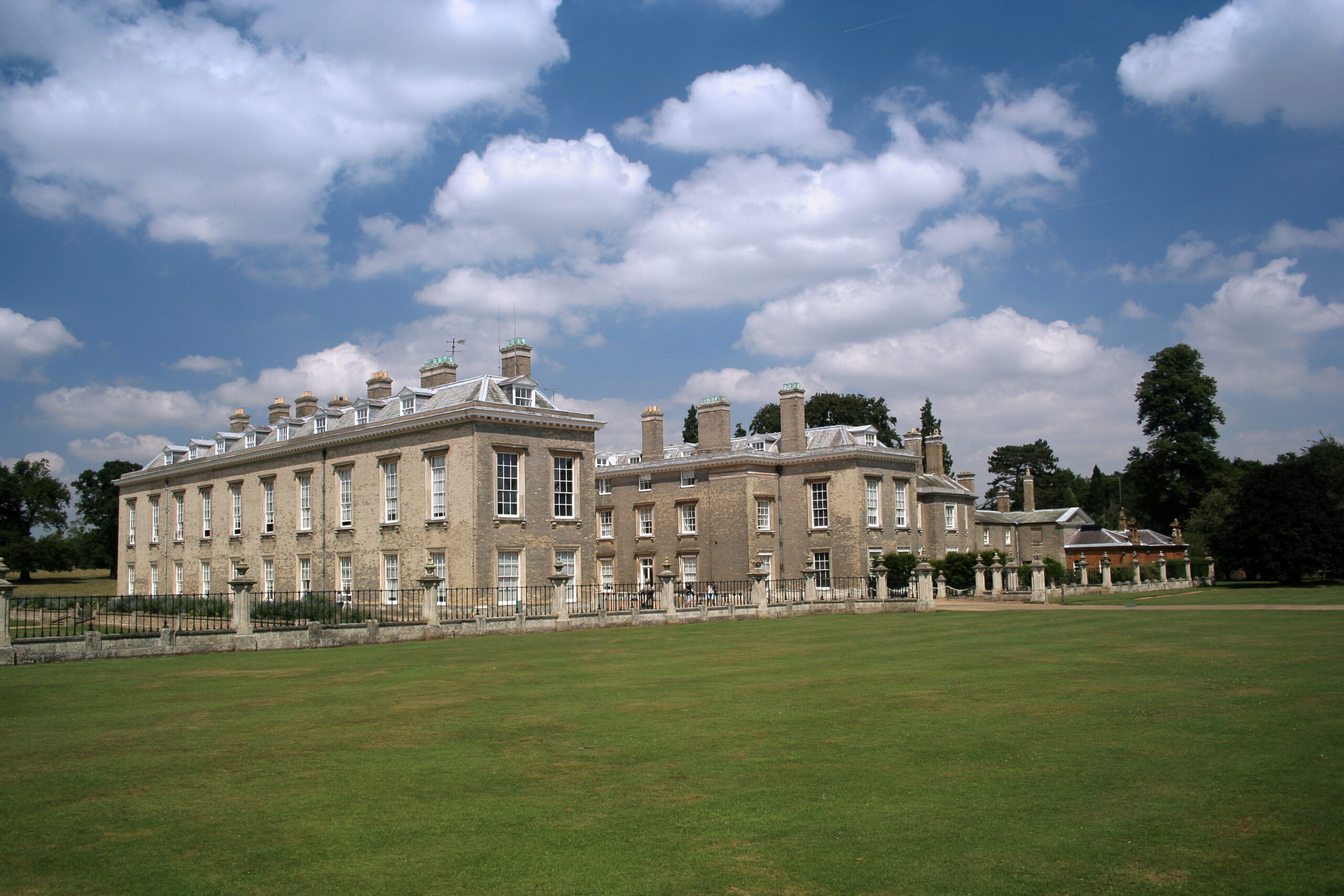
For a house that has been in one family for over five centuries, the Althorp ghost stories are strikingly few, and all the more interesting for it. There is no massacre here, no bricked-up wing, no local legend polished by generations of guides. What survives instead are two accounts, both attached to named people, both concerning small domestic sights rather than horrors: a groom checking the candles beside a bishop’s bed, and a girl wearing grey slippers in the long Tudor gallery. The setting is a Grade I listed stately home in West Northamptonshire, better known now as the burial place of Diana, Princess of Wales.
Althorp at a Glance
What it is: a Grade I listed stately home and estate in the civil parish of Althorp, West Northamptonshire, of about 13,000 acres.
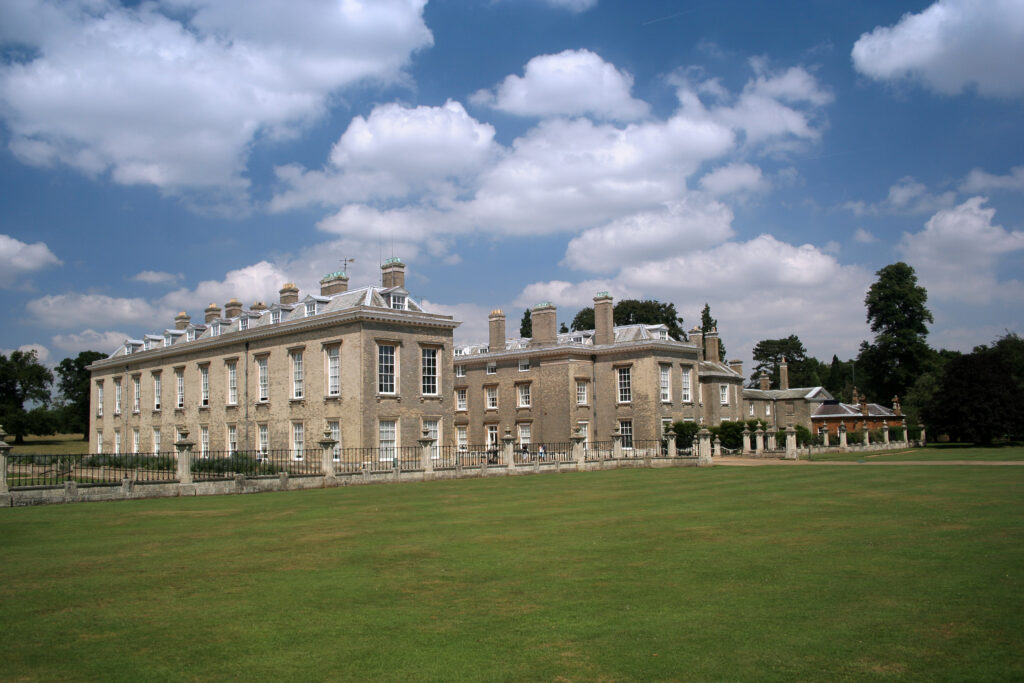
Where: roughly 6 miles north west of Northampton by road, between the villages of Great Brington and Harlestone.
Owner: Charles Spencer, 9th Earl Spencer, since 1992. The Spencers have held the place for more than 500 years.
The present house: dates to 1688, replacing an earlier building that was once visited by Charles I.
Reported phenomena: two historic accounts, one from a guest in the mid nineteenth century and one from a resident member of the family.
From Olletorp to the Spencers
Althorp appears in the Domesday Book of 1086 as a small hamlet called “Olletorp”. By 1377 it was a village where fifty people paid Poll Tax, but the population fell away through the fifteenth century and by 1505 there were no tenants living there at all. Three years later, in 1508, John Spencer bought the estate for £800 from the Catesby family, using money made in the family’s sheep rearing business. The name has never quite settled: the current earl has noted that none of his family say Althorp, and that his father insisted on “Awl-trupp”, until the BBC Pronunciation Department contacted him in 1992 and the now standard “Awl-thorp” was agreed.
Robert Spencer, 2nd Earl of Sunderland, built the present house in 1688. Its Tudor red brick was radically altered from 1788, when the architect Henry Holland encased the exterior in mathematical tiles and added four Corinthian pilasters to the front. The grand hall entrance, Wootton Hall, was called by Sir Nikolaus Pevsner “the noblest Georgian room in the county”. George John, 2nd Earl Spencer, who owned Althorp between 1783 and his death in 1834, built one of the largest private libraries in Europe here, over 100,000 books by the 1830s. Hard times later forced John Spencer, the 5th Earl, known as the Red Earl, to sell much of that collection in 1892 to Enriqueta Rylands, who was building the University of Manchester Library.
The Dean of Lincoln and the Groom with the Candles
The better documented of the two Althorp accounts belongs to the mid nineteenth century. The Dean of Lincoln was invited to stay by Frederick, 4th Earl Spencer, and complained the following morning that during the night a figure dressed as a groom had entered his room holding candles and checking that they were snuffed out around the bed. The figure was believed locally to be the ghost of a deceased servant of the 3rd Earl. It is worth being plain about what that is: a guest’s report of a night in an unfamiliar room, recorded second hand, with the identification of the figure supplied afterwards by other people. No incident in the estate’s record corroborates it.
The Girl in Grey Slippers in the Picture Gallery
The second account comes from inside the family. Lady Margaret Douglas-Home, sister of Albert Spencer, the 7th Earl, lived at Althorp from 1910 and was fond of the picture gallery. She professed to being aware of the ghost of a girl with grey slippers there. The gallery is the oldest feeling room in the house, stretching 115 feet, about 35 metres, along the first floor of the west wing, panelled in oak and one of the best surviving examples of the original Tudor woodwork in the mansion. Its length was once put to practical use: in Tudor times the women of the house walked it for exercise on wet days rather than drag their skirts through the mud outside. In 1695 the county nobility and gentry dined together in the gallery to pay their respects to William III. The oak was painted white during the eighteenth century renovation and only restored in 1904, paid for by selling a Rubens found in the housekeeper’s room.
Charles Spencer, the present owner, professes never to have seen a ghost at Althorp or anywhere else, while acknowledging that numerous sightings have been reported in the house over the years. That is about as honest a summary as the evidence allows.
The Island in the Round Oval
Following the death of Diana, Princess of Wales, on 31 August 1997, she was interred on a small island in the middle of the ornamental Round Oval lake, which had been created by the architect William Milford Teulon in 1868. Charles Spencer chose the island because the water would “act as a buffer against the interventions of the insane and ghoulish”. The ground was consecrated by the Bishop of Peterborough before the burial, and the grave is marked with a white memorial plinth and urn. A Doric style temple with Diana’s name inscribed on top stands across the water, and is where visitors leave floral tributes. It was originally commissioned by the 2nd Earl Spencer to thank God for the British victory at the Battle of the Nile.
Visiting Althorp in July and August
Althorp was first opened to the public in 1953 by Albert, the 7th Earl, to mitigate against taxation, and the house and estate now open during the summer months, from 1 July to 30 August. Visitors come for the interior and the grounds rather than for anything spectral. The exhibition devoted to Diana’s life, housed in the Grade II* listed stable block, ran from 1998 and closed permanently in August 2013. The estate holds 28 listed buildings and structures in total, including nine planting stones, the Grade I listed former falconry of 1613, and the mustard yellow Palladian stable block ordered by Charles, 5th Earl of Sunderland, in the early 1730s. One wartime detail belongs to the grounds rather than the house: a Wellington bomber crashed near the ice house during the Second World War, killing all of its crew.
Address: Althorp, near Great Brington, West Northamptonshire
See Althorp for Yourself
Sources
- 'Althorp', An Inventory of the Historical Monuments in the County of Northamptonshire, Volume 3: Archaeological sites in North-West Northamptonshire
- Recusant History
- John Charles Spencer, 3rd Earl Spencer
- George John, 2nd Earl Spencer
- Diana, Princess of Wales biography
- Wikipedia: Althorp
Frequently Asked Questions
Can you visit Althorp House Spencer Estate?
Althorp House Spencer Estate is accessible by guided tour only. Always follow posted rules and respect private property.
Reader sightings
Nobody has reported anything here yet. If you have been, you would be the first.
Report your own visit to The Groom Who Snuffed the Candles: Althorp Ghost Stories
How haunted is this place?
Be the first to rate
Leave a Reply