
Reviewed by Josh N · Updated August 31, 2026 · How we verify
Reported Phenomena
- Green lady apparition
- Spectral soldier
- Phantom dog
- Hooded figure
Reported by visitors & local legend. Stories, not verified claims.
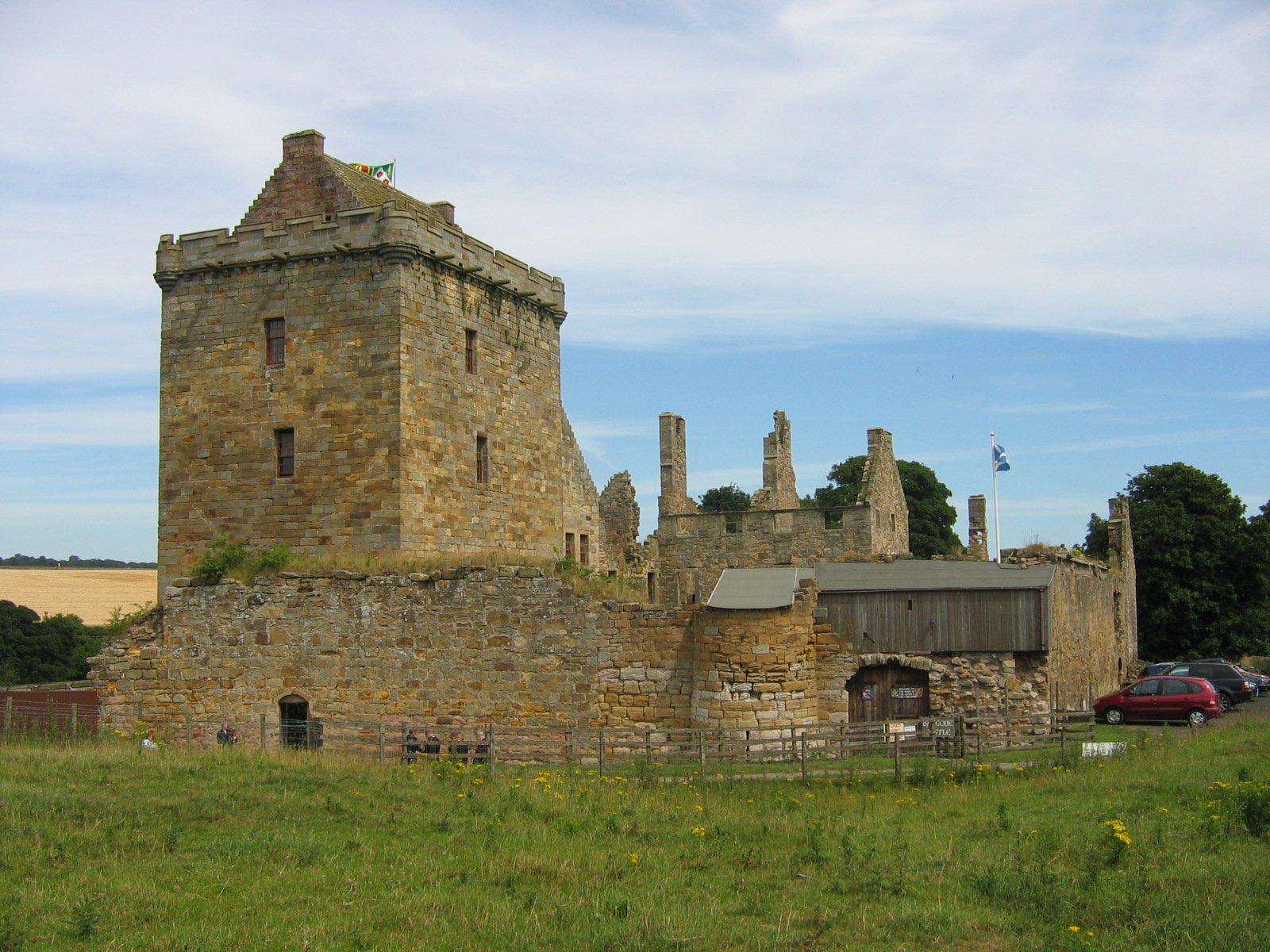
Stand in the courtyard of this Fife tower and you are looking at roughly four centuries of building work stacked against one another, some of it restored and lived in, some of it open to the sky. The Balgonie Castle ghosts are the reason many people first hear the name, above all the green lady known as Green Jeanie, but the castle itself is a genuinely unusual survivor: a 14th-century keep on the south bank of the River Leven in Scotland, with a ruined range beside it and a family still in residence.
Quick orientation. The castle sits near Milton of Balgonie, about 2.2 miles east of Glenrothes. The keep dates from the 14th century, and the remaining structures were added piecemeal until the 18th century. The keep has been restored; other parts are roofless ruins. With the exception of the tower, which is used as a home, Balgonie is a Scheduled Ancient Monument.
Sibbalds, Lundies and the 18 Shillings of James IV
The lands of Balgonie were held by the Sibbalds from at least 1246, and probably in the 1360s the family built a barmkin, a fortified courtyard, with a tower house at its north-west corner. The estate passed to a daughter, who married Sir Robert Lundie. Following his appointment as Lord High Treasurer of Scotland, Lundie extended the castle in 1496, adding a two-storey range east of the keep with a long hall and a solar, work that swallowed up an earlier corner tower and the 14th-century chapel.
One dated detail survives from that building campaign. King James IV visited Balgonie on 20 August 1496 and gave 18 shillings to the masons as a gift.
The Field Marshal Who Bought Balgonie
The Boswells bought the castle in 1627 and sold it on in 1635 to Sir Alexander Leslie, a Scottish soldier who had fought for the Swedish army during the Thirty Years’ War and risen to the rank of Field Marshal. Leslie went on to lead the Covenanters during the Scottish Bishops Wars, was created Lord Balgonie and Earl of Leven in 1641, and retired in 1654.
He treated Balgonie as a home worth improving, adding a two-storey building at the south-east corner of the courtyard. The initials FSAL and DAR, for Field Marshal Sir Alexander Leslie and his wife Dame Agnes Renton, were found inscribed within that south-east block, which suggests it went up before his elevation to the peerage. He also raised the late 15th-century north range by an extra storey and laid out a park around the castle, remnants of which are still there.
A Grand Stair, a Disputed Earldom and Rob Roy at the Gate
The next round of work came from John Leslie, 7th Earl of Rothes, who disputed the earldom of Leven with David Melville after the second earl died in 1664. With the help of John Mylne junior, the king’s master mason, Rothes built a grand stair linking the keep and north range where a wooden bridge had previously stood. On his death in 1681, David Melville inherited Balgonie along with the earldom, and in 1706 added a three-storey section joining the north range to the south-east block, completed by master mason Gilbert Smith.
In 1716 Rob Roy MacGregor captured Balgonie Castle during a raid, though it was soon returned to the Melvilles. David Melville, 6th Earl of Leven made minor improvements in the 1720s, including the insertion of sash windows.
Roofs Removed to Dodge the Tax
Balgonie’s long decline has a very specific cause. The castle was sold in 1824 to James Balfour of Whittingehame, father of James Maitland Balfour and grandfather of Arthur Balfour, who served as British Prime Minister from 1902 to 1905. Balfour could not arrest the decay, and in the mid nineteenth century the roofs were removed to avoid paying tax on the property.
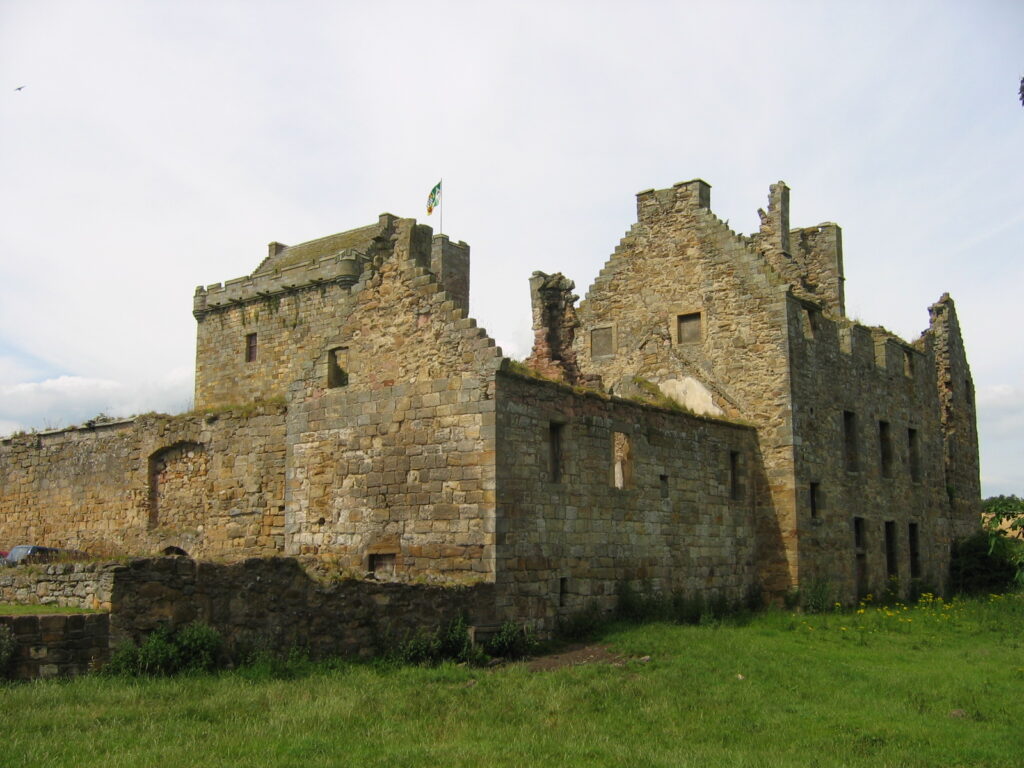
Much vandalism followed in the 1960s. Restoration only began in 1971, under then owner David Maxwell, and continued through the 1970s and 1980s with European funding tied to European Architectural Heritage Year in 1975. Excavations in 1978 uncovered the remains of earlier buildings within the courtyard, apparently demolished in the early 17th century to allow rebuilding. The keep and chapel are now fully restored and the castle is occupied again; the current owner is Raymond Morris, originally of Walsall, and his family, who have said they intend to keep restoring the rest.
What Visitors Report: Green Jeanie, a Soldier and a Dog
Several hauntings have been reported within the castle, and it is worth being clear that these are claims and traditions rather than documented events. The best known is a spectre nicknamed Green Jeanie, said to be the ghost of one of the Lundie occupants, the family who held Balgonie in the late fifteenth century. Alongside her, sightings have been claimed of a 17th-century soldier, a dog, and a hooded man.
One hard fact sits oddly close to the folklore. During works in 1912, a skeleton was found in the floor of the great hall. The record says nothing about who it was, and no source connects it to any of the reported figures; that link is the sort of tidy conclusion visitors tend to draw for themselves.
Walking the Keep, the Gatehouse and the Deer Park
Entry is still through the 15th-century gatehouse, semi-ruinous above ground level, with a guardroom and a prison visible inside. The gate opens onto the courtyard and its well. In the keep, the ground and first floors are vaulted, the first floor holding the hall, which unusually had no great fireplace and was originally reached by a moveable timber stair. Two further floors sit above, each with a fireplace, linked by a turnpike stair under a pitched roof with crow stepped gables. The parapet walk and cannon spouts outside are 17th-century, as are the enlarged windows, though some of the smaller trefoil-headed originals survive.
The vaulted chapel is in the basement of the north range; the rest of that range and the east buildings are roofless, walls and chimney stacks only. Beyond the castle, the extensive boundary walls of the deer park survive in damaged condition, with large mature trees left from the 17th-century landscaping.
Visiting Balgonie Castle
The castle is open to the public, and the restored chapel and great hall can be hired for events such as weddings. Remember that the tower is a private home as well as a monument, so treat the residential parts accordingly and check arrangements before travelling.
Address: Milton of Balgonie, near Glenrothes, Fife, Scotland
See Balgonie Castle for Yourself
Sources
- Beware the witching hour – Local Headlines
- digital.nls.uk
- GeoHack – Balgonie Castle
- Wikipedia: Balgonie Castle
Frequently Asked Questions
Where is Balgonie Castle Green Jeanie Fife located?
Balgonie Castle Green Jeanie Fife is located at Milton of Balgonie, near Glenrothes, Fife, Scotland.
Can you visit Balgonie Castle Green Jeanie Fife?
Balgonie Castle Green Jeanie Fife is open to the public. Always follow posted rules and respect private property.
Reader sightings
Nobody has reported anything here yet. If you have been, you would be the first.
Report your own visit to Green Jeanie and a Skeleton Beneath the Hall: Balgonie Castle Ghosts
How haunted is this place?
Be the first to rate
Ghost Tours Nearby
 Underground Vaults Walking Tour in Edinburgh Old Townfrom $32
 The World Famous Underground Ghost Tourfrom $26
 Ghost Bus Tour of Edinburghfrom $28
Affiliate links: BeyondHaunted may earn a commission, at no extra cost to you.
Nearby Haunted Locations
- 1Ardblair Castle Green LadyScotland29mi
- 2The Green Lady of Stirling CastleScotland31mi
- 3The Maid in the Brown DressScotland37mi
- 4Cardinal Beaton and the Ethie Castle Ghosts of AngusScotland38mi
- 5Duns Castle Ghost Stories and the Keep That Cannot Be DatedScotland41mi
- 6Magic Circles and Roof FiresScotland52mi
Leave a Reply