
Reviewed by Josh N · Updated August 25, 2026 · How we verify
Reported Phenomena
- White Lady sightings
- Floating disembodied hand
- Grey-clad woman
- Phantom fighting men
- Objects moved
- Doors opening and shutting
- Shaking bed
Reported by visitors & local legend. Stories, not verified claims.
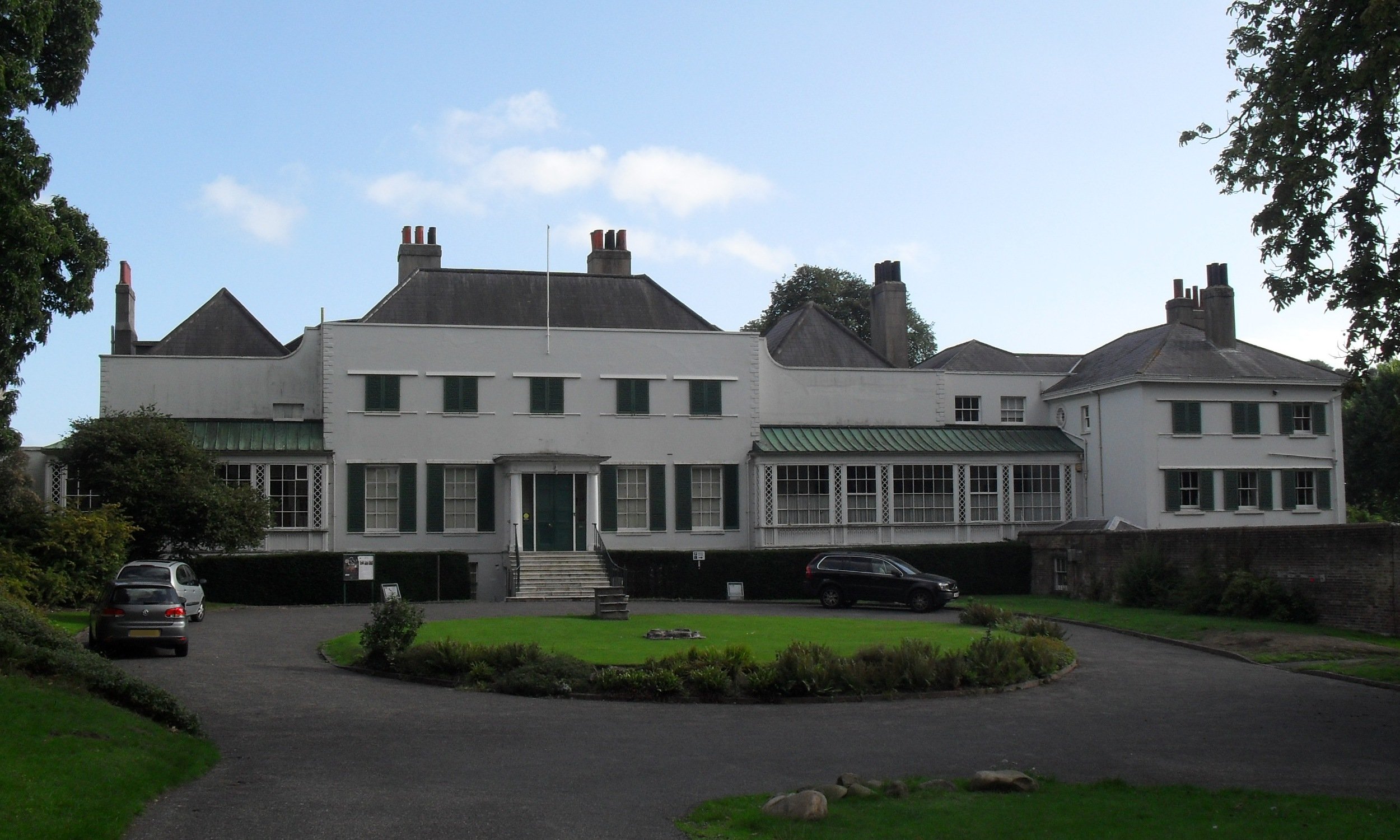
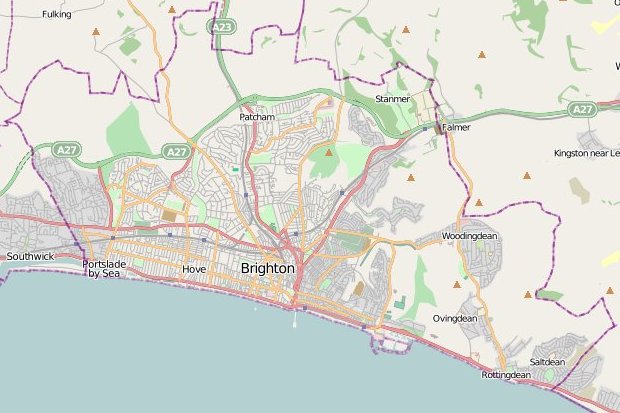
The roll-call of Preston Manor ghosts is unusually long and unusually specific: a grey-clad woman, a blonde figure said to have identified herself as an excommunicated nun, a floating hand with no arm attached, and a phantom riding a toy tractor. The house is the former manor house of the ancient Sussex village of Preston, now swallowed by the coastal city of Brighton and Hove, England, and it has a long-established reputation as a site of paranormal activity, described by some accounts as one of Britain’s most haunted houses.
What separates it from most reputedly haunted houses is the paperwork. This is a museum owned by Brighton & Hove City Council and administered as part of the Royal Pavilion and Museums Trust, listed at Grade II* on 13 October 1952, with a documented family history stretching back to Domesday. It reopened to the public in April 2025.
Priest’s Farmstead, Bishop’s Manor
The village name derives from Preste-tun, meaning “priest’s farmstead”, and the ecclesiastical link ran deep. The manor was held by the Episcopal See at Selsey, then by the Bishop of Chichester after the See transferred there in 1075. The Domesday survey calculated the manor’s value at £25 and recorded 12 ploughs, a church, the manor house and a mill of unspecified type. Nothing of that earliest house survives.
What does survive, in the basement, are remnants of a stone building dated to 1250. It faced north and measured roughly 15.2 m by 7.6 m, and today only the general layout of its two unequal rooms can be made out. That medieval core matters to the ghost stories for one reason: the earliest reported apparition here was said to be a nun, and the house had centuries of church ownership behind it.
What Thomas Western Built Over the Medieval Cellar
The present building dates mostly from 1738, when Lord of the manor Thomas Western rebuilt the original 13th-century structure around its own core. A foundation stone in the basement is carved with the date 1738 and the name “Thos. Western”. He gave the house a symmetrical five-bay Palladian and Georgian façade across its full 15 m width, and added unequally sized east and west wings. Preston Manor today is a two-storey building with that façade now clad in stucco and a roof laid with Welsh slates.
In 1794 Preston Manor, with about 1,000 acres of land, was sold to a tenant, William Stanford, for £17,600, ending the long association of Preston with the Western family. By the time Stanford died in 1841 he was considered one of the richest private individuals in the county. His descendants controlled how Brighton and Hove expanded, and the money shows in the house.
Charles Stanley Peach and the Edwardian Remodelling
Charles Stanley Peach, a friend of the Stanfords, was commissioned in 1905 to make substantial alterations to the house and grounds, and it is his work that gives the building its current appearance: a verandah, a west extension with a new dining room and rooms for visitors and servants, a rear porch, lavishly decorated corridors and new attic rooms. The extra space was put to work. In 1910 Charles Thomas-Stanford was elected Mayor of Brighton, a post he held until 1913, and in 1914 he was elected a Conservative Member of Parliament, serving until 1922.
The bequest that made the museum was partly a family quarrel. Ellen and Charles feared that if her son John inherited he would demolish the house or turn it into a girls’ school. In 1925 Charles bought Preston Manor from his wife’s trustees and provided in his will that the house and four acres should pass to Brighton Corporation by deed of gift, on condition it be preserved in its historic condition and used as a museum with exhibits relevant to Brighton and Sussex. Both died in 1932, Ellen in November, bequeathing the furniture and contents. The transfer was completed in January 1933 and the house opened as a museum of Edwardian life.
The White Lady and the Skeleton Found in 1897
The blonde nun, usually called the White Lady, is the earliest and most famous of the purported ghosts. She was first mentioned in the 16th century, reported most frequently at the end of the 19th, and last recorded in 1903.
The best-documented cluster of accounts belongs to 1896. One of Eleanor Stanford’s children from her second marriage, already familiar with the descriptions of the ghost, claimed to have encountered it that year walking from the drawing room to the staircase, and said the apparition vanished when she tried to touch it. Another daughter reportedly saw the same figure at the top of the stairs soon afterwards. Later in 1896 a family friend, staying at the house in the hope of seeing the White Lady, reported meeting it in the entrance hall, and claimed to have learned, supposedly by talking to the ghost, that it was the spirit of a nun who had been excommunicated and buried on unconsecrated land. A séance held late that year produced further claims, including that there were two ghosts, both nuns excommunicated in about 1535 by a friar, even though one had done no wrong.
Then comes the detail that keeps the story alive. Early in 1897 the skeleton of a middle-aged woman, whose remains were dated to the 16th century by a doctor, was found behind the house during building work, and was secretly buried on consecrated ground in St Peter’s churchyard with help from the Stanford family. A séance in 1898 reputedly made contact with the now pacified spirits, and only two further sightings of a figure with long fair hair were recorded, both in 1903: one in a billiard room, one in a bedroom. White-clad female figures were later reported by passers-by in the grounds in 1976 and 1992. The bones are a matter of record as reported; the identification with an excommunicated nun is not.
The South-West Bedroom, the Floating Hand and the Shaking Bed
The south-west side of the building attracted the strangest accounts. The same daughter who reported the staircase apparition also described two phantom men apparently fighting on another staircase there earlier in the 19th century, and early in the 20th century reported an “immensely evil” presence in the south-west bedroom, moving about and then leaning over the bed.
In that same room, a visitor once believed she saw a floating hand, unattached to any arm, fastening itself to her four-poster bed and moving up and down it. Another visitor later reported an identical experience and added that the bed seemed to be shaking. Strange noises, objects being moved, dresses cut with regular patterns of holes, and doors opening and shutting were all reported from this part of the house.
Grey Women, a Wartime Firewatcher and a Toy Tractor
A grey-clad female ghost was reported several times across the 20th century: once in the boiler room early in the century, twice in quick succession by a Second World War firewatcher, first on the main staircase and then on the parapet of the roof, and once by a security guard. Another security guard reported a figure in old-fashioned black clothing crossing a landing in the 1990s. Oddest of all, in the 1960s a ghost apparently riding a toy tractor was reported in the grounds.
The volume of these accounts has produced regular ghost tours, and the Living television channel’s programme Most Haunted filmed an episode at the manor in June 2006. None of it constitutes evidence of haunting. It is a long, consistent record of what people say they experienced in one particular corner of one particular house.
Walking the House: Four Levels, Servants’ Rooms and the Pet Cemetery
The visitor route covers four levels, taking in the entrance hall, the former library now called the Macquoid Room, a morning room, the ground-floor corridors, the Cleves Room, drawing room and dining room, and the staircase up to the first-floor landing and former bedrooms. The Victorian servants’ quarters in the semi-basement were restored and opened to the public in 1988, and the attic includes a former maids’ workroom now presented as a nursery.
Outside, English Heritage has designated the grounds in their entirety as a Garden of Historic Interest. The 18th-century flint walls, Grade II-listed, run about 85 m and enclose the garden on three sides; the walled garden was restored in the 1990s with money from the Heritage Lottery Fund. A wellhouse east of the house, also Grade II-listed, dates from the 1730s and is now in poor condition, having lost its original horse-operated iron pump and capstan. The walls on the south-east side and the ruined wellhouse were both listed on 20 August 1971. In the south-west corner of the garden lies a pet cemetery, believed to be the only one in Sussex, holding four cats and 16 dogs.
One footnote for anyone who likes their history close to the surface: in November 1945 Princess Elizabeth came to tea at Preston Manor at the invitation of the Mayor of Brighton. It was her first public occasion.
Address: Preston Manor, Preston Road, Brighton and Hove
See Preston Manor for Yourself
Sources
- Preston Manor and Brighton
- A History of the County of Sussex: Volume 7, The Rape of Lewes. Parishes: Preston
- Listed Buildings
- Images of England, Statistics by County (East Sussex)
- Preston Manor to reopen with Downton Abbey-style immersive experience
- Wikipedia: Preston Manor, Brighton
Frequently Asked Questions
Where is Preston Manor Brighton White Lady located?
Preston Manor Brighton White Lady is located at Preston Manor, Preston Road, Brighton and Hove.
Can you visit Preston Manor Brighton White Lady?
Preston Manor Brighton White Lady is open to the public. Always follow posted rules and respect private property.
Reader sightings
Nobody has reported anything here yet. If you have been, you would be the first.
Report your own visit to The Skeleton Behind the House: Preston Manor Ghosts
How haunted is this place?
Be the first to rate
Ghost Tours Nearby
 Baleful Brighton – Brighton's Funnest Ghost Walk!!from $28
 Witchcraft and Magic Tour of Brightonfrom $18
Affiliate links: BeyondHaunted may earn a commission, at no extra cost to you.
Leave a Reply