
Reviewed by Josh N · Updated July 28, 2026 · How we verify
Reported Phenomena
- Disembodied footsteps
- Apparition sightings
- Candles lighting themselves
- Unexplained scratching sounds
Reported by visitors & local legend. Stories, not verified claims.
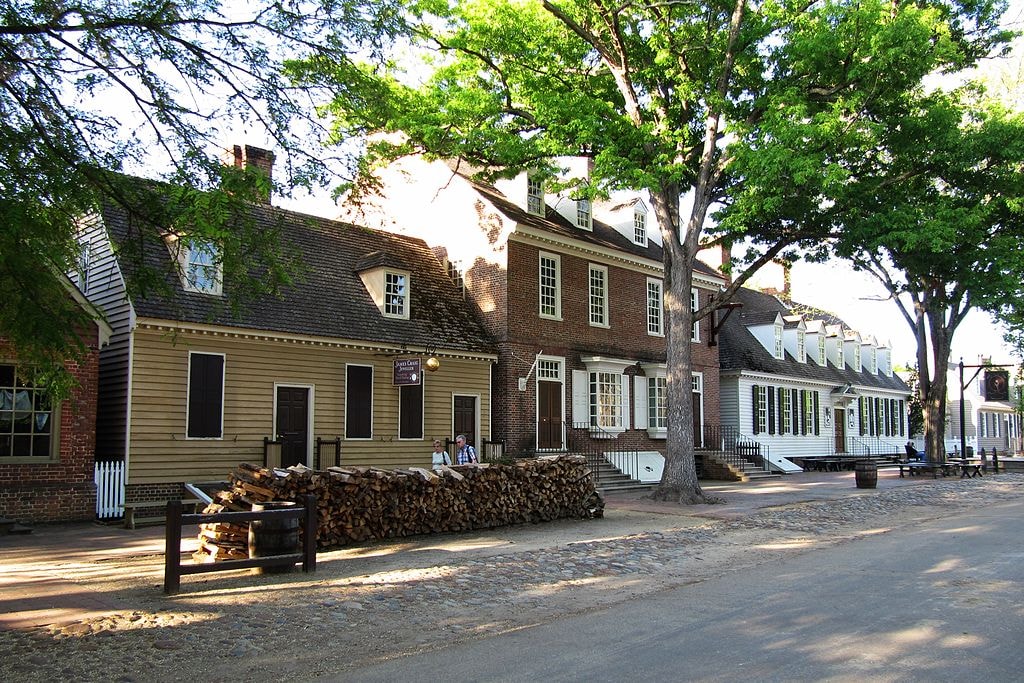
Few places in the United States have been rebuilt as deliberately as this one, which is part of what makes haunted Colonial Williamsburg such an odd proposition. The 301-acre historic area in Virginia is a working reconstruction of an 18th-century capital: several hundred restored or recreated buildings, costumed staff who speak in period diction, animal-drawn carts on streets closed to cars. Some of the structures are genuine survivors. Others were raised on their original foundations in the 1930s. The ghost stories, told in taverns and along the Palace Green, do not always distinguish between the two, and that is worth keeping in mind before deciding what to make of them.
What You Are Actually Standing In
The core of the historic area runs along Duke of Gloucester Street, with the Palace Green crossing it north and south. A quick orientation to the buildings that come up most often in both the history and the stories:
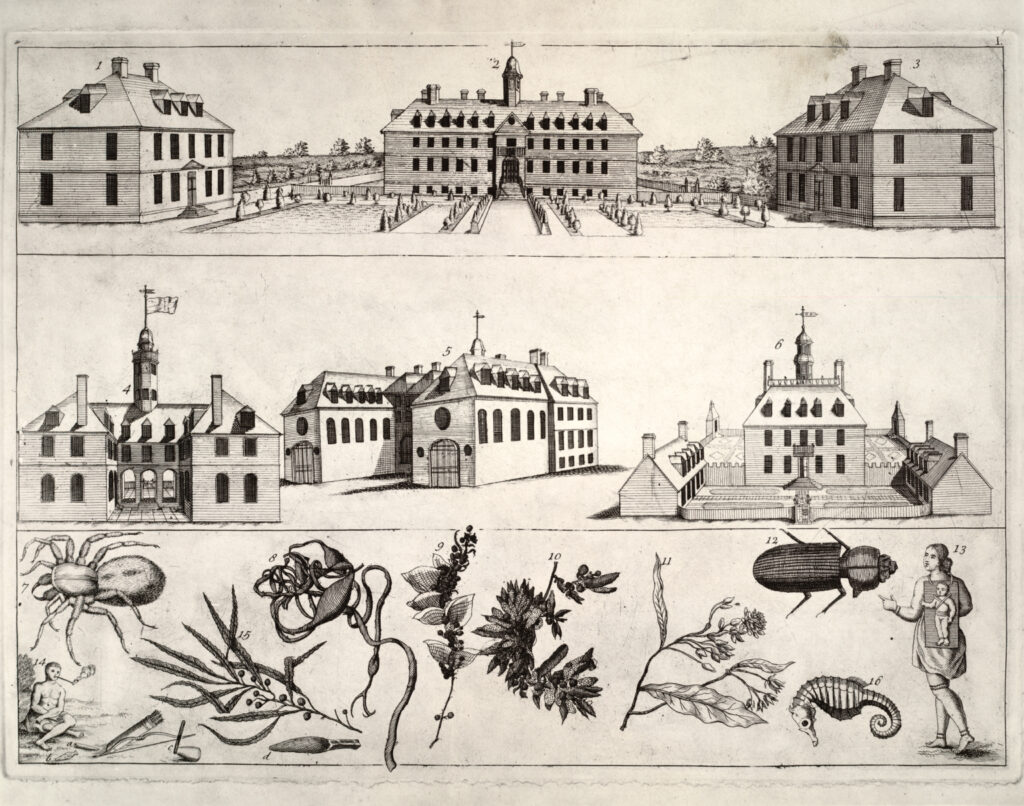
- Originals: the Courthouse, the Wythe House, the Peyton Randolph House, the Magazine, and Bruton Parish Church, which is independently owned and still holds services.
- Reconstructions: the Capitol, the Governor’s Palace, and the Raleigh Tavern, all rebuilt on their original sites.
- Taverns: four have been reconstructed as restaurants and two as inns, among them Shields Tavern and Chowning’s Tavern.
- Public buildings open to visitors: the Capitol, the Courthouse, the Magazine, the Public Hospital, and the Public Gaol, where members of Blackbeard’s crew were held while awaiting trial.
Not everything is open. A number of houses in the historic area serve as residences for Colonial Williamsburg employees, large donors, the occasional city official, and sometimes College of William & Mary associates.
How Middle Plantation Became Williamsburg
The settlement began as Middle Plantation, established in 1632. Virginia’s government sat at Jamestown from 1607, but the case for moving it strengthened when rebels burned the statehouse during Bacon’s Rebellion in 1676 and 1677. The Crown held off until the College of William & Mary was founded at Middle Plantation in 1693 and a second statehouse fire struck in 1698. In 1699 the town was renamed for William III of England and made the colony’s capital.
Williamsburg was one of the country’s first planned cities. Governor Francis Nicholson had it surveyed and gridded by Theodorick Bland, working around the brick College Building and the then decaying Bruton Parish Church. The grid wiped out most traces of an earlier scheme said to have laid the streets in the monogram of William and Mary, a W superimposed on an M. The main thoroughfare took the name Duke of Gloucester after Queen Anne’s eldest son. Nicholson named the streets either side of it Nicholson and Francis, both after himself.
For 81 years of the 18th century this was the center of government, education, and culture in the Colony of Virginia. George Washington, Thomas Jefferson, Patrick Henry, James Monroe, James Madison, George Wythe, Peyton Randolph, and Richard Henry Lee all worked here. The college counts Jefferson, Monroe, and John Tyler among its alumni. America’s first hospital dedicated to mental health care opened in the town in 1773, and Washington assembled troops here in 1781 before the siege of Yorktown.
Eighty-One Years as Capital, Then a Long Stagnation
In 1780, under Governor Thomas Jefferson, the government moved to Richmond on the James River, which was more central and less exposed to British attack. Williamsburg’s businesses followed or failed, and the town settled into a slow decay that ironically preserved its 18th-century shape. General George McClellan captured it in 1862 and garrisoned it, sparing it the destruction visited on other Southern cities.
What jobs there were came from the college, the Courthouse, and the Eastern Lunatic Asylum, now Eastern State Hospital. Locals joked that the “500 Crazies” of the asylum supported the “500 Lazies” of the college and town. Colonial buildings were modernized, neglected, or pulled down. Development around a World War I gun cotton plant at nearby Penniman and the arrival of the automobile did further damage. By the early 20th century many older structures stood empty, in poor condition, or occupied by squatters.
Goodwin, the Rockefellers, and a Town Rebuilt
The Reverend Dr. W. A. R. Goodwin arrived as rector of Bruton Parish Church in 1903 at the age of 34, and inherited a divided congregation and a stalled campaign to restore the 1711 church building. With New York ecclesiastical architect J. Stewart Barney he finished that restoration in time for the 300th anniversary of the founding of America’s Anglican Church at nearby Jamestown in 1907, an occasion that brought J. P. Morgan to town and gave Goodwin a network of wealthy contacts.
He left for Rochester, New York in 1908 and returned in 1923 as a William & Mary fund-raiser and religious studies professor. He saw how far the colonial buildings had slipped. He worked with the Association for the Preservation of Virginia Antiquities to protect and repair the Magazine, and with other professors saved the John Blair House from being cleared for a gasoline station. By the late 1920s, restoration of the town was being promoted as a patriotic project, backed by the Colonial Dames of America, the United Daughters of the Confederacy, the United States Chamber of Commerce, and, decisively, John D. Rockefeller Jr. and Abby Aldrich Rockefeller. Work on the living history museum began in 1926. Reconstruction of vanished buildings on their original sites got underway in the 1930s. The district was designated a National Historic Landmark District in 1960.
The Addresses Where the Stories Cluster
None of what follows is documented fact. These are accounts passed between staff, guests, and tour guides, and they attach themselves to specific buildings rather than to the historic area as a whole.
Shields Tavern
The best known of the tavern stories involves Frances Shields. Visitors and staff have reported footsteps with no walker attached to them, and a whispered voice calling her name.
The Peyton Randolph House
One of the original houses, and open to tourists. It carries the reputation of a figure seen inside and on its grounds, reported by people who did not know the stories beforehand and could not identify what they had seen.
The Wythe House
The story here is the least dramatic and the most repeated: candles that light themselves. No mechanism has ever been demonstrated, and the claim rests entirely on witness accounts.
Chowning’s Tavern
Scratching sounds are the recurring complaint, heard in a reconstructed building where an old-building explanation is at least as plausible as any other.
Taken together the reports are modest in scale: footsteps, voices, scratching, a figure, a flame. What makes them persistent is the density of the setting. A few hundred buildings, most of them dark and empty after closing, in a town that spent a century and a half decaying quietly before anyone thought to restore it.
Walking Duke of Gloucester Street as a Visitor
Colonial Williamsburg is operated by a private foundation, and access works in layers. The streets themselves are free to walk and are closed to motorized traffic during the day, which is why you will see cyclists, joggers, and dog walkers sharing them with carriages. Entry to the exhibition buildings, the trade shops, and the houses that are open requires a ticket. Craft shops cover printing, shoemaking, blacksmithing, cooperage, cabinetmaking, gunsmithing, wigmaking, and silversmithing. Two of the reconstructed taverns operate as inns and four as restaurants, so it is possible to eat and sleep inside the historic area.
Ghost walks are a standing part of the program and are the usual way visitors encounter the tavern and house stories. Expect entertainment as much as investigation. If you are here for the history, the Abby Aldrich Rockefeller Folk Art Museum and the DeWitt Wallace Decorative Arts Museum sit nearby under the same foundation, and Merchants Square, a Colonial Revival commercial area with its own historic district designation, adjoins the site. Colonial Williamsburg also forms part of the Historic Triangle with Jamestown, Yorktown, and the Colonial Parkway, which makes it easy to build several days around.
Two practical notes. Some of the handsomest houses along the Palace Green are lived in, so respect the closed doors and stay off private steps. And remember that ghost hunting can be risky and unwelcome: never trespass, and do not enter buildings or grounds after closing without permission.
See Colonial Williamsburg for Yourself
Sources
Frequently Asked Questions
Can you visit Colonial Williamsburg?
Colonial Williamsburg is open to the public. Always follow posted rules and respect private property.
Reader sightings
Nobody has reported anything here yet. If you have been, you would be the first.
Report your own visit to Candles and Footsteps: Haunted Colonial Williamsburg After Dark
How haunted is this place?
Be the first to rate
Ghost Tours Nearby
 Whispers of Williamsburg Haunted Ghost Tour with Add-on optionsfrom $26
 Williamsburg Ghosts, Witches and Pirates Tourfrom $25
 Williamsburg Ghosts and Brews Haunted Pub Crawlsfrom $29
Affiliate links: BeyondHaunted may earn a commission, at no extra cost to you.
Leave a Reply