
Reviewed by Josh N · Updated August 26, 2026 · How we verify
Reported Phenomena
- Apparition of a physician
- Phantom Civil War soldiers
- Footsteps in corridors
Reported by visitors & local legend. Stories, not verified claims.
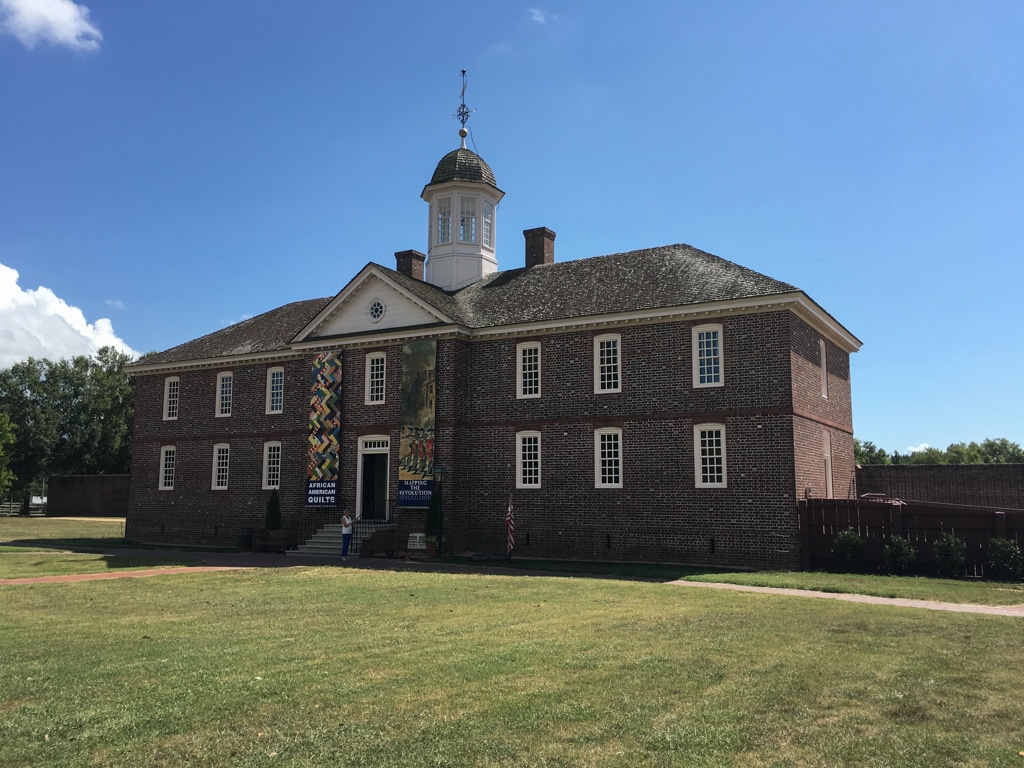
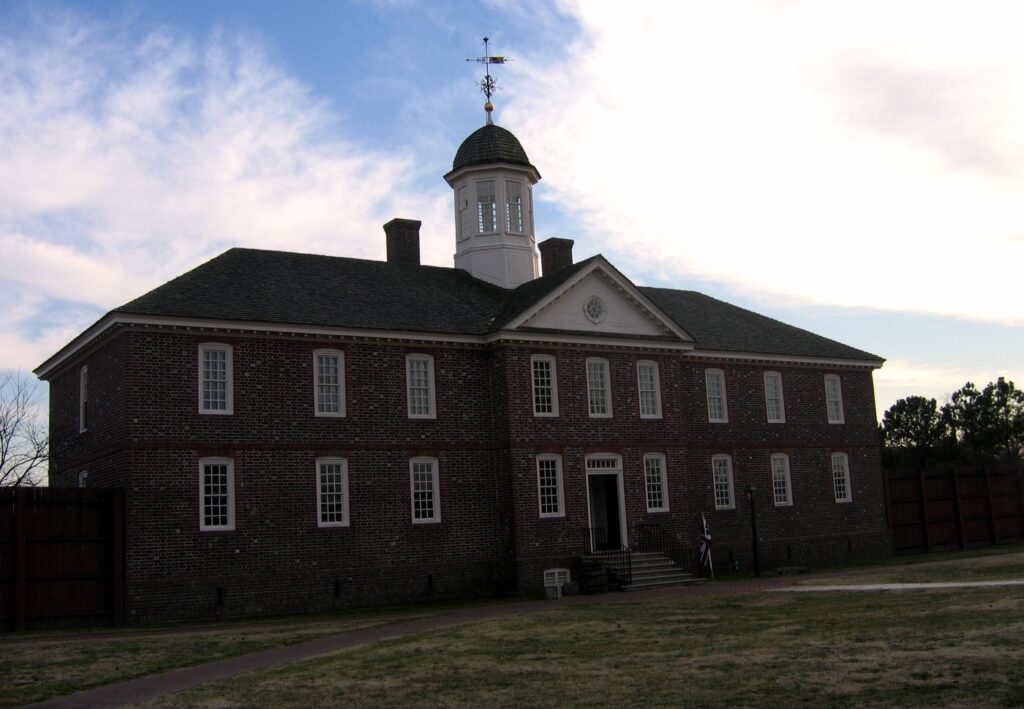
Williamsburg, Virginia keeps two versions of the same building: the one that burned and the one that stands today. The Public Hospital of 1773, known for most of its working life as Eastern State Hospital, was the first public facility in what is now the United States built solely for the care and treatment of the mentally ill. The original structure burned to the ground in 1885. What visitors walk into now is a 1985 reconstruction raised on the excavated foundations of the first, and the ghost stories attached to it are told about a building that is, physically, only decades old.
Quick Orientation
- Built: 1773, admitting its first patients on 12 October of that year
- Also called: Eastern State Hospital, the Eastern Lunatic Asylum
- Destroyed: 7 June 1885, by fire
- Standing today: a reconstruction completed in 1985 by the Colonial Williamsburg Foundation
- The hospital itself: still operating, on the outskirts of Williamsburg
Governor Fauquier Had to Ask Twice
The hospital began with a speech. On 6 November 1766, Francis Fauquier, Royal Governor of the colony of Virginia, addressed the House of Burgesses at its first meeting since the Stamp Act and the Virginia Resolves. Most of what he said concerned the colonies and the mother country. Then, unexpectedly, he turned to what he called “a poor unhappy set of People who are deprived of their senses and wander about the Country,” and argued that “Every civilized Country has a Hospital for these People.”
Nothing happened. On 11 April 1767 he raised it again, noting with visible frustration that a resolution had been passed and a bill ordered, “But I do not find that any thing more was done in it.” He also admitted that he was himself confining a man without legal authority, and said he would rather be bound by the laws of the country than compelled to the daily commission of an illegal act.
Fauquier died on 3 March 1768, five years before the building he pushed for opened. His argument sat squarely inside Enlightenment thinking, which was busy replacing superstition with science and reasoning. In London at the same period, the insane were still treated as entertainment: Bethlehem Royal Hospital, or Bedlam, drew tourists and paraded its inmates. The newer view held that mental illness was an illness of the mind, comparable to a physical sickness, and therefore treatable.
Before the Hospital: Twelve Citizens and the Public Gaol
What the Public Hospital replaced is worth understanding, because it shapes everything visitors are told inside. A person suspected of mental illness was not diagnosed by a physician. Twelve citizens, working much like a jury, judged the person to be a criminal, a lunatic or an idiot. Most of those labelled lunatic were put in the Public Gaol at Williamsburg. The only hospital that sometimes accepted mentally ill patients beforehand was the Pennsylvania Hospital in Philadelphia, a Quaker institution, and there they were kept in the basement, out of the way of patients needing medical care, until Benjamin Rush campaigned in 1792 for a separate treatment wing.
Percival Goodhouse is thought to have been among the first patients admitted after the doors opened. Treatment in the early decades ran from drugs and adjustments to a patient’s surroundings to bloodletting and demanding physical regimes, all aimed, in the language of the period, at restoring lost reason. By modern standards much of it reads as dangerous.
Dr. John Galt’s Experiment
In 1841 Dr. John Galt became superintendent, with roughly 125 patients, then called inmates, in his care. Galt brought in moral treatment, a school of thought holding that the mentally ill deserved respect and dignity rather than punishment. He offered talk therapy and occupational therapy, pressed for research inside the institution, and cut back sharply on physical restraint, at one point going a full year without using it and leaning instead on calming drugs including laudanum. He argued for moving patients out into community-based care, and was repeatedly turned down.
Galt also won admission for enslaved people with mental illness, and taught the enslaved people owned by the hospital to deliver talk therapy alongside nurses and aides. He claimed to treat patients equally regardless of race, though he never published a racial breakdown of who was in his wards.
May 1862: The Keys and the Locked Wards
When the Civil War reached Williamsburg, the hospital sat first behind one army’s lines and then the other’s. Union troops captured the asylum on 6 May 1862. What they found was 252 patients locked inside without food or supplies, abandoned by the fleeing white employees. Somersett Moore was the only non-African American employee to come back after the capture, and it was Moore who handed the occupying soldiers the keys to let the patients out.
On 17 or 18 May, within two weeks of the capture, Dr. Galt died of an overdose of laudanum. Whether he intended it has never been established.
The decades that followed were a retreat. The hospital grew steadily more crowded while confidence in science as a treatment for mental illness fell away. Custodial care took over: the aim was no longer to cure anyone but to keep patients comfortable and separate from society.
The Wiring Fire of 7 June 1885
The original 1773 building burned to the ground on 7 June 1885. The fire started in newly installed electrical wiring, itself a product of the rapid expansion of the facilities at the time. The institution carried on regardless. By 1935 it held some 2,000 patients with no land left to expand into, and by then the restoration of Colonial Williamsburg and the development of the Williamsburg Inn had put a working psychiatric hospital in the middle of a booming tourist district. Between 1937 and 1968 every patient was moved to a new site on the edge of town, where Eastern State Hospital still operates. In 1985 the Colonial Williamsburg Foundation rebuilt the 1773 hospital on its excavated foundations.
The Ghost Stories Told About the Public Hospital
The building’s reputation rests on its history rather than on any documented incident, and the accounts below are reported experiences and local legend, not verified events.
The best known story concerns Dr. Galt, whose spirit is said to walk the hospital’s corridors, a tale that draws on his laudanum death in May 1862 and on the strain of running an overcrowded asylum through an occupation. The record confirms the death and the overdose. It does not tell us his state of mind, and it certainly does not establish a haunting.
A second strand of the legend has the ghosts of Civil War soldiers, said to have been committed with what would now be recognised as post-traumatic stress, wandering the premises and reliving the war. This one deserves particular caution: the documented Civil War episode here is the capture of 6 May 1862 and the 252 patients found locked in, not the admission of traumatised soldiers. Treat the soldier story as folklore that grew out of a real and genuinely grim event.
Anyone hoping for classic haunted-house atmosphere should also weigh a plain fact: the walls, floors and roof are a 1985 reconstruction. Whatever people report experiencing, they are reporting it inside a modern building standing on old foundations.
Seeing the Public Hospital in Colonial Williamsburg
The rebuilt hospital sits within Colonial Williamsburg’s historic area, close to the museum complex that grew up around it, so a visit is a museum visit rather than an urban exploration. Access, opening hours and ticketing are set by the Colonial Williamsburg Foundation and change with the season, so check before travelling. Interpretation inside focuses on eighteenth-century treatment and confinement, which is the honest reason to come: the story of how a colony moved its citizens out of the Public Gaol and into a purpose-built hospital is stranger and more affecting than the ghost stories layered on top of it.
The working hospital on the outskirts of Williamsburg is an active psychiatric facility and not a visitor attraction. It should be left alone.
See The Public Hospital for Yourself
Sources
- A Ghostly Encounter
- The History of Eastern State
- Francis Fauquier (bap. 1703 to 1768) – Encyclopedia Virginia
- Wikipedia: Eastern State Hospital (Virginia)
Address: 325 West Francis Street
Frequently Asked Questions
Where is The Public Hospital located?
The Public Hospital is located at 325 West Francis Street.
Can you visit The Public Hospital?
The Public Hospital is open to the public. Always follow posted rules and respect private property.
Reader sightings
Nobody has reported anything here yet. If you have been, you would be the first.
Report your own visit to Public Hospital of 1773: Ghosts of America’s First Asylum
How haunted is this place?
Be the first to rate
Ghost Tours Nearby
 Whispers of Williamsburg Haunted Ghost Tour with Add-on optionsfrom $26
 Williamsburg Ghosts, Witches and Pirates Tourfrom $25
 Williamsburg Ghosts and Brews Haunted Pub Crawlsfrom $29
Affiliate links: BeyondHaunted may earn a commission, at no extra cost to you.


Leave a Reply