
Reviewed by Josh N · Updated August 27, 2026 · How we verify
Reported Phenomena
- Apparitions in library
- Unexplained footsteps
- Doors opening alone
- Schoolhouse ghost rumours
Reported by visitors & local legend. Stories, not verified claims.
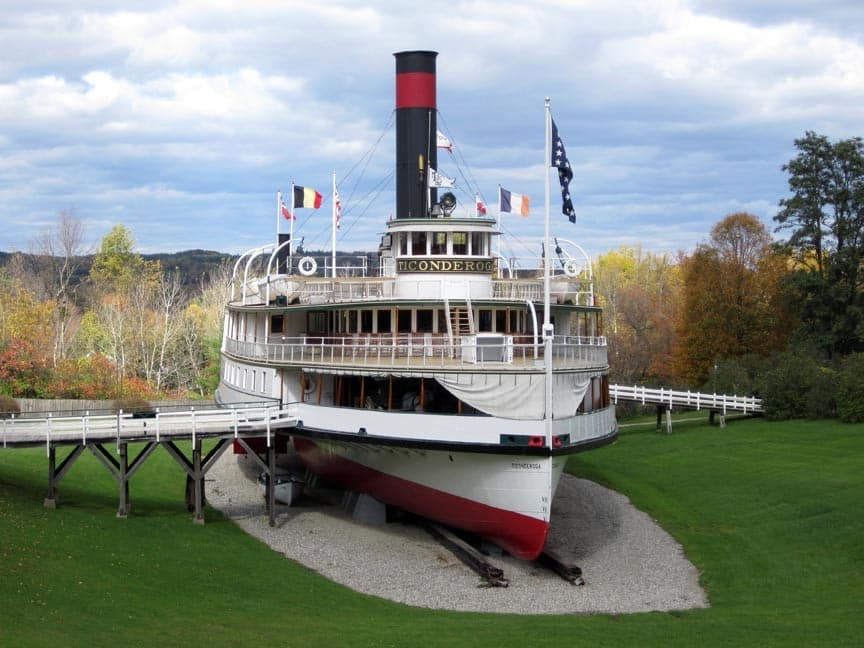
Shelburne Museum is a place where the buildings themselves are exhibits. Set on 45 acres near Lake Champlain in Shelburne, Vermont, it holds more than 150,000 works across 39 exhibition buildings, 25 of which were lifted from their original sites in New England and New York and rebuilt here. A lighthouse stands nowhere near open water. A 220-foot steamboat sits on dry land. That deliberate strangeness is part of why ghost stories have attached themselves to the grounds, even though the museum’s own published history offers nothing to support them.
Quick Orientation
- What it is: a museum of art, design and Americana, founded in 1947
- Founder: Electra Havemeyer Webb, a pioneering collector of American folk art
- Scale: approximately 150,000 objects, 39 exhibition buildings, 45 acres
- Season: year-round since 2013, when the Pizzagalli Center for Art and Education opened
- Reported activity: apparitions and footsteps, most often associated with the library and the schoolhouse. Anecdotal only.
Electra Havemeyer Webb Moved the Buildings, Not Just the Objects
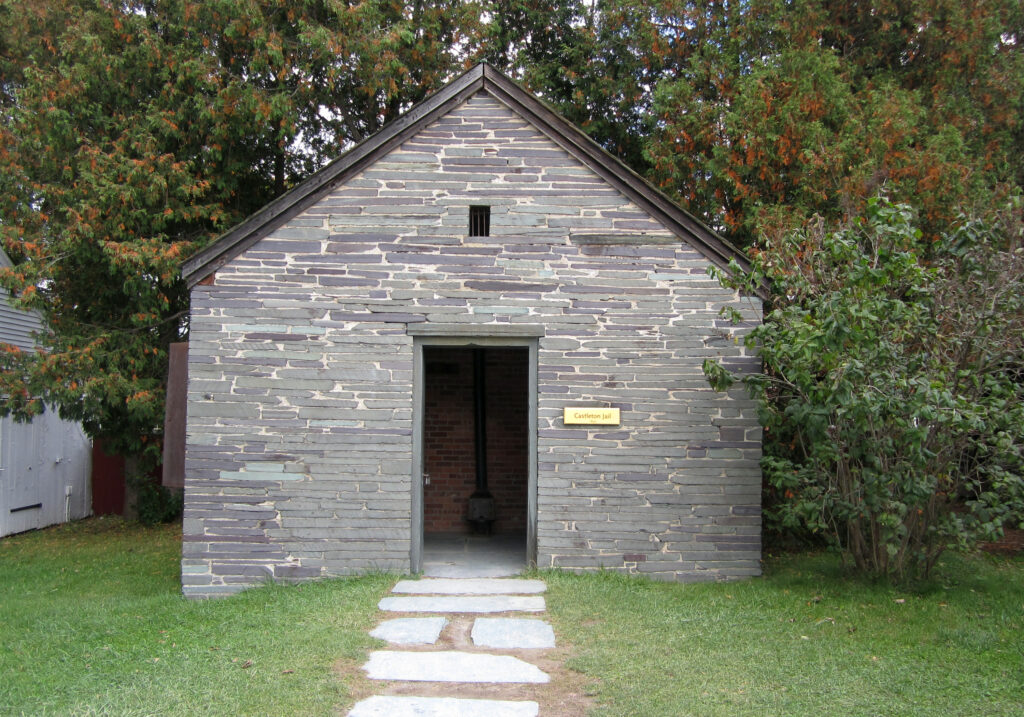
Webb was the daughter of Henry Osborne Havemeyer and Louisine Elder Havemeyer, collectors of Impressionist, European and Asian art. She went in a different direction. She was among the first people to treat the applied and decorative arts of rural America as worth collecting at all, and when she founded the museum in 1947 she did something few institutions would attempt: rather than build galleries, she collected 18th and 19th century buildings to put the collection inside. Twenty historic structures were relocated to Shelburne, among them houses, barns, a meeting house, a one-room schoolhouse, a lighthouse, a jail, a general store and a covered bridge.
She described what she wanted as “an educational project, varied and alive.” The result reads less like a museum campus than a village that never existed, stitched together from real pieces of ones that did. The landscape carries the same intent, with over 400 lilacs, a circular formal garden, herb and heirloom vegetable gardens, and perennial beds.
Webb’s influence ran outward as well. She exchanged ideas with other major early collectors including Katherine Prentis Murphy, Henry and Helen Flynnt, and Henry Francis du Pont, who founded the Winterthur Museum and credited her with inspiring him to collect American decorative arts.
What Actually Fills the Thirty-Nine Buildings
The inventory is the point here, and it is genuinely unusual in its range. The folk art holdings include 1,400 wildfowl decoys and miniature carvings, 150 trade figures and signs, 120 weathervanes and 50 carousel figures, including all 40 animals from an early Dentzel carousel. The circus collection runs to 600 historic posters plus letters and memorabilia from P.T. Barnum, the hand-carved 3,500 piece Kirk Brothers Miniature Circus, and the Roy Arnold Circus Parade, which recreates 112 attractions in miniature across 525 linear feet of a purpose-built exhibition hall.
Textiles account for 770 bed coverings, 500 of them quilts, along with 400 hooked and sewn rugs, 1,800 samplers, laces and linens, and 2,800 costumes and accessories. There are 6,650 pieces of decorative art, over 1,000 dolls with 27 dollhouses, 225 horse-drawn vehicles, 1,000 farming implements and 5,000 hand tools. An apothecary shop and physician’s office displays 2,000 patent medicines alongside turn of the 20th century medical instruments.
American paintings include Bierstadt, Cassatt, Chase, Copley, Heade, Homer, Eastman Johnson, Lane, Grandma Moses, Peto and Andrew Wyeth. From the Havemeyer collection come works by Corot, Daubigny, Degas, Manet and Monet, hung in furnished rooms re-created from the Webbs’ New York apartment as it stood around 1930. They are the only Impressionist pictures on public view anywhere in Vermont.
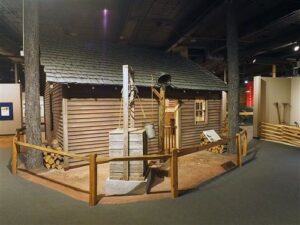
Among the relocated structures are the 1871 Colchester Reef Light, a 1901 Vermont round barn, an 1840 one-room schoolhouse, an 1890 Vermont slate jail, an 1840 general store, a rare 18th-century up-and-down sawmill, a 19th-century covered bridge, an 1890 railroad station, a 1914 steam locomotive and, largest of all, the 1906 steamboat Ticonderoga, a U.S. National Historic Landmark measuring 220 feet.
The 1996 Sale That Split the Webb Family
The museum’s difficult chapter is financial rather than spectral. It was reported to have carried a deficit of more than $300,000 in 1994. In 1996 it sold $30 million of its art to cover expenses. J. Watson Webb Jr., Electra Havemeyer Webb’s son, resigned in protest, arguing that the sale breached the code of ethics of the American Alliance of Museums, which forbids selling artworks for any purpose other than acquiring more art. The proceeds went into a Collections Care Endowment that still funds conservation, storage and collection management.
More recent expansion has been additive. The 2013 opening of the Pizzagalli Center for Art and Education added two galleries, an auditorium and a classroom, and shifted the museum from a mid-May through October season to year-round operation. In 2023 the museum announced a Native American Initiative, with plans for a building to display and interpret both material already in its stewardship and the Perry Collection, some 200 works by Plains, Prairie and Southwest groups.
The Library and the Schoolhouse: What People Say Happens
None of the museum’s documented history involves a death, a disaster or a tragedy on the grounds. The ghost stories that circulate are staff and visitor anecdotes, passed along informally, and they should be read that way.
The library draws the most reports. Accounts describe figures glimpsed between the stacks, footsteps in rooms where nobody is walking, and doors that open or close without a hand on them. The schoolhouse is the other named location, said in local retelling to be connected to spirits from some earlier tragedy, though nobody repeating the story identifies what that tragedy was, and no record of one at the building survives in the museum’s published account of its collections.
There is a plausible non-supernatural explanation worth keeping in mind: almost every structure on the property was dismantled, moved and reassembled somewhere it was never meant to stand. Old timber frames settle, contract and complain. A building that spent a century in one place and now sits in another will make noises that its custodians do not recognise. That does not explain a figure standing between the shelves, but it accounts for a great deal of the rest, and no investigation has established anything beyond the testimony itself.
Planning a Visit to Shelburne Museum
This is a public, ticketed museum, not a paranormal attraction, and it does not market itself on ghost stories. Expect a full day. Thirty-nine buildings spread over 45 acres cannot be covered quickly, and several of them contain working exhibits: blacksmithing, printing, spinning and weaving are staffed by craftspeople, and a Jacquard loom operates in the weaving shop. The carousel runs.
Since 2013 the museum has been open year-round, though the outdoor season, with the lilacs and the gardens, remains the fullest experience. Check the official website for current hours, since the historic buildings and the winter gallery programme operate on different schedules. If the hauntings are your reason for coming, temper expectations: what you are far more likely to leave with is the peculiar impression of having walked through a village assembled out of other villages.
See Shelburne Museum for Yourself
Sources
- Museum's Fortunes Rise at Auction (The New York Times)
- Archived copy
- Preservation Trust Awards 2005
- Surprises abound at Shelburne Farms and Shelburne Museum
- Barn City
- Wikipedia: Shelburne Museum
Address: 6000 Shelburne Road
Frequently Asked Questions
Where is Shelburne Museum located?
Shelburne Museum is located at 6000 Shelburne Road.
Can you visit Shelburne Museum?
Shelburne Museum is open to the public. Always follow posted rules and respect private property.
Reader sightings
Nobody has reported anything here yet. If you have been, you would be the first.
Report your own visit to A Steamboat on Dry Land: Ghost Tales at Shelburne Museum
How haunted is this place?
Be the first to rate
Ghost Tours Nearby

Affiliate links: BeyondHaunted may earn a commission, at no extra cost to you.

Leave a Reply