

Reviewed by Josh N · Updated September 22, 2026 · How we verify
Reported Phenomena
- Phantom piano music
- Disembodied crying
- Unexplained touches
- Shadow figure
- Unexplained footsteps
- Sudden cold spots
Reported by visitors & local legend. Stories, not verified claims.
Set back from South Walton Boulevard behind its heritage gardens, the Peel Mansion is the best preserved piece of Gilded Age Bentonville, and the most talked about haunted house in northwest Arkansas. The documented story is straightforward: a Confederate veteran turned congressman built himself an Italianate showpiece in the 1870s, and the building survived long enough to become a museum. The ghost stories are a separate matter, passed along by visitors and tour groups rather than recorded anywhere in the house’s history. Both are worth knowing before you walk through the door.
Quick Facts on the Col. Samuel W. Peel House
- Built: around 1875, by Samuel W. Peel
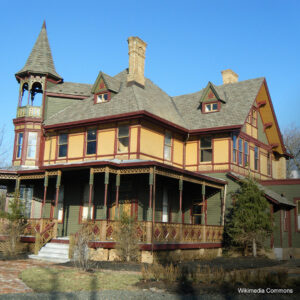
- Style: two-story stuccoed brick masonry with a three-story hip-roofed tower at the center of the front facade
- Status: historic house museum, also known as the Peel Mansion Museum
- Listed on the National Register of Historic Places: 1995
- Access: open for tours year-round, with a limited schedule in January and February
Who Colonel Samuel W. Peel Actually Was
Peel served in the Confederate Army during the American Civil War, then studied law and practiced it in Bentonville for many years. He went on to serve several terms in the United States Congress and helped establish the First National Bank of Bentonville. That is the man behind the house: a lawyer, a politician, and a banker, comfortably established in the town he had returned to after the war.
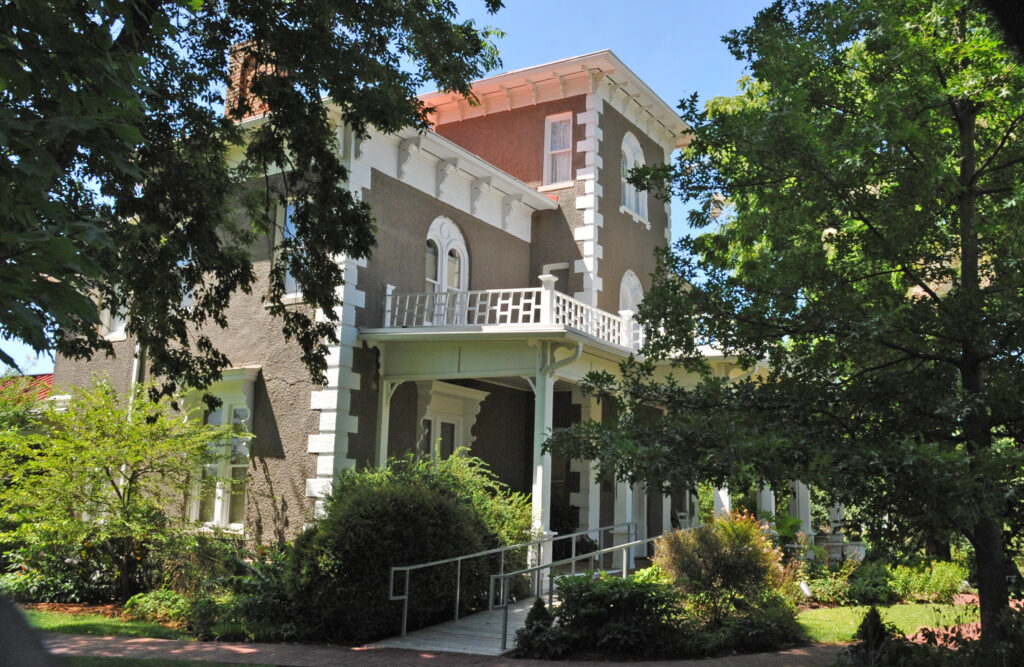
This matters because one of the darker claims attached to the mansion, that the Peel family fell into post-war destitution and that members of the household starved, does not appear anywhere in the documented record of the property or of Peel himself. The historical account describes a prominent local businessman with the means to build one of the finest Italianate mansions in the region. Treat the starvation story as folklore that grew up around an old house, not as history.
The Italianate House Itself
The building is the point even if you have no interest in ghosts. Stuccoed brick, two stories, with a square tower rising a full three stories above the center of the front elevation: it is a textbook expression of the Italianate taste that swept American domestic architecture in the decades after the Civil War, and there is very little of it left standing at this quality in the region. The house has been altered over the years, but enough of the original survives that it was listed on the National Register of Historic Places in 1995.
The Story of Margery English
The most repeated legend at the Peel Mansion concerns a girl named Margery English. As the story is told, she fell into a coma from appendicitis in 1920, was mistaken for dead, and was shut away in an upstairs room for forty years. Visitors who have heard the tale report crying from that room, sudden cold, and the sensation of being touched or pinched on entering it.
It is worth saying clearly that no part of this account is supported by the documented history of the house, and the arithmetic of the story does not hold together well on its own terms. What is real is the reaction people describe having in that room, which is a different thing from a verified event. If you take the tour, treat it as a piece of local storytelling and judge the room for yourself.
Piano Music and the Colonel’s Shadow
Two other figures turn up in the mansion’s ghost lore. Colonel Peel is said to still walk the house he built, usually reported as a shadowy figure in a doorway or as footsteps on floors where nobody is standing. His daughter Minnie Belle Peel is the source of the most cheerful of the accounts: visitors have described hearing an antique piano playing, and in some tellings seeing the keys move, only to find the room empty.
None of these reports have been verified, and an old masonry house with heavy floors, temperature swings and a tower stairwell produces a great deal of noise on its own. What the stories do reliably reflect is that people leave the Peel Mansion with something to talk about.
Touring the Peel Mansion Museum
The house operates as a museum and is open for tours throughout the year, with a reduced schedule in January and February, so confirm hours before making the drive if you are visiting in winter. The heritage gardens on the grounds are part of the experience and are best seen in the warmer months.
This is a staffed historic site rather than a paranormal attraction. Guides are there to interpret the architecture and the Peel family’s place in Bentonville history, and the ghost material is not the main program. Ask politely, behave as you would in any museum, and do not expect the staff to stage anything for you.
See Peel Mansion for Yourself
Sources
- NRHP nomination for Col. Samuel W. Peel House
- NPGallery Asset Detail (National Park Service)
- GeoHack – Col. Samuel W. Peel House
- Wikipedia: Col. Samuel W. Peel House
Frequently Asked Questions
Where is Peel Mansion located?
Peel Mansion is located at 400 S Walton Blvd, Bentonville, AR 72712.
Can you visit Peel Mansion?
Peel Mansion is accessible by guided tour only. Always follow posted rules and respect private property.
Reader sightings
Nobody has reported anything here yet. If you have been, you would be the first.
Report your own visit to Piano Keys and a Sealed Room: Bentonville’s Peel Mansion
How haunted is this place?
Be the first to rate
Ghost Tours Nearby

Affiliate links: BeyondHaunted may earn a commission, at no extra cost to you.

Leave a Reply