
Reviewed by Josh N · Updated August 26, 2026 · How we verify
Reported Phenomena
- Apparition in white robes
- Blue Lady sightings
- Small blue objects left
- Sudden cold drafts
- Unexplained noises
- Fleeting shadows
Reported by visitors & local legend. Stories, not verified claims.
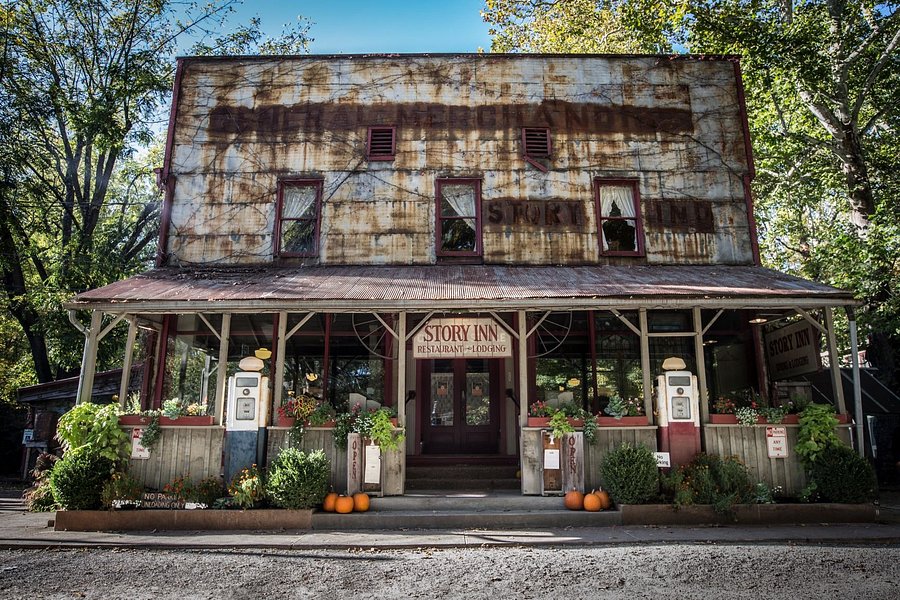
Guests at Story Inn do not just book a room in an old building. They book a room in a whole village, and if the guest books are any indication, they may be sharing it. The Blue Lady of Story Inn has been turning up in employee accounts and handwritten entries since the 1970s, in a second-floor room above what used to be the Wheeler-Hedrick General Store. What surrounds her is one of the more unusual preservation stories in Indiana: an entire crossroads settlement, bought at a sheriff’s sale, kept alive as a bed and breakfast.
Story Inn at a Glance
- Where: the unincorporated community of Story, in Van Buren Township, Brown County, on State Road 135, roughly thirteen miles from the village of Nashville and adjacent to the southwestern boundary of Brown County State Park.
- What it is now: a country inn and bed and breakfast, with the old general store operating as a restaurant.
- Recognition: the village was listed on the National Register of Historic Places in March 2019.
- The ghost: the Blue Lady, described as a harmless apparition, reported by staff and guests since the 1970s.
Dr. Story’s 173 Acres and the Village That Grew Around Them
The village takes its name from Dr. George P. Story, who received a land patent for 173 acres from President Millard Fillmore in 1851. That original patent is on display at the inn. Dr. Story moved from Ohio during the early 1850s to settle the acreage, and over the following twenty years family farms, his medical practice, a township school and a grist mill grew up around him, enough for locals to start calling the place “Storyville.”
The village was not formally created until 1882, and not by Story himself. That year Dr. Arnold S. Griffitt carried on the medical practice and the farming, opened a dry goods store that housed the first post office, and the settlement’s first church congregation was founded. The Story-Griffitt House, an I-house dating to about 1858, is now part of Story Inn. Earlier accounts of the village also record a blacksmith shop and a slaughterhouse, both ordinary fixtures of a rural Indiana crossroads. Story was a farm and store village rather than a logging camp, though a saw mill was added later, and the clear cutting of the surrounding hills would eventually help ruin the soil that supported it.
The Wheelers, the 1915 Fire, and Clotha’s Pickled Bologna
In 1900 the store and grist mill were sold to Alra and Mary Wheeler, who lived in the 1894 Queen Anne style Wheeler-Hedrick House across from the store. That house, too, is now part of the inn. The Wheelers enlarged the store between 1911 and early 1915, and in November 1915 it burned. One report afterwards claimed Wheeler’s stock “was one of the largest in the county.” The loss did not last: a new two-story building went up with “Wheeler General Store” painted across the upper facade, and business boomed. The store supplied huckster wagons that worked the region every week, ran the grain mill, and by oral account served as the wool-buying center for the county, with Wheeler hauling wool to mills in Seymour.
Wheeler died in 1921. In early 1924 Albert and Susan Hedrick bought the store, the saw mill and the Wheeler home in partnership with their oldest son Ralph, and it became Hedrick and Son Grocery. Through the 1920s and into the 1930s the store sold farm equipment, clothing, shoes, produce and meat butchered on the premises, thirty-five hogs in a single year. Ralph’s youngest sister Clotha clerked in the store and became locally famous for her pickled bologna. She kept the place going until 1969, adding a lunch counter for park visitors and passing motorists and running the only fuel service in the area. The gold and red crown Standard Service pumps, dating to about 1937, still stand in front of the building.
How the Depression and Lake Monroe Cut Story Off
Farming the hilly, rocky ground of what is now the Hoosier National Forest region was always hard, and soil runoff from logged hillsides made marginal farms worse. When the government began buying land in the 1920s for what became Brown County State Park, opened in 1929, many farmers sold gladly. The Depression scattered more families in search of work. Brown County lost half its population between 1930 and 1940. Yellowwood State Forest, the Hoosier National Forest and the Charles C. Deam Wilderness Area displaced still more, and Brown County is around eighty percent forested today.
The final isolation came in 1960, when the Army Corps of Engineers flooded the country west of Story to create Lake Monroe, the state’s second largest man-made lake. The town of Elkinsville was abandoned and the road that had carried Story’s traffic toward Bloomington was closed. Elkinsville Road still serves as Story’s main street, but it now dead-ends four miles to the west at a fallen iron bridge. The lack of money had one accidental benefit: nobody ever “modernised” Story’s wooden floors, stamped tin ceilings and globe lighting.
Benjamin, Cynthia, and the Sheriff’s Sale of a Whole Town
The general store limped along into the 1970s. In 1978 Benjamin, who used only the one name, and his wife Cynthia Schultz bought four and a half acres taking in the grocery store, grist mill, barn and a small rented house, and moved into the store’s second floor. He was an architect and builder with restaurant experience, she a former restaurant owner, and together they turned the upstairs and the surrounding cottages into guest lodging. Story Inn was born, and over the next decade the couple reassembled the roughly twenty-four acres that make up the old town, until the inn’s name and the village’s name meant the same thing.
The Schultzes sold in 1992 and Story fell hard. A federal bankruptcy was followed by receivership, and on February 14, 1999, the entire town was sold at sheriff’s sale to an entity owned by Rick Hofstetter, an Indianapolis attorney and preservationist, and Frank Mueller, a German-born restaurateur. The pair had earlier worked on the renovation of the Athenaeum in Indianapolis, now a National Historic Landmark, Hofstetter as the first president of its foundation and Mueller as manager of the Rathskeller Restaurant in its basement. Hofstetter’s book Kentuckiana Roads covers much of the region’s history.
What People Report in the Blue Lady Room
Four bed and breakfast rooms occupy the second floor of the old general store, and one of them is named the Blue Lady. The published account of her is refreshingly modest: an innocuous apparition in flowing white robes, cheeky rather than frightening, observed by Story Inn employees and recorded in guest books since the 1970s. That guest book is the whole evidentiary record, and it should be read as exactly what it is, a collection of personal reports rather than anything documented.
Local retellings have added detail over the years. She is often said to be the wife of Dr. George Story, though nothing in the village’s recorded history establishes that, and the identification should be treated as legend. Guests describe vivid blue eyes, small blue objects left behind, sudden cold drafts, unexplained noises and movement at the edge of vision. The best known piece of the tradition is the blue light in the room: switch it on, the story goes, and she is more likely to appear. Others insist she turns up without any invitation at all. None of it is verified, and the inn does not pretend otherwise.
Planning a Stay in Story
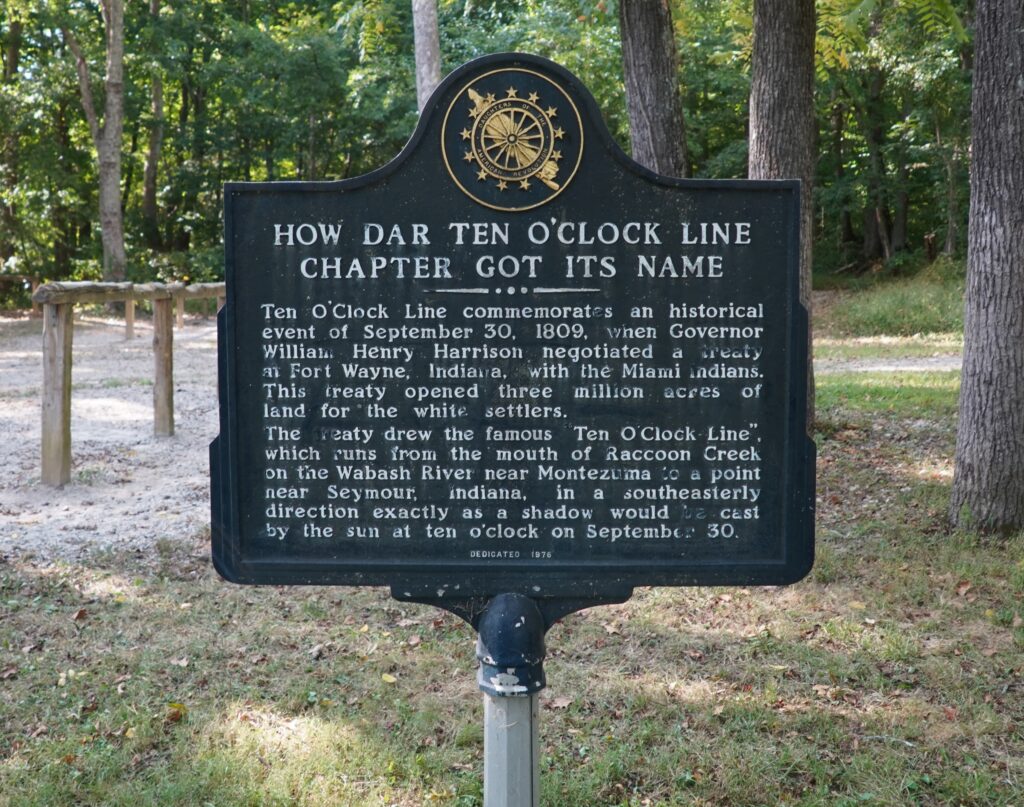
You can book the Blue Lady room, or one of the other rooms and cottages, and eat in the old general store, which now operates as the inn’s restaurant. The village green holds the Story Monument, marking the Ten O’Clock Treaty Line of 1809, which ran through the heart of what became the village. The inn hosts the annual Indiana Wine Fair each May. Beyond the buildings there is Salt Creek, a hundred-mile system of slow tributaries feeding the backwaters of Lake Monroe, and the state park boundary a short drive away. Even for visitors indifferent to the Blue Lady, Story is a rare thing: a nineteenth century Indiana crossroads that was too broke to be improved and is now too valuable to change.
See The Story Inn Nashville for Yourself
Sources
- U.S. Census website (US Census Bureau)
- An Indiana Ghost Town with a Fascinating History is up for Sale, and It Costs Less Than Some Houses
- Geographic Names Information System (Nationalmap (official))
- GeoHack – Story, Indiana
- Wikipedia: Story, Indiana
Address: 6404 South State Road 135
Frequently Asked Questions
Where is The Story Inn Nashville located?
The Story Inn Nashville is located at 6404 South State Road 135.
Can you visit The Story Inn Nashville?
The Story Inn Nashville is a place where you can stay overnight. Always follow posted rules and respect private property.
Reader sightings
Nobody has reported anything here yet. If you have been, you would be the first.
Report your own visit to The Blue Lady of Story Inn: Indiana’s Village-Sized B&B
How haunted is this place?
Be the first to rate
Leave a Reply