
Reviewed by Josh N · Updated October 17, 2025 · How we verify
Reported Phenomena
- Disembodied voices
- Phantom footsteps
- Slamming doors
- Flickering lights
- Objects moving
- Screams & cries
Reported by visitors & local legend. Stories, not verified claims.
Address: 75 Spring Street, Portland, Maine 04101
Website: Portland Museum of Art
Phone: (207) 775-6148
Hours: Open Wednesday–Sunday, 10 a.m.–6 p.m. (Hours may vary seasonally)
A Federal-Style Treasure with a Ghostly Past
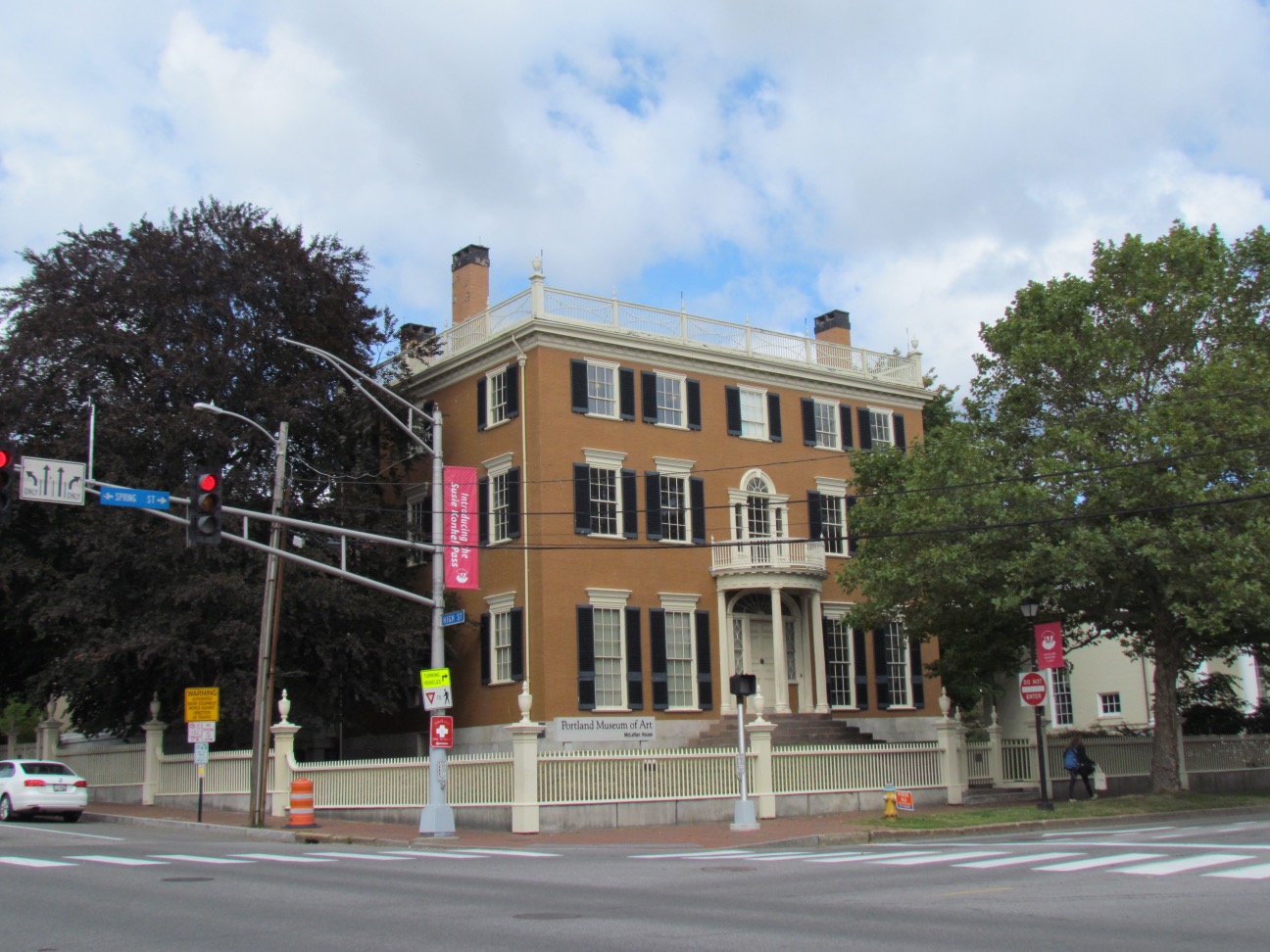
The McLellan-Sweat Mansion sits quietly in downtown Maine, its red brick façade blending into the Portland Museum of Art campus. But step closer, and you’ll find that this stately home holds far more than architectural beauty, it’s one of Portland’s most whispered about haunted locations.
Built in 1800–1801 for shipping merchant Major Hugh McLellan, the mansion was a grand symbol of wealth and early American style. Designed by architect John Kimball Sr., it reflected the best of the Federal period, with its Palladian windows, ornate staircase, and fine woodwork imported from Boston craftsmen. For early Portlanders, this house was a statement of success and refinement.
When you walk through the restored rooms today, it’s easy to imagine candlelight flickering against the high ceilings, the soft sound of classical music echoing through the parlor. What’s harder to shake, though, is the feeling that you’re not entirely alone.
From Wealth to Art and Legacy
Over the centuries, the home changed hands many times. In 1817, Asa Clapp bought the house for his son Charles, another influential Portland merchant. Then in 1880, it came into the possession of Lorenzo De Medici Sweat, a prominent lawyer and U.S. Congressman. His wife, Margaret Jane Mussey Sweat, was a talented author and art patron who adored European travel and culture.
Margaret Sweat’s name remains inseparable from the house’s history. When she died in 1908, she left the property and a sizable endowment to the Portland Society of Art, which later became the Portland Museum of Art. Her gift funded the adjacent L.D.M. Sweat Memorial Galleries, designed by famed Maine architect John Calvin Stevens, linking art, architecture, and history in one remarkable complex.
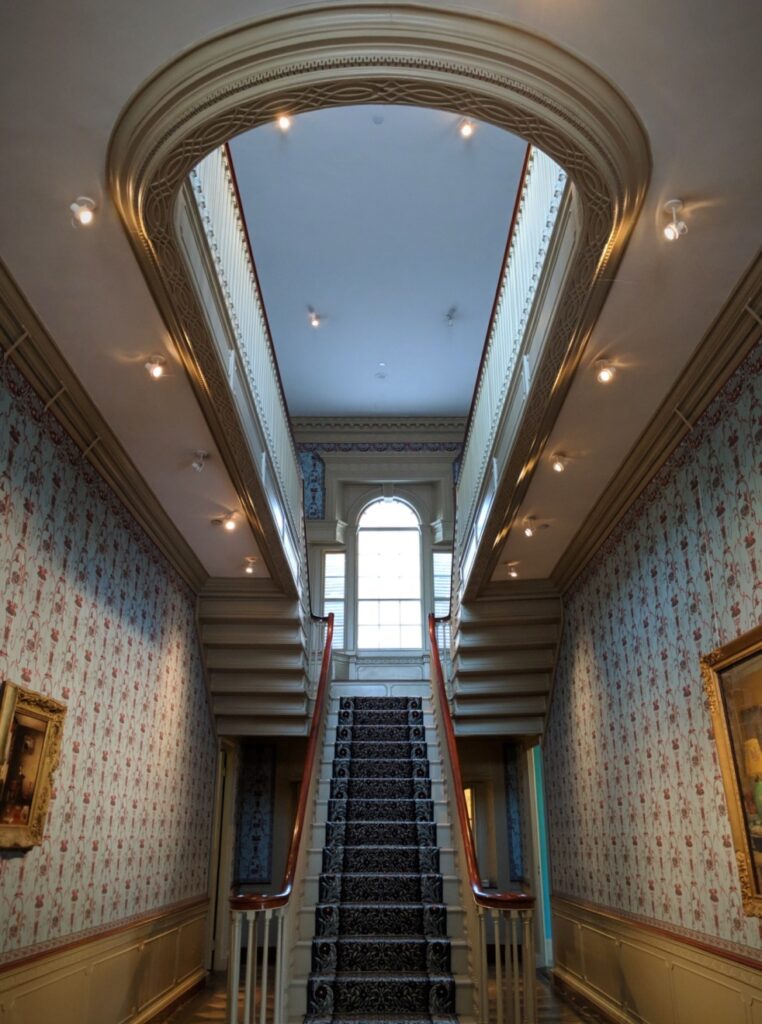
In 2002, the mansion reopened to the public after an extensive restoration. The Portland Museum of Art carefully preserved its original plasterwork, wood trim, and staircases while integrating modern systems. It remains one of Maine’s best surviving examples of early 19th-century design — and one of its eeriest.
The Haunting of Margaret Sweat
It’s said that Margaret Sweat never truly left her beloved home. Museum staff and visitors alike have reported cold drafts and footsteps echoing through empty halls. Some have described the faint rustle of a gown, as if someone were sweeping past them on her way to a long-forgotten soirée.
There are also tales of doors closing on their own and objects shifting slightly between visits, small, unsettling details that defy explanation. In quiet moments, docents have even said they felt a “presence” nearby, a calm but watchful energy in the upstairs rooms.
Locals whisper that Margaret’s spirit lingers because she loved the house too much to part with it. Others say she watches over her legacy — the museum that grew from her generosity. Whatever the truth, her story has become part of Portland’s paranormal folklore, often mentioned in local ghost tours and on lists of Maine’s most haunted historic homes.
What We Found Most Fascinating
When we visited, the mansion’s silence was striking. Despite being connected to the busy art museum, the air inside felt still, almost reverent. The craftsmanship is incredible, from the hand carved mantels to the sweeping staircase that rises elegantly beneath the central skylight.
But what really caught our attention were the subtle moments: a chill that drifted through the hall when no one was nearby, the faint echo of a door closing somewhere distant. Was it just old air moving through a 200-year-old structure, or something else?
The museum doesn’t publicly promote ghost tours, but even as an art space, the McLellan-Sweat Mansion carries an unmistakable sense of memory. Every creak of the floorboards feels like a whisper from Portland’s past.
Visiting the McLellan-Sweat Mansion
Visitors can explore the mansion as part of general admission to the Portland Museum of Art. The home’s restored rooms showcase period furnishings and interpretive displays that tell the story of the families who lived there.
Whether you come for the architecture or the possibility of a spectral encounter, it’s worth the visit. Just be prepared, you might leave feeling like someone watched you from the stairwell as you walked away.
Never trespass on property that isn’t yours or without permission. Ghost hunting can be dangerous, so always use caution and respect any location’s preservation rules.
Sources
Frequently Asked Questions
Where is Mclellan Sweat Mansion located?
Mclellan Sweat Mansion is located at 75 Spring Street, Portland, Maine 04101.
Reader sightings
Nobody has reported anything here yet. If you have been, you would be the first.
Report your own visit to The Haunted McLellan-Sweat Mansion in Portland, Maine
How haunted is this place?
Be the first to rate
Ghost Tours Nearby
 2-Hour Portland Old Port Ghost Walking Tourfrom $29
 Walk With Ghosts in Portlandfrom $33
 Phantoms Penance and Poltergeists Portland ME Ghost Tourfrom $26
Affiliate links: BeyondHaunted may earn a commission, at no extra cost to you.





Leave a Reply