
Reviewed by Josh N · Updated October 20, 2025 · How we verify
Reported Phenomena
- Phantom footsteps
- Objects moving
- Unexplained sounds
Reported by visitors & local legend. Stories, not verified claims.
Address: 235 Lighthouse Way, Crescent City, California 95531
Website: Del Norte County Historical Society
Hours: April–September 10 a.m.–4 p.m. daily; October–March weekends only
Access: Only reachable during low tide, the causeway is submerged when the tide rises.
A Lighthouse Standing Against Time
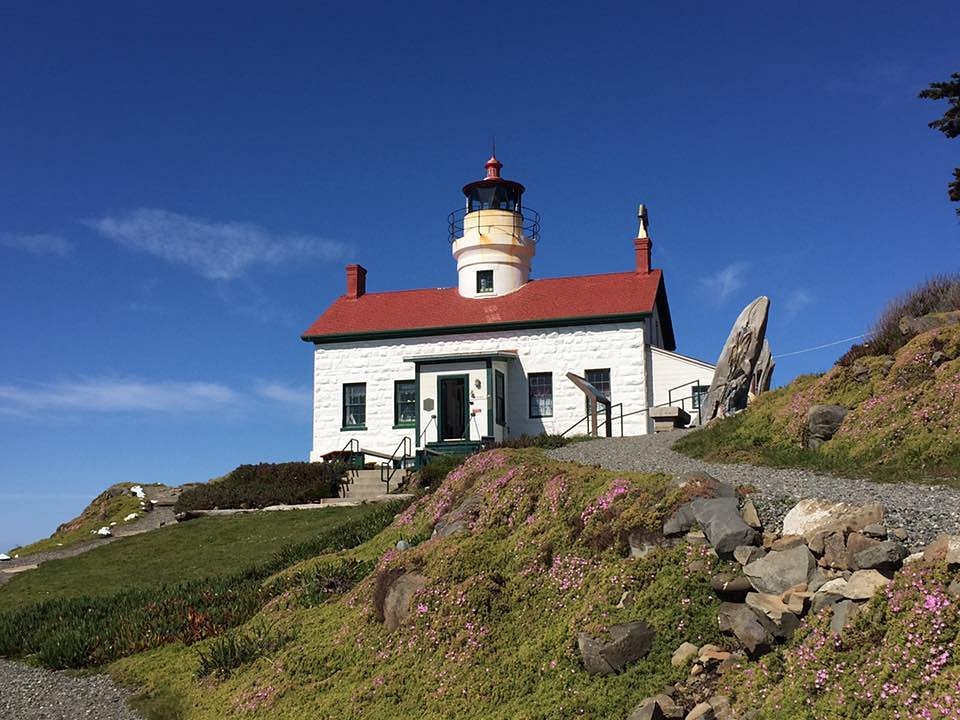
Just off the rocky shoreline of Crescent City, Battery Point Lighthouse rises from a tiny island that disappears beneath the sea each high tide. Built in 1856, it’s one of the earliest lighthouses on the California coast and one of the few where visitors can still step inside a working light keeper’s home.
Congress approved $15,000 for construction, and the light was first lit on December 10, 1856. Its beam guided ships through fog and fierce storms until the U.S. Coast Guard automated it in 1953. The keepers’ quarters, restored with 19th-century furnishings, remain a small museum cared for by the Del Norte County Historical Society.
What’s incredible is that it survived the 1964 tsunami caused by the Alaska earthquake. While much of Crescent City was destroyed, the lighthouse endured, its keepers trapped inside but unharmed as waves smashed into the rocks below. When you stand there today and listen to the roar of the Pacific, it’s easy to picture that terrifying night.
Strange Sounds in the Tower
Locals say the lighthouse never truly quieted down. Visitors have reported footsteps echoing on the spiral stairs when no one else is inside. Several caretakers over the years have claimed that a rocking chair moves on its own, even when the air is still. Others have found slippers or books shifted overnight, as if someone tidied up after closing hours.
One longtime resident keeper recalled waking in the middle of the night to the distinct sound of boots climbing the stairs toward the tower, followed by the faint creak of a door. When he investigated, no one was there, and the entry was locked from the inside.
A few tour guides have described a sudden cold hand on the shoulder or the quiet laughter of a child echoing in the upstairs bedrooms. Whether these sounds come from restless spirits or simply the old wood shifting in the ocean wind, no one can say for sure, but nearly everyone who’s spent a night here agrees the building feels alive.
Visiting Battery Point Lighthouse
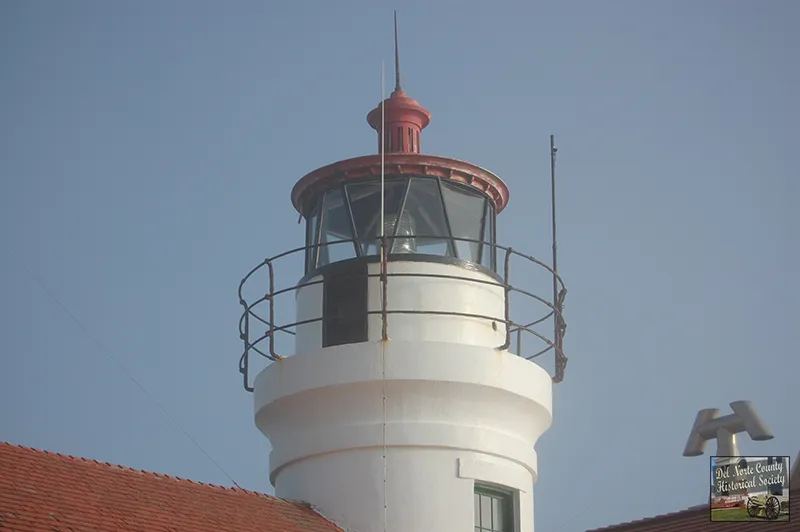
To reach the lighthouse, you’ll need to walk across the rocky isthmus at low tide. Check the tide chart before going; at high tide, the path vanishes beneath the water. Guided tours are small and personal, usually led by volunteers who live on site part of the year. Inside, you can climb to the lantern room for panoramic views and explore rooms filled with original furnishings and maritime relics.
If you’re drawn by the haunted side, late afternoon or early evening visits add an atmospheric touch. As fog rolls in from the Pacific and the light begins to glow through the mist, it’s not hard to imagine the keepers who never left.
We loved how the lighthouse feels more like a home frozen in time than a museum. The smell of salt air, the cramped stairs, and the way the lantern glass still flickers in the sea breeze make the history feel tangible, and maybe, just a bit haunted.
Know Before You Go
- The walkway is not accessible during high tide; plan carefully.
- No ghost hunting equipment or unsupervised exploration is allowed.
- Donations support maintenance and restoration.
- Photography is permitted inside during tours.
- Expect limited cell service and very strong coastal winds.
You should never trespass on private or restricted property, and ghost hunting, especially near water or cliffs, can be dangerous. Always use caution and respect local safety rules when exploring historic sites like this.
Sources
- Del Norte County Historical Society – Battery Point Lighthouse
- LighthouseFriends.com – Battery Point Light (Crescent City)
- Wikipedia – Battery Point Light
- Visit Del Norte County – Haunted Places in Del Norte County
- Spookt – Battery Point Lighthouse
- California Historical Landmarks – CHL No. 951.1
Frequently Asked Questions
Where is Battery Point Lighthouse located?
Battery Point Lighthouse is located at 235 Lighthouse Way, Crescent City, .
Reader sightings
Nobody has reported anything here yet. If you have been, you would be the first.
Report your own visit to The Haunted Battery Point Lighthouse in California
How haunted is this place?
Be the first to rate
Leave a Reply