
Reviewed by Josh N · Updated September 20, 2025 · How we verify
This article explains the background, practical steps, cultural considerations, and limitations of cleansing a space with sage. It is for informational purposes only—not medical, legal, or professional advice. If you’re struggling with anxiety, grief, or unsafe conditions, seek help from appropriate professionals.
TL;DR
Burning sage (often called smudging) is widely used as a symbolic cleansing ritual. It can reduce odors and provide a calming, mindful atmosphere. Historically, it comes from Indigenous and First Nations spiritual traditions where sage is one of several sacred medicines. If you want to practice respectfully, learn the cultural roots, use sustainably sourced sage, or adapt with non-appropriative alternatives (such as incense, saltwater, or prayer in your own tradition). Evidence suggests sage smoke has antimicrobial properties and the ritual can lower stress, but it should not replace ventilation, cleaning, or medical care.
Table of Contents
- What Is Sage Cleansing?
- Cultural & Historical Origins of Smudging
- Practical Benefits of Sage Smoke
- Step-by-Step Guide: Cleansing a House with Sage
- Safety Considerations
- Respectful Sourcing & Cultural Sensitivity
- Alternatives If You Don’t Want to Use Sage
- Quick FAQ
1) What Is Sage Cleansing?
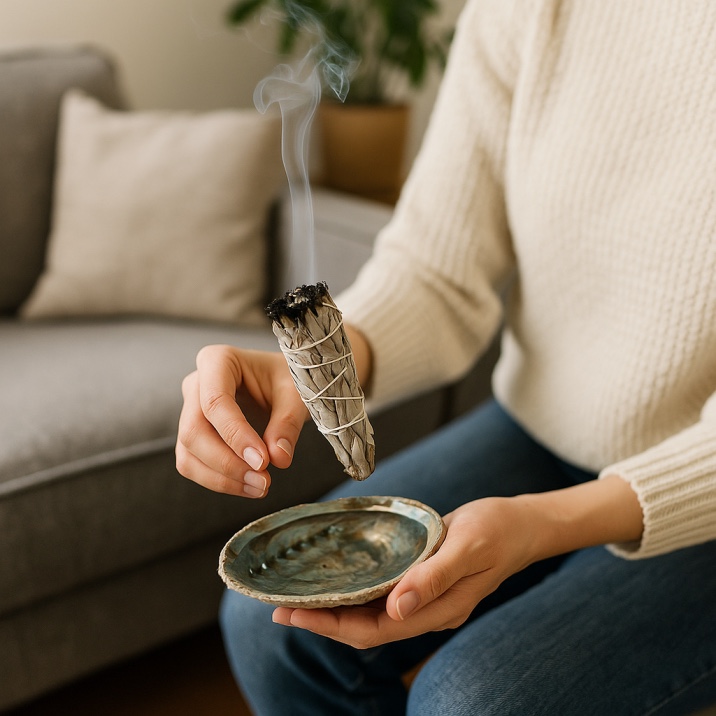
Sage cleansing (or smudging) refers to burning bundles of dried sage leaves and wafting the smoke around a home or person. In popular culture, it is said to “clear negative energy,” though in spiritual traditions the meaning is deeper: it is about purification, prayer, and inviting balance.
2) Cultural & Historical Origins of Smudging
- Smudging is a sacred Indigenous ceremony, practiced by many Native American and First Nations peoples. It often uses sage, sweetgrass, cedar, and tobacco, not just sage alone.
- In these traditions, the ritual is tied to prayers, community, and cultural teachings—not just as a “home fragrance.”
- Over-harvesting of white sage (Salvia apiana) has raised sustainability concerns, as wild populations are under pressure from commercial demand.
If you are not Indigenous, approach this practice with respect and awareness. Learn about its origins, credit the cultures who developed it, and consider whether alternatives may be more appropriate.
3) Practical Benefits of Sage Smoke
- Antimicrobial effects: Studies show burning sage releases compounds with antimicrobial properties, helping reduce airborne bacteria.
- Psychological benefits: The act of intentional ritual—slowing down, breathing deeply, focusing—can reduce stress and anxiety.
- Symbolic reset: The visible smoke provides a tangible “reset moment,” which many people find grounding.
But remember: sage smoke is not a substitute for cleaning, ventilation, or medical-grade air purification.

4) Step-by-Step Guide: Cleansing a House with Sage
Here is a simple, respectful outline:
- Gather tools: a sage bundle (preferably ethically sourced), a fireproof bowl or shell, and a lighter/matches.
- Prepare the space: open a window or door for ventilation—smoke needs somewhere to exit.
- Set intention: silently or aloud, state your purpose (e.g., “I release stress and invite peace”).
- Light the sage bundle: let it catch fire briefly, then blow out so it smolders.
- Walk the space slowly: guide smoke into corners, around doorways, and near mirrors—areas people often focus on.
- Use a feather or hand to waft smoke: avoid shaking the bundle, which can drop embers.
- Finish safely: extinguish in sand, dirt, or a fireproof dish—never leave it burning unattended.
5) Safety Considerations
- Always ensure good airflow; inhaling dense smoke can irritate lungs.
- Keep a bowl of sand or water nearby to extinguish embers.
- Avoid around pets or individuals with asthma or respiratory conditions.
- Do not leave burning sage unattended—treat it like a candle.
6) Respectful Sourcing & Cultural Sensitivity
- Buy from Native-owned businesses or reputable, sustainable suppliers.
- Avoid mass-market white sage harvested without permission.
- Acknowledge the practice’s Indigenous roots when you use it.
7) Alternatives If You Don’t Want to Use Sage
- Herbs in your own tradition: rosemary, lavender, or incense.
- Salt water cleansing: sprinkle at thresholds or wipe down surfaces.
- Sound cleansing: bells, chimes, or singing bowls.
- Mindful cleaning: decluttering and airing out a space can create the same psychological reset.
8) Quick FAQ
Q: Can sage really remove negative energy?
A: Scientifically, sage reduces microbes and odors. Spiritually, its meaning depends on your tradition. The “energy” shift is often psychological, not measurable.
Q: Is burning sage cultural appropriation?
A: Using sage without acknowledgment or respect for Indigenous traditions can be seen as appropriation. To avoid this, credit the practice’s origins, use sustainable sources, and consider alternatives rooted in your own culture.
Q: How often should I cleanse with sage?
A: There’s no set rule—some do it seasonally, during stressful times, or after major life changes. The important part is intention and respect.
Cultural & Ethical Context
UMass Native Advisory Council – Smudging and Sacred Medicines
https://www.umass.edu/nativecouncil/smudging-sacred-medicines
Native American Rights Fund – Cultural Appropriation of Spiritual Practices
https://narf.org/cultural-appropriation
Scientific & Practical Information
Journal of Ethnopharmacology – Medicinal Smoke Reduces Airborne Bacteria
https://doi.org/10.1016/j.jep.2006.03.018
Verywell Mind – What Is Smudging? Benefits, Meaning, and How to Do It
https://www.verywellmind.com/what-is-smudging-5189055
Healthline – How to Smudge Your House to Clear Negative Energy
https://www.healthline.com/health/benefits-of-burning-sage
Bottom Line
Cleansing your house with sage can be a meaningful symbolic reset, offering psychological and sensory benefits. To do it well: prioritize safety, respect cultural roots, and use ethical sources. And remember—sage is not a substitute for good cleaning, ventilation, or professional help when needed.
Reader sightings
Nobody has reported anything here yet. If you have been, you would be the first.




Leave a Reply