
Reviewed by Josh N · Updated April 20, 2026 · How we verify
Reported Phenomena
- Phantom footsteps
- Unexplained sounds
Reported by visitors & local legend. Stories, not verified claims.
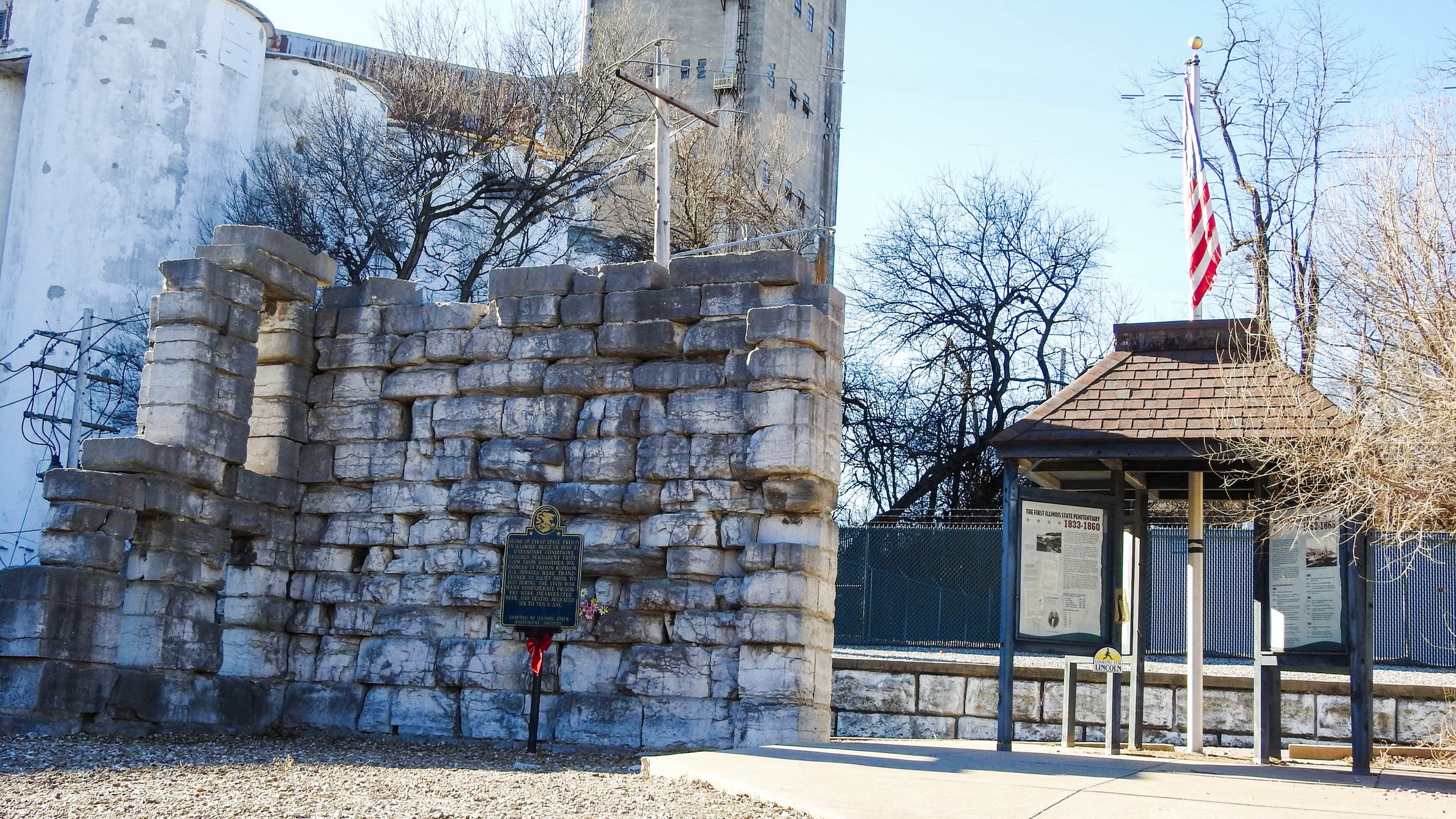
Location: the surviving prison site is commonly listed at 214 William Street, Alton, IL 62002, while Illinois tourism materials also describe it as Williams Street at Broadway in Alton. What visitors see today is not the full prison, but the remaining wall and memorialized site of the old penitentiary.
Alton Military Prison is one of those places where the history is so bleak that the haunting stories almost feel inevitable. Long before it gained a reputation as one of Alton’s eeriest locations, it was already infamous for overcrowding, disease, miserable sanitation, and death. That part is not legend. It is documented history.
What was the Alton Military Prison?
The site began as the first Illinois State Penitentiary, opening in 1833. It started with just 24 cells, later expanded to 256, and quickly developed a terrible reputation. The prison had drainage problems, poor ventilation, inadequate heat, and chronically unhealthy conditions. Reformer Dorothea Dix even urged Illinois lawmakers to abandon it because of how bad conditions were.
After Illinois moved prisoners to Joliet in 1860, the old Alton prison did not stay empty for long. During the Civil War, Union authorities reopened it as a military prison. The first Confederate prisoners arrived on February 9, 1862, and over the next three years more than 11,700 Confederate prisoners passed through the site. The prison also held civilians accused of disloyalty, guerrillas, and other detainees.
Why the prison became so deadly
Alton was already an unhealthy place to confine people before the war. The Civil War only made it worse. Overcrowding, poor sanitation, bad food, inadequate clothing, and harsh Midwestern weather all took a heavy toll on prisoners. Historical sources describe rats running over men at night, severe congestion inside the cells, and frequent disease outbreaks.
Smallpox became the prison’s most feared killer. The outbreak began in 1862 and peaked in the winter of 1863 to 1864. To try to contain it, authorities isolated infected prisoners on an island in the Mississippi River, variously known as Tow Head Island, Sunflower Island, or later Smallpox Island. Many who died there were buried on the island itself, and the exact burial locations were later lost to erosion and flooding.
The death toll is part of what has kept the prison in local memory for so long. Federal cemetery materials state that the names of 1,354 Confederate soldiers who died in the prison or on Tow Head Island were later inscribed on the obelisk at North Alton Confederate Cemetery. Other official interpretive materials describe the number of dead more broadly as nearly 1,300 or over 1,300, which shows how hard exact wartime totals can be to pin down across different records.
What remains today
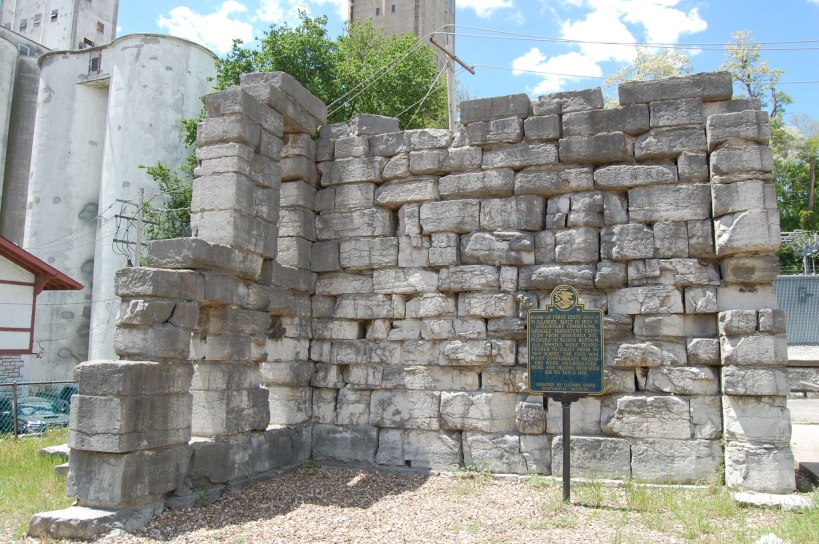
The prison itself is gone. The buildings were torn down after the war, and stone from the complex was reused elsewhere in Alton. What survives is a fragment of the old wall at the prison site, plus the North Alton Confederate Cemetery, where many of the dead are commemorated. That remaining wall is the physical reason this place still hits people so hard. It is not a reconstruction. It is an actual piece of the old prison.
If you visit, these are the key pieces of the story to keep in mind:
- It started as Illinois’s first state penitentiary in 1833.
- It reopened as a Union military prison during the Civil War in 1862.
- More than 11,700 Confederate prisoners passed through the site.
- Disease, especially smallpox, was one of the prison’s deadliest forces.
- The surviving wall in downtown Alton is the only visible remnant of the prison itself.
Why people believe Alton Military Prison is haunted
This is where history and folklore start to overlap. The brutal conditions, mass death, and the prison’s place in Alton’s wider haunted reputation have made it a magnet for ghost stories for generations. Alton itself is regularly promoted as one of America’s most haunted small towns by tourism outlets and ghost-tour operators, and the old penitentiary is one of the sites that comes up again and again.
One of the oldest prison-related ghost reports tied to the site goes back to 1889. A Madison County collection of historical ghost accounts preserves a period item titled “Ghost of the Alton Prison,” which says a “ghost with the lockstep” was heard near the old prison. That is important because it shows the haunting reputation did not appear recently for tourism. It was already attached to the prison site in the nineteenth century.
Later sources continued that pattern. Regional haunted-history coverage has described the old Alton Military Prison site as a place linked to reports of sounds, footsteps, and voices, while travel and ghost-tour materials still treat the old penitentiary as one of Alton’s core haunted locations. Some writers and tour operators go further, describing people seeing or hearing multiple spirits around the prison ruins and nearby areas connected to the prison dead. Those claims should be treated as reported experiences, not proven facts, but they are part of the location’s long-standing folklore.
True-life ghost encounters and reported phenomena
No one can prove a haunting at Alton Military Prison. But there are a few reported experiences that are part of the site’s documented lore:
- In 1889, a ghost story connected to the old prison described a “ghost with the lockstep” being heard near the site.
- Modern haunted-history and tour sources continue to associate the ruins with reports of footsteps, voices, and unexplained sounds.
- Some regional paranormal and travel writing has gone further, claiming that visitors have seen or heard spirits around the ruins and in places tied to the prison dead, including the cemetery and old prison grounds.
That mix of hard history and long-running witness stories is exactly why the prison still stands out. Even skeptics usually agree on one thing. The site has an atmosphere.
Is Alton Military Prison worth visiting?
Yes, especially if you care more about real history than overproduced ghost theatrics. This is not a preserved cellblock experience. It is a ruin. A scar in stone. But it is tied to one of the grimmest Civil War prison stories in the Midwest, and the surviving wall gives the history a physical weight that many markers and monuments do not have.
For paranormal travelers, the draw is obvious. For history readers, the site matters because it shows how a badly designed antebellum prison became a wartime death trap. In Alton, those two threads have been tangled together for more than a century.
Please never trespass on property that is not yours without permission, and remember that ghost hunting can be dangerous, so always use caution.
Sources
- Madison County Historical Society, The Alton Military Prison
- American Battlefield Trust, Alton Military Prison Site
- Enjoy Illinois, Confederate Prison Site
- Illinois Department of Corrections, History
- U.S. Department of Veterans Affairs, North Alton Confederate Cemetery
- U.S. Department of Veterans Affairs Interpretive Sign, North Alton Confederate Cemetery
- Madison County ILGenWeb, Paranormal, including “Ghost of the Alton Prison”
- Great Rivers & Routes, Alton Hauntings Tours
- Great Rivers & Routes, Why Alton is America’s Most Haunted Small Town
Frequently Asked Questions
Where is Alton Military Prison located?
Alton Military Prison is located at 214 William Street, Alton, IL 62002.
Reader sightings
Nobody has reported anything here yet. If you have been, you would be the first.
Report your own visit to Alton Military Prison in Illinois: History, Death, and the Ghost Stories That Followed
How haunted is this place?
Be the first to rate
Ghost Tours Nearby
 St Louis Ghost Tours: Sinister Sins & Shadows Ghost Tourfrom $26
 St. Louis Haunted Pub Crawl Ghost Stories and Drinksfrom $35
 Lemp Haunted Neighborhood Walking Tourfrom $25
Affiliate links: BeyondHaunted may earn a commission, at no extra cost to you.
Leave a Reply