

Reviewed by Josh N · Updated October 16, 2026 · How we verify
Reported Phenomena
- Balcony apparition
- Footsteps in empty hallways
- Doors opening alone
- Cold spots backstage
- Flickering balcony lights
- Feeling of being watched
Reported by visitors & local legend. Stories, not verified claims.
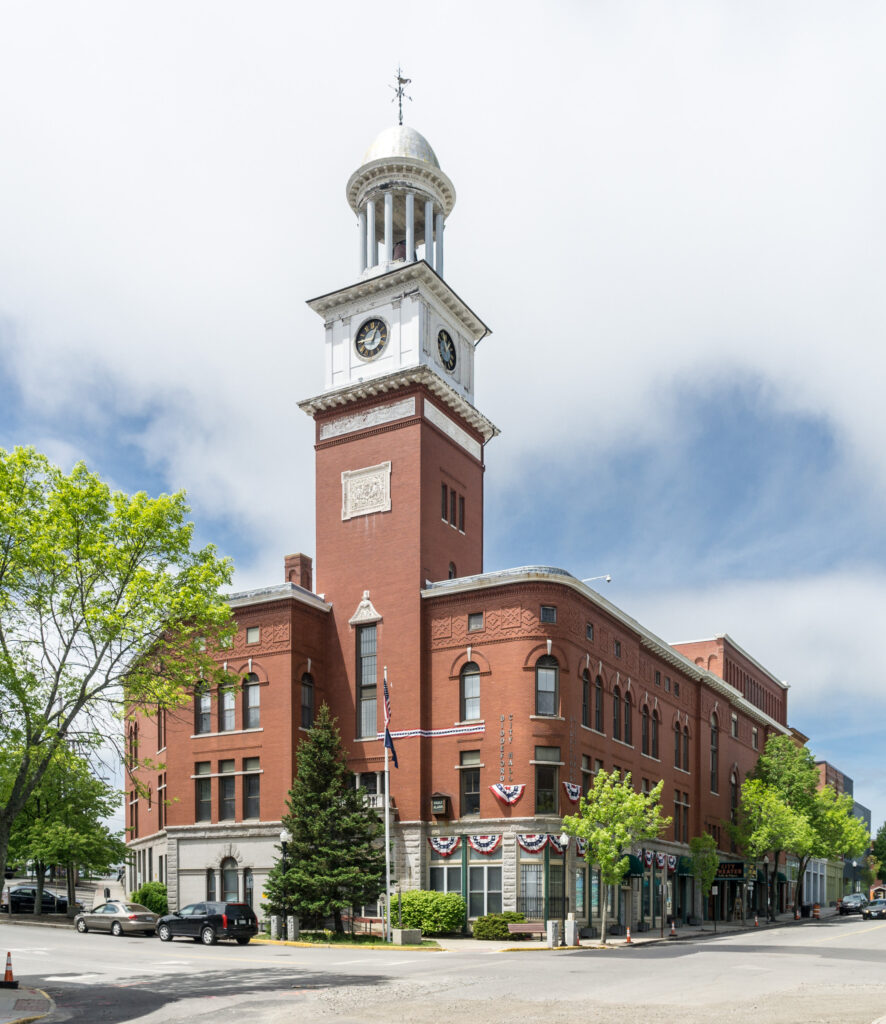
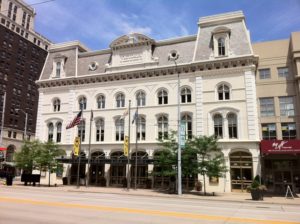
Biddeford City Theater occupies the performance wing of the Biddeford City Hall complex in southern Maine, and almost everything people say about its ghost comes back to one night in 1904 and one singer who did not survive her encores. The building itself is a restored Victorian opera house seating close to 500, run by a non-profit, volunteer-driven organization that fills the calendar with plays, musicals, concerts, movies, comedy and dance. The ghost story is older than the restoration, and it is the kind that theater people carry forward long after the newspapers have lost interest.
The Theater at 205 Main Street in Brief
- Where: 205 Main Street, Biddeford, Maine, as part of the Biddeford City Hall complex
- First opera house on the site: opened October 1860
- Destroyed by fire: December 30, 1894
- Rebuilt and reopened: January 20, 1896, to a design by Maine architect John Calvin Stevens
- Capacity: near 500 seats
- Listed: on the National Register of Historic Places, and a contributing element to the Biddeford Main Street Historic District
- Status: open and operating year-round
An Opera House Built on the Eve of the Civil War
In the late 1840s the City of Biddeford bought a parcel at the corner of Adams and Main Streets and planned a building to hold its municipal offices along with an opera house. That first house opened in October 1860 with a play depicting slavery in the Southern states, which was timely to the point of discomfort: the Civil War was months away.
What followed was a genuine run of national talent passing through a mill city in York County. Edwin Booth appeared here. So did Joseph Jefferson and Pat Rooney. Vaudeville made Biddeford an important stop on its circuit, and the Barrymores took the stage alongside minstrel shows, community pageants and straight drama. A local director and actor named J. J. Salvas drew capacity crowds with his character turns, including his role as Tonkoutou. Illustrated songs, the slide-and-singer format that bridged stage and screen, were a staple.
The Fire of December 30, 1894
A raging fire destroyed the entire city building on December 30, 1894. An emergency city council meeting was called for January 2, 1895, and from that first session onward the question of whether to rebuild the opera house at all was hotly debated. Municipal offices were a necessity. A performance hall was an argument.
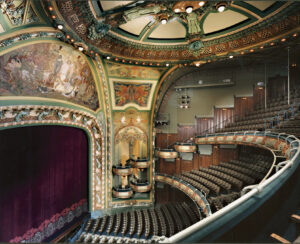
The arts won. John Calvin Stevens designed a richly ornamented replacement in the colonial revival style, with a dramatic horseshoe balcony, stenciled ceilings and a large ornate brass chandelier hung with glass shades. The rebuilt opera house reopened on January 20, 1896, and resumed its place as a cultural focal point for the county. That horseshoe balcony is worth noting now, because it is the part of the room that most of the modern ghost reports attach themselves to.
Eva Gray’s Third Encore, Halloween Eve 1904
This is the incident at the center of the theater’s folklore, and unlike most haunted-building stories it has a name, an age and a song attached to it.
On Halloween Eve, 1904, the singer Eva Gray collapsed after her third encore of Goodbye, Little Girl, Goodbye. She was 33. Her three-year-old daughter was present. Gray died backstage of heart failure, and ever since, people connected with the building have referred to Eva as the theater’s resident ghost.
Keep the two halves of that separate. The death is part of the theater’s recorded history, specific and dated. The identification of a presence in the building as Eva Gray is folklore, an interpretation laid over later experiences by people who knew the story. No investigation has demonstrated a connection between the 1904 death and anything reported in the building since. What the story does explain is why a figure glimpsed in a balcony seat gets a name instead of a shrug.
What Staff and Performers Say Happens After Hours
The accounts gathered from performers, crew and staff follow the pattern common to working theaters, and none of it is verified. These are reported experiences, not established events:
- Footsteps in empty hallways and stairwells
- Doors opening or closing on their own backstage
- Cold spots near the balcony and the dressing rooms
- Unexplained noises when the building is otherwise empty
- A seated figure reported in the balcony when nobody else is in the house
- Lights flickering in the balcony area without an obvious electrical cause
- The sensation of being watched by performers alone on stage during late rehearsals
The skeptical reading is not hard to assemble. This is a brick building from 1896 with original equipment still in service above the stage, including most of the pulleys and the pin rail of the fly system. Old timber and plaster move with temperature. Air travels through backstage passages and stairwells. A rigging system more than a century old makes noise that nobody in the house can place. None of that rules anything out, and none of it has ever been tested here under controlled conditions. The honest summary is that the stories have circulated among local theater people for decades and have become part of how the building is described.
From Movie House to Horseshoe Pit and Back
The theater’s decline is well documented, and it is uglier than most. When talkies arrived in 1928 live performance was nearly eclipsed, and the opera house became a movie house in the 1930s. It was renamed City Theater in 1955, when the lobby and staircase were paneled, display cases and a projection booth were built, and a permanent cinemascope screen went in. Television and drive-ins finished the job, and City Theater closed its doors in 1965. From 1971 to 1974 the city used it for storage. In 1973, with the building serving as a warehouse, City Theater was recognized as part of Biddeford City Hall and listed as a Historical Landmark with the National Trust. In 1975 a load of sand was dumped into the middle of the place, turning the orchestra pit into a horseshoe pit.
City Theater Associates incorporated in 1977 and set out to reopen the building. It came back in 1978 with the internationally acclaimed Norman Luboff Choir, still badly in need of comprehensive work. The theater marked its centenary in 1996 and received a gift of new seats from the city, after which federal, state, municipal, private and business funding drove a real restoration: a new marquee, restored and reproduced stenciling on the lobby walls, house walls and ceiling, modern lighting and sound, a digital projector, and new heating and air conditioning. Work continues on the stage floor, the costume room, the restrooms, the exterior brick pointing and that original fly system.
Seeing a Show at Biddeford City Theater
There is no ghost tour here and no need for one. This is an operating, volunteer-driven non-profit venue running a year-round season of theater, music, comedy and film, drawing audiences from across New England, and buying a ticket is the straightforward way inside. Five main stage productions anchor the schedule, supplemented by collaborations with other non-profits and entertainment organizations. Check the current season before traveling, since a community theater’s calendar is not a museum’s opening hours.
Go for the room. The horseshoe balcony, the stenciling and the brass chandelier are the point, and they are the reason this building survived storage, sand and a demolition-by-neglect era that killed hundreds of comparable opera houses. If you find yourself glancing up at the balcony between scenes, you will be in good company. Just do not expect the theater to sell you proof, and do not go looking around the building after hours uninvited: the backstage of a 19th century theater is a working industrial space, and the staff have better things to do than retrieve visitors from the fly rail.
Sources
- City Theater in Biddeford to host film festival
- City Theater
- City Theater (Biddeford, ME)
- A backstage look at a thriving Biddeford community theater
- NPGallery Asset Detail (National Park Service)
- Wikipedia: City Theater (Biddeford, Maine)
Frequently Asked Questions
Where is Biddeford City Theatre located?
Biddeford City Theatre is located at 205 Main Street.
Can you visit Biddeford City Theatre?
Biddeford City Theatre is open to the public. Always follow posted rules and respect private property.
Reader sightings
Nobody has reported anything here yet. If you have been, you would be the first.
Report your own visit to The Third Encore: Eva Gray and Biddeford City Theater
How haunted is this place?
Be the first to rate
Ghost Tours Nearby
 2-Hour Portland Old Port Ghost Walking Tourfrom $29
 Walk With Ghosts in Portlandfrom $33
 Phantoms Penance and Poltergeists Portland ME Ghost Tourfrom $26
Affiliate links: BeyondHaunted may earn a commission, at no extra cost to you.
Nearby Haunted Locations
- 1Captain Lord Mansion Kennebunkport Maine Haunted History and Ghost StoriesMaine8.1mi
- 2The Ghost Ship of Casco BayMaine15mi
- 3Seguin Island Lighthouse and the Piano That Played One TuneMaine23mi
- 4Fort Popham in Phippsburg, MaineMaine23mi
- 5Blaine House GhostsMaine24mi
- 6Ghosts of the Kennebec ArsenalMaine25mi

Leave a Reply