

Reviewed by Josh N · Updated October 21, 2026 · How we verify
Reported Phenomena
- Strange noises upstairs
- Disembodied voices
- Cold spots in attic
- Sounds of movement overhead
- Feelings of oppression
Reported by visitors & local legend. Stories, not verified claims.
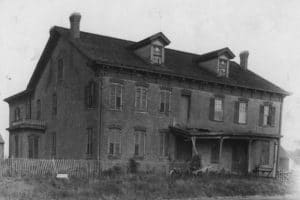
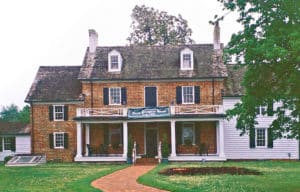
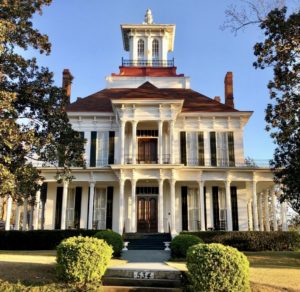
Stand on the ridge above the Saline River bottoms in Gallatin County, Illinois, and the building at the top of the hill looks like any other antebellum farmhouse grown rich: a wide front, a double gallery of columns, a long view over fields. The Old Slave House, properly the Crenshaw House, earned its reputation not from the rooms visitors could see but from the twelve small chambers under its roof. Built in the 1830s by a man who was one of the few people in a free state legally permitted to hold slaves, it is the only building the National Park Service has recognized for its role in the Reverse Underground Railroad: the traffic that carried free black people and escaped slaves back into bondage.
- Also known as: Crenshaw House, Crenshaw Mansion, Hickory Hill
- Where: Equality Township, Gallatin County, southern Illinois
- Built: 1830s, with the mansion raised on Hickory Hill in 1838 by John Hart Crenshaw and his brother Abraham
- Recognized: 2004, named by the National Park Service as part of the Underground Railroad National Network to Freedom program for its place in the Reverse Underground Railroad
- Current access: closed to the public since 1996, owned by the state of Illinois since December 2000
Salt, Loopholes and the Fortune of John Hart Crenshaw
The house exists because of salt. The Illinois Salines, two saline springs along the Saline River near Equality, had been worked since prehistoric times, and salt was a frontier necessity: a nutrient, and the only practical way to preserve food. Illinois entered the Union as a free state and its constitution bans slavery, but the law carved out an exception for the salt works, on the reasoning that the labor was so brutal no free man could be found to do it.
John Hart Crenshaw leased those state-owned salt works, and the lease made him one of a tiny minority of Illinois residents legally entitled to keep slaves. He became remarkably wealthy on it. At one point his tax bill alone amounted to one-seventh of the revenue of the entire state. He owned thousands of acres outright on top of the 30,000 acres he leased from Illinois, and more than 700 slaves passed through his control. In 1838 he and his brother Abraham turned that money into the mansion on Hickory Hill, a few miles from the salt works near the town of Junction. It was the main residence for Crenshaw, his wife and their five children.
The Twelve Attic Rooms and the Reverse Underground Railroad
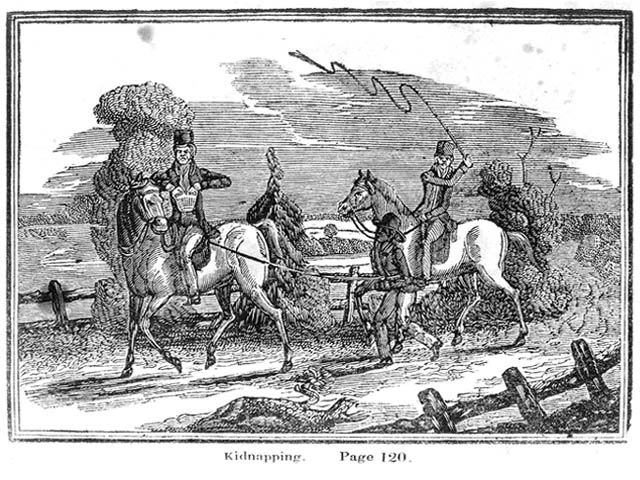
This is the part of the record that matters, and it is documented rather than whispered. The third-floor attic of the Crenshaw House contains twelve rooms, long believed to be the site of a secret slave jail where Crenshaw held kidnapped free black people and captured runaways before moving them south for sale.
Crenshaw was indicted by a grand jury for kidnapping twice. The first indictment came in the mid-1820s and its outcome is unknown. The second came in 1842, and a trial jury acquitted him. The victims in that case, Maria Adams and her seven or eight children, ended their lives as slaves in Texas. In 1828 Crenshaw took Frank Granger and fifteen others downriver to Tipton County, Tennessee, and sold them. The same year he kidnapped a woman named Lucinda and her children, who ended up in Barren County, Kentucky. Contemporary letters identifying Crenshaw’s role back both cases. In the 1840s he kidnapped Peter White and three others, who were sold into slavery in Arkansas and later rescued.
One nuance is worth keeping straight, because popular retellings blur it. Crenshaw family accounts drew a distinction between the plantation’s household servants and field hands on one side and the victims of Crenshaw’s criminal trafficking on the other. The attic rooms are often described simply as slave quarters; the darker and better supported reading is that they served the kidnapping business.
In 2004 the National Park Service named the mansion, under the name The Old Slave House, as a station on the Reverse Underground Railroad, acknowledging Crenshaw’s practice of seizing free black people in Illinois and selling them in the slave states.
The Night Abraham Lincoln Slept Upstairs
In September 1840, Abraham Lincoln, then a state representative, spent more than a week in Gallatin County attending debates at Shawneetown and Equality. The Crenshaws threw a ball in honor of the occasion, held on the second floor, which had been designed to convert into a ballroom: the hall and two of the rooms were built with moveable partitions for exactly that purpose.
Lincoln and the other male guests stayed the night in the southeast bedroom. The room held one bed and two chairs. The bed was shorter than Lincoln, so he either folded himself onto it, spread out across the two chairs, or slept on the floor. However he managed it, he slept one floor below the attic.
After Crenshaw: The Sisk Family and a Thrilling Experience
Crenshaw and his family moved into nearby Equality in 1850, hiring a German family to live in the house and work the farm. He sold the property in 1864, died in 1871, and was buried in the Hickory Hill Cemetery.
By 1913 the house belonged to the Sisk family, who grasped immediately what they had. They opened it for paid public tours, advertising "a thrilling experience," and ran it as an attraction for most of the twentieth century. George Sisk, Jr. retired in 1996 and closed the museum. In December 2000 the family sold the house and ten acres to the state of Illinois for $500,000.
Strange Noises Upstairs: What People Have Reported
None of the following is verified, and none of it should be mistaken for the historical record above. It is what people have said.
The oldest thread is the most striking, because it does not come from the ghost tour era at all. Stories of strange noises coming from upstairs, attributed to Crenshaw’s victims, date to 1851, within a year of the family moving out of the house.
During the decades the Sisk family ran the property as a museum, the reports that accumulated from visitors and staff followed a consistent pattern:
- Voices, moans and whispering heard on or above the third floor with no one present
- Sudden cold in the attic corridor and in the narrow rooms off it
- Sounds of movement, shuffling or dragging, overhead
- A feeling of pressure, nausea or being unable to stay in the attic
Treat the attic reports with the care the place deserves. Visitors climbed those stairs already knowing what the rooms were used for, in an unlit top floor under a metal and timber roof that expands and contracts with the weather. That context does not refute anyone’s experience, but it is the first thing a careful reader should weigh. There is no documented investigation that has established anything paranormal here, and the house’s real horror requires no ghost to carry it.
Can You Visit the Old Slave House?
Not at present. The Crenshaw House has been closed to the public since 1996 and remains closed while the state of Illinois decides its future. Reopening would require renovations and repairs, a new road and parking lot, and a separate building to house restrooms, with the total estimated at a minimum of $7 million.
Anyone making the drive into Gallatin County should go expecting a view from the public road and nothing more. The property is state-owned and off limits, and walking onto it is trespassing. Ghost hunting can be dangerous, and no story is worth entering a closed, unmaintained building or a restricted site without permission.
See The Old Slave House for Yourself
Sources
- McLeansboro.com "A piece of history fading out – by Spencer Cramer"
- Explore the Network: NTF Candidate Application (National Park Service)
- Old Slave House
- NPGallery NRHP Archive Search (National Park Service)
- Foster's Satchel
- Wikipedia: Crenshaw House (Gallatin County, Illinois)
Frequently Asked Questions
Can you visit The Old Slave House?
The Old Slave House is on private property and best viewed from a distance. Always follow posted rules and respect private property.
Reader sightings
Nobody has reported anything here yet. If you have been, you would be the first.
Report your own visit to Hickory Hill and the Old Slave House of Gallatin County
How haunted is this place?
Be the first to rate
Leave a Reply