

Reviewed by Josh N · Updated September 20, 2026 · How we verify
Reported Phenomena
- Rose perfume scent
- Stage apparition
- Rustling petticoat sound
- Unexplained sounds
- Cold, heavy atmosphere
- Unexplained physical contact
- Figure on stage curtain
Reported by visitors & local legend. Stories, not verified claims.
Dayton’s Victoria Theatre has been burned, flooded, renamed five times and marked for the wrecking ball, and it is still selling tickets. The building at the north end of Main Street in downtown Dayton, Ohio, first opened its doors on New Year’s Day, 1866, which makes it one of the oldest continually operated theaters on the continent. Its ghost stories are much younger than its history, and much harder to pin down, but they have attached themselves to the place firmly enough that staff, performers and audiences still trade them.
Quick Facts About the Victoria
- Opened: January 1, 1866, as the Turner Opera House
- Current capacity: 1,154 seats, 635 in the orchestra and 519 in the balcony
- Listed: National Register of Historic Places, after a 1975 campaign to stop its demolition
- Operated by: Dayton Live, formerly the Victoria Theatre Association
- Reported ghosts: “Vicky,” “Lucille,” and an unidentified man associated with the stage curtain
Turner Opera House, Music Hall, Grand, Victory, Victoria
The first night’s bill was Virginius, the James Sheridan Knowles play, starring Edwin Forrest, an actor so closely identified with the role that the booking was a statement of ambition. Press of the period called the new house “the best theater west of Philadelphia.” Dayton was proud enough of it that Edward Spoth published a musical march named after the opera house.
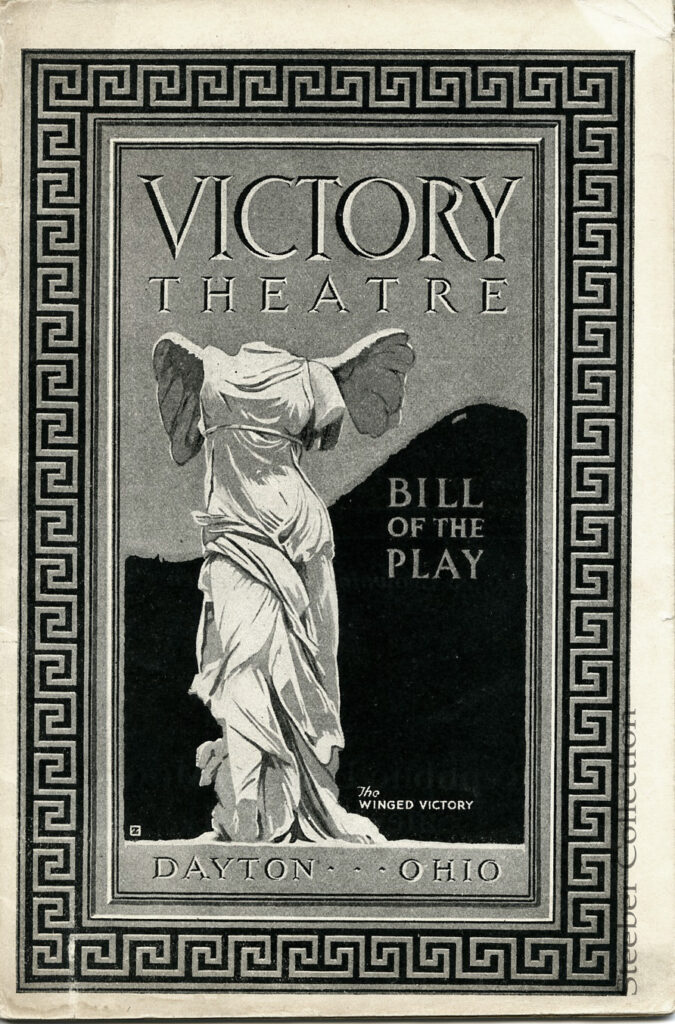
That first building lasted three and a half years. Arson was suspected in the fire of May 16, 1869, which consumed the theater at a loss of $500,000, only $128,000 of which was insured. The rebuilt house opened in 1871, using part of the surviving facade but rising three stories instead of the original six, and reopened under a new name, The Music Hall. It became The Grand Opera House in 1885. On September 18, 1899, it was rechristened the Victoria Opera House, and in 1903, two years after the death of Queen Victoria, it settled on the Victoria Theatre.
The names kept coming. The Great Dayton Flood of 1913 tore through the region and swamped the ground floor, forcing an interior rebuild. On January 16, 1918, fire struck again and gutted portions of the building. Wartime material shortages delayed the work, so it was only after the Armistice that the theater reopened, in 1919, as The Victory Theatre, a name chosen to mark the American war effort. Under that banner it served for decades as a national embarkation point for traveling theater and stock companies. Al Jolson, the Marx Brothers, Helen Hayes, Fannie Brice, George M. Cohan, Gertrude Lawrence, Alfred Lunt, Lynn Fontayne and Harry Houdini all worked the stage.
Talking Pictures, Midnight Movies and a Proposed Parking Lot
In 1930 the Victory was outfitted for talking pictures and continued as a full service cinema. Through the 1950s and 1960s it ran Walt Disney releases and other studios’ family fare. By the late 1960s, downtown Dayton was losing business to freeways and suburban malls, and in 1975 the theater was slated for demolition to make room for a parking lot. Public outcry that year won the building a listing on the National Register of Historic Places and saved it. Parts of the structure were in poor condition, and a group of young volunteers raised money and did the early renovation work themselves.
The 1970s house was a hybrid: legitimate theater, rock concerts, movies, and home to the Dayton Ballet Company. Its Friday and Saturday “Midnight Movies,” programmed by a local independent producer, pulled a largely teenage crowd for counter-cultural films. During the revitalization push at the end of the decade, stage manager Gary Kuzkin overhauled the technical systems, and crews from the local Stagehands Union restored the ancient hemp-and-sandbag fly gallery, replacing several hundred thousand feet of rope along with miles of wiring. In 1978, National Cash Register donated equipment and stage draperies from its doomed auditorium, along with a historic five-rank Estey pipe organ that enthusiasts renovated and installed. In 1986, Virginia Kettering gave $7 million toward a downtown arts center on the condition that it include the Victory and sit within the same block.
The Tunnels Beneath Main Street
The building sits above a network of access tunnels that once ran several blocks beneath the city streets. The story attached to them is that in the vaudeville era, circus animals were unloaded from railroad cars blocks away and held underground until showtime. Much of the network was still accessible to employees as late as 1979, though city steam pipes had sealed off some sections. The stage itself still carried remnants of its original gas footlights. None of this is ghost lore, but it is the sort of detail that feeds it: a theater with a dark, half sealed underside tends to accumulate stories about what else might be down there.
Vicky, Lucille and the Figure on the Curtain
The theater’s best known ghost is “Vicky,” described in local tradition as an actress of the 1920s who is said to have vanished under circumstances nobody has ever explained. What gets reported is not usually a full figure. It is the smell of rose perfume drifting where nobody is standing, unaccountable sounds, and a sense of movement onstage, sometimes described as the rustle of a petticoat. Sightings cluster on and around the stage.
A second presence, called “Lucille,” is tied to the private boxes and to a story of a violent assault said to have occurred there. Visitors in that part of the house report a sudden drop in atmosphere and unexplained physical contact. A third account concerns an unidentified man said to have taken his own life inside the building, whose form is occasionally reported against the stage curtain.
It is worth being clear about the evidence. The documented history of the Victoria is unusually well preserved, with collections held at the Dayton Metro Library, the University of Dayton and Wright State, and that record covers fires, floods, name changes, bookings and budgets in considerable detail. It does not contain Vicky or Lucille. Their names come from theater tradition and retelling rather than from the archive, and the experiences attributed to them are exactly that: reported experiences, not verified events. The building has been rebuilt often enough that almost nothing a visitor touches today is original to the deaths these stories describe.
Seeing a Show at the Victoria Theatre
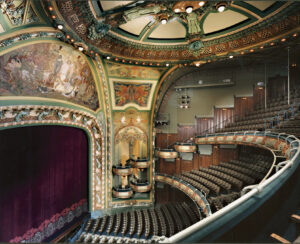
The Victoria closed in 1989 for the most drastic work of its life. Crews razed the commercial space in the Main Street facing section along with the stage house, while carefully preserving the 1866 to 1871 facade and the 1919 auditorium. The street level retail became a grand new lobby, the plaster, drapery, marble, gilding and fresco detail were restored to their original appearance, and the wiring, lighting and sound were brought up to modern standard, including infrared transmitters for headphone use. The proscenium measures 37 feet 7 inches wide by 29 feet high, with a full orchestra pit below the stage lip and ten dressing rooms off stage left.
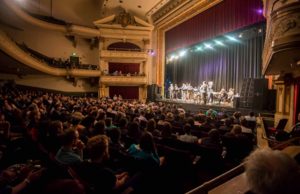
There are no dedicated ghost tours here. The way inside is to buy a ticket. The theater is operated by Dayton Live, which took that name at an open house on March 10, 2020, weeks before the pandemic shuttered venues nationwide, and which also runs the Schuster Performing Arts Center, the Loft Theatre at the Metropolitan Arts Center and the PNC Arts Annex. Between the venues the organization presents more than 300 performances a year, from touring Broadway to stand-up, films and family shows, and the Dayton Ballet, Dayton Opera and Dayton Philharmonic all use the buildings. For anyone chasing the Victoria’s reputation, the practical advice is to pick a show, sit near the boxes or the front of the house, and stay for the lights coming up.
See The Victoria Theatre for Yourself
Sources
- NPS Focus
- Edwin Forrest
- Turner's Opera House March (piano score) (Jhu (official site))
- Virginia Kettering a protector of Victory
- Victoria Theatre Association announces new brand
- Wikipedia: Victoria Theatre (Dayton, Ohio)
Frequently Asked Questions
Where is Victoria Theatre located?
Victoria Theatre is located at 138 North Main Street.
Can you visit Victoria Theatre?
Victoria Theatre is open to the public. Always follow posted rules and respect private property.
Reader sightings
Nobody has reported anything here yet. If you have been, you would be the first.
Report your own visit to Vicky and the Tunnels Beneath Dayton’s Victoria Theatre
How haunted is this place?
Be the first to rate
Leave a Reply