
Reviewed by Josh N · Updated August 24, 2026 · How we verify
Reported Phenomena
- Woman in white
- Apparition of a boy
- Disembodied voices
- Ghostly animals
- Shadowy figures
Reported by visitors & local legend. Stories, not verified claims.
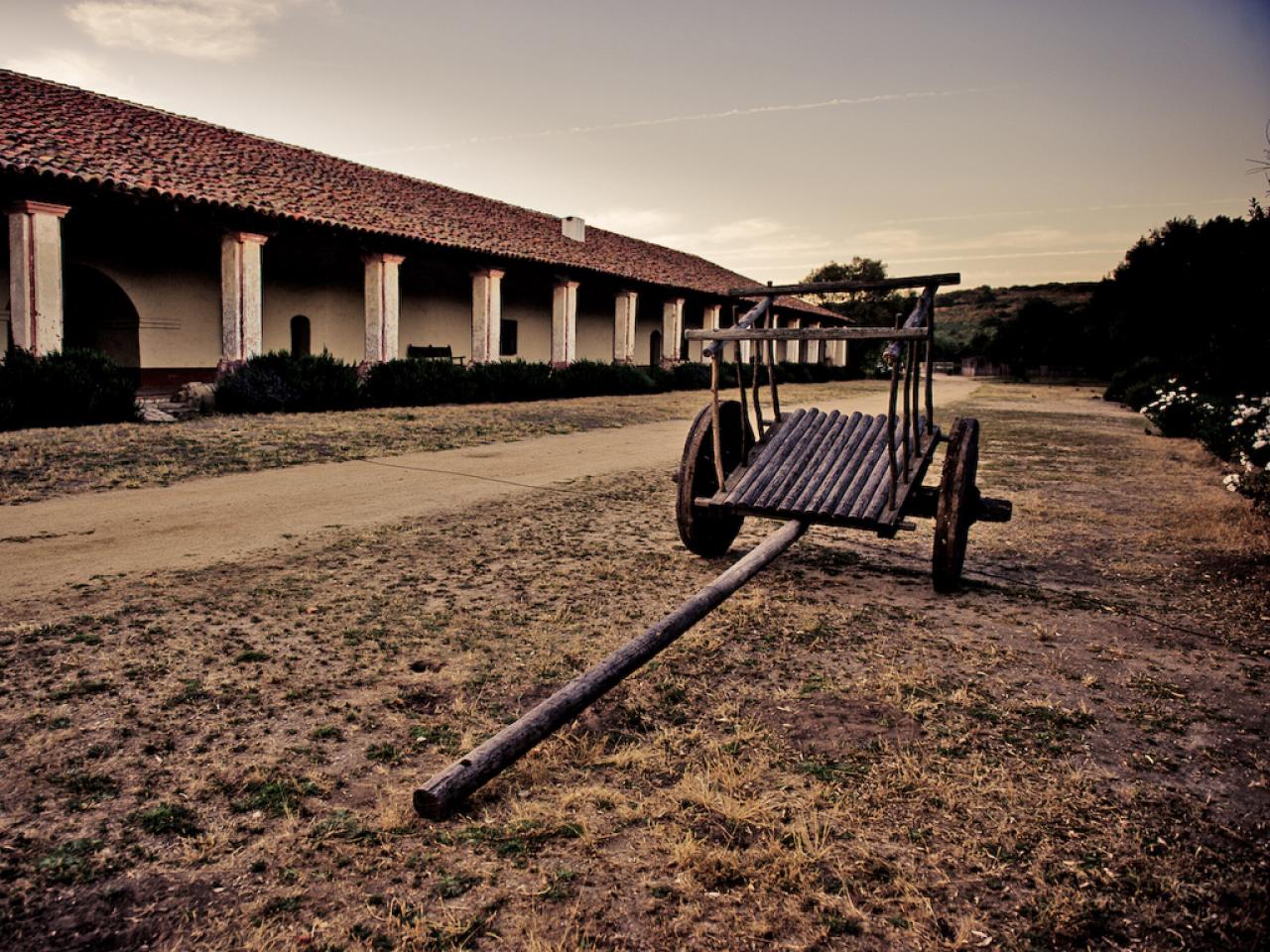
La Purisima Mission sits in a fold of hills outside Lompoc, in Santa Barbara County, California, and it is the only place in the state where you can walk through a Spanish colonial mission complex more or less entire: church, workshops, quarters, blacksmith shop, water system and all. That completeness is not an accident of survival. Almost everything standing today was rebuilt in the 1930s from ruins, on a site the mission only moved to after an earthquake flattened the first one. The ghost stories, a woman in white, a boy, voices with nobody attached, are reported experience rather than documented history, and nothing about them is confirmed.
La Purisima Mission at a Glance
- Founded: 8 December 1787, the Feast of the Immaculate Conception, by Fermin Lasuen
- Order in the chain: the 11th of the 21 Spanish missions in California
- First site: one mile south of Lompoc, known to the Chumash as Algsacpi
- Destroyed: by the Ventura earthquake of 21 December 1812
- Re-established: 23 April 1813 at La Canada de los Berros, known to the Chumash as Amuu
- Restored: by the Civilian Conservation Corps, dedicated 7 December 1941
- Now: a 1,934 acre state historic park established in 1935, and a National Historic Landmark since 1970
Algsacpi: the Mission Before the Mission
The Franciscans established La Misión de la Purisima Concepcion de la Santisima Virgen Maria on 8 December 1787, taking the name from the feast day on which it was founded. The site, one mile south of Lompoc, was called Algsacpi by the Chumash and the plain of Rio Santa Rosa by the Spanish. Colonial rules said no California mission should be planted within seven miles of a pueblo, but the Viceroyalty of New Spain made an exception here because Lompoc was so small. The mission was associated with the Presidio of Santa Barbara, and six soldiers were quartered on site.
Fermin Lasuen, who founded it, was president of the Franciscan missions in Alta California and personally founded nine of the twenty one. La Purisima was the eleventh in the chain.
The scale of the place by the early nineteenth century is worth sitting with, because it explains why so many people are said to linger here. By 1803, through the system of Indian Reductions, 1,436 Chumash people were attached to the mission, alongside 3,230 cattle, 5,400 sheep, 306 horses and 39 mules. That year’s harvest ran to 690 fanegas of wheat, corn and beans, a fanega being roughly 220 pounds. The adobe quadrangle grew to 330 feet square, with rooms for two priests, for the soldiers, for married Chumash families and for unmarried women. At its peak roughly 1,520 Chumash people lived there. During the mission period they spoke Purisimeno.
The Earthquake of 21 December 1812
The Ventura earthquake of 21 December 1812 severely damaged the mission buildings and effectively ended the first La Purisima. A small wrinkle for the record keepers: California State Historical Landmark No. 928, which marks the original site, gives the date of the earthquake as 12 December 1812. The ruins of that first mission still stand at 508 South F Street near East Locust Avenue in Lompoc, and were designated a state historical landmark on 29 June 1979. They are listed separately on the National Register from the park a few miles away.
Mariano Payeras Moves the Community to La Canada de los Berros
Rather than rebuild on the ruined plain, Mariano Payeras received permission to move the mission community four miles northeast, to a valley beside El Camino Real that the Chumash knew as Amuu and the Spanish called La Canada de los Berros. La Purisima Mission was officially established at this new location on 23 April 1813. Materials salvaged from the earthquake wreckage were carted over and reused, and the buildings took ten years to complete.
The Chumash Revolt of 1824
Mexico won its war of independence in 1823, and Spanish funding to the Santa Barbara Presidio stopped. Unpaid soldiers took out their frustration on the Chumash. After a soldier reportedly beat a man at nearby Mission Santa Ines, the revolt of 1824 began there and spread to La Purisima, where the Chumash held the mission for a month until reinforcements arrived from the Monterey Presidio. The occupation ended, many of those who had taken part left, and others who had sheltered in the mountains during the fighting came back. It is the single most turbulent month in the building’s documented history, and no ghost story attached to the site names it.
From Rancho Ruin to CCC Reconstruction
Mexico secularised the Alta California missions between 1834 and 1843, transferring them from the Catholic Church to civil authorities. La Purisima was abandoned, passed into private hands, and its lands were granted to the Rancho Ex-Mission la Purisima. The adobe went back to mud. By 1934 only nine buildings remained intact.
The rescue came in pieces. The Union Oil Company deeded several parcels to the State of California in 1933. Under the direction of the National Park Service, the Civilian Conservation Corps offered to restore the mission if enough land could be assembled for a historic landmark, and the Catholic Church and Union Oil between them provided it. The CCC rebuilt the nine surviving buildings, numerous smaller structures and the original water system. The dedication took place on 7 December 1941, the day the United States entered the Second World War, which is why the reopening of the most complete mission in California got almost no attention at the time.
La Purisima is also, along with Mission San Francisco de Solano, one of only two Spanish missions in California no longer governed by the Catholic Church. It was designated a National Historic Landmark in 1970.
The Woman in White and Other Reported Encounters
What follows is local lore and visitor testimony. None of it is verified, and none of it is part of the state park’s historical interpretation.
- A woman in white. The most frequently repeated sighting, described by visitors and staff as a female figure in pale clothing, is usually explained in the retelling as one of the mission’s former inhabitants. No name or incident is attached to her.
- A young boy. A second recurring apparition, again identified only by assumption rather than by any record.
- Disembodied voices. Speech heard in and around the restored buildings with no visible source.
- Ghostly animals. Unusual for a mission story, and perhaps unsurprising at a site that once ran thousands of cattle and sheep and still keeps livestock on the grounds.
- Shadowy figures. Vague forms glimpsed among the quarters and workshops.
Two things are worth holding in mind. First, almost everything a visitor touches here was rebuilt in the 1930s, so the fabric that people report reacting to is largely twentieth century reconstruction on an early nineteenth century footprint. Second, the mission’s genuinely documented tragedies, the earthquake, the epidemics implied by the collapse of the Chumash population, the revolt of 1824, do not appear in the folklore at all. The stories reach for a woman and a child instead. That gap between the history and the haunting is characteristic of legend rather than of independent sightings.
Visiting La Purisima Mission State Historic Park
The mission is the centrepiece of La Purisima Mission State Historic Park, a 1,934 acre park outside Lompoc established in 1935 and maintained by the California Department of Parks and Recreation. Ten of the original buildings are fully restored and furnished, including the church, the shops, the living quarters and the blacksmith shop. The gardens and the livestock are presented as they would have been in the 1820s.
There is a visitor centre with displays and artefacts, guided tours, and a self guided route through the complex for those who would rather set their own pace. Living history events run through the year and are the best way to see the workshops in use rather than as static rooms. The park was among many threatened with closure in 2008, a fate avoided by system wide cuts to hours and maintenance, so it is worth checking current opening times before you drive out. The mission also served as a filming location in 2025 for Paul Thomas Anderson’s One Battle After Another.
Go for the completeness of the place, which nowhere else in California can offer. Treat the woman in white as what she is: a story told about a rebuilt adobe quadrangle in a very quiet valley, unproven and unprovable, and no less interesting for that.
Sources
- Purisimeño
- missionscalifornia.com, La Purísima Concepción Historic Images
- Significant Earthquakes and Faults Chronological Earthquake Index: The December 21, 1812 Earthquake (Caltech (official site))
- californiahistoricallandmarks.com # 928
- We Traveled the Real California That 'One Battle After Another' Imagined (The New York Times)
- Wikipedia: La Purísima Mission
Frequently Asked Questions
Where is La Purisima Mission located?
La Purisima Mission is located at 508 South F Street near East Locust Avenue.
Can you visit La Purisima Mission?
La Purisima Mission is open to the public. Always follow posted rules and respect private property.
Reader sightings
Nobody has reported anything here yet. If you have been, you would be the first.
Report your own visit to Dedicated on Pearl Harbor Day: La Purisima Mission, Lompoc
How haunted is this place?
Be the first to rate
Leave a Reply