
Reviewed by Josh N · Updated August 21, 2026 · How we verify
Reported Phenomena
- Ticket-taker apparition
- Unexplained footsteps
- Curtains moving unattended
- Oppressive balcony atmosphere
- Sense of being watched
- Ghost light tradition
Reported by visitors & local legend. Stories, not verified claims.
Two blocks off Union Square, behind a Georgian Revival front that has barely changed in a century, sits one of the busiest tryout houses in American theatre. The Curran Theater ghost stories that circulate among San Francisco stagehands and tour guides are older than most of the shows that have played here, and they attach themselves to a building in California that has been in near continuous use since 1922. What follows separates what the record actually supports from what gets repeated in the dark.
Homer Curran’s House at 445 Geary Street
The Curran stands at 445 Geary Street, between Taylor and Mason in San Francisco’s Theatre District, and it opened in February 1922. It took the name of its first owner, the American theatrical producer Homer Curran, who had already operated an earlier theatre bearing his name before building this one. That earlier house went through several changes of identity; this Curran never has. The building was designed by architect Alfred Henry Jacobs, pairing a Georgian Revival facade with an ornate interior, and seats 1,667.
It began life as a Shubert house, later became a showcase for Theatre Guild presentations, and then settled into a long association with the San Francisco Civic Light Opera, which booked prestige productions and mounted its own shows with name stars in the leads. For many years the San Francisco Opera staged its annual Spring Opera series here. Homer Curran himself wrote the book for the musical Song of Norway and co-wrote the book for Magdalena, before leaving San Francisco for Southern California and a business renting theatrical lighting.
The Civic Light Opera moved to the Orpheum in 1977. By the end of that year Carole Shorenstein Hays and James M. Nederlander had taken over operation of the Curran and launched their Best of Broadway season with John Raitt in the national tour of Shenandoah, followed by the West Coast debut of Annie. Shorenstein’s organisation later became SHN. In 2015 she left SHN to concentrate on the Curran alone, and SHN no longer operates the theatre. As of 2025 the building is owned by the San Francisco Giants.
Ghost Light Superstition on a Stage That Never Rests
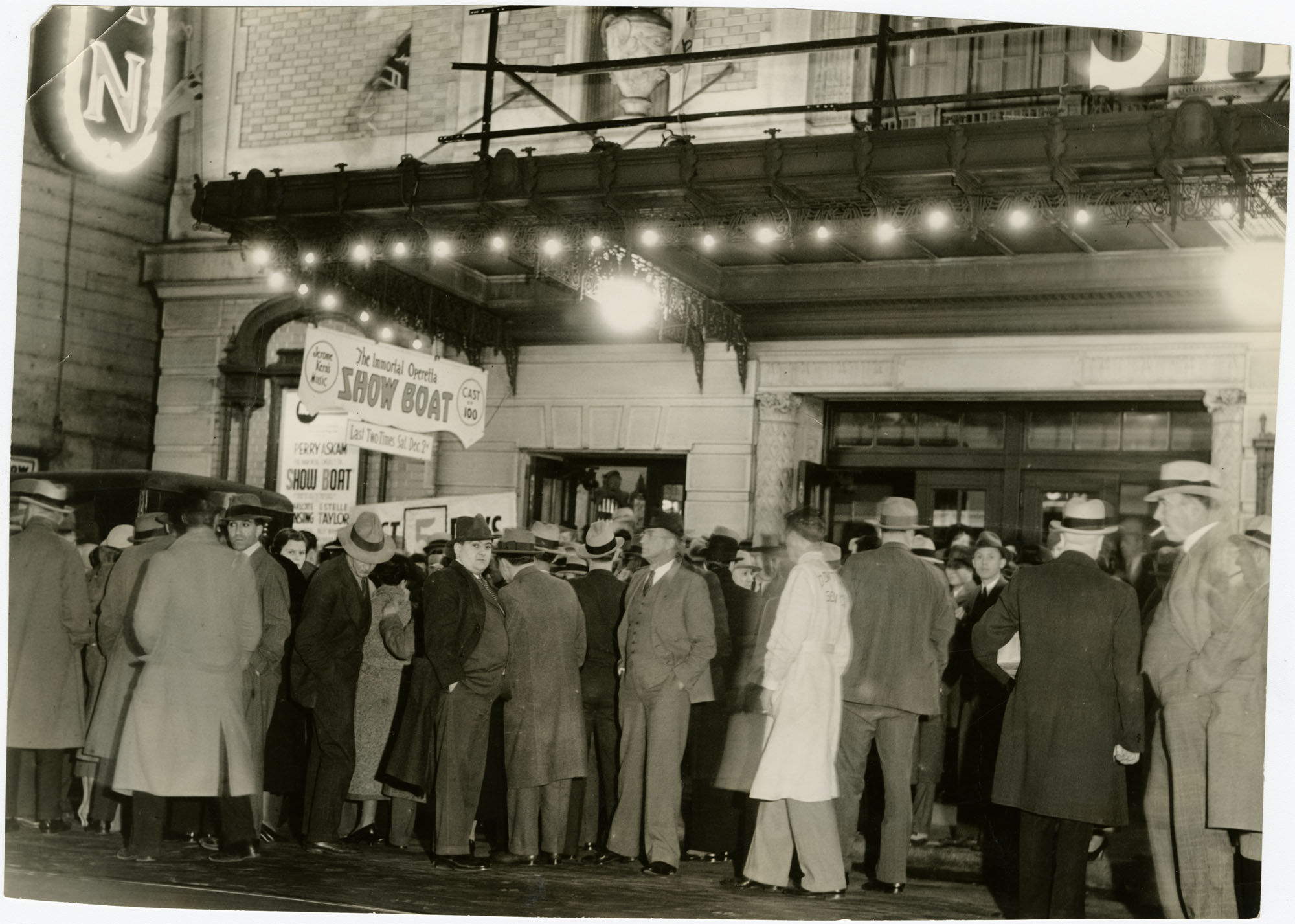
The Curran has hosted more pre-Broadway engagements than any other theatre in San Francisco. Kismet and Carnival in Flanders in 1953, Peter Pan in 1954, the American premiere of Oliver! in 1962, Brighton Beach Memoirs in 1983, Fences in 1987, Wicked in 2003 and Beautiful: The Carole King Musical in 2013 all worked out their problems on this stage first. Under SHN the house held five years of The Phantom of the Opera, the show’s longest domestic run outside New York City, plus long stays by Les Miserables and Jersey Boys. Harry Potter and the Cursed Child opened here in December 2019.
All of which matters to the ghost stories, because a theatre this heavily worked accumulates people, and people accumulate anecdotes. The most visible piece of stage superstition at the Curran is the ghost light, the single bulb left burning on an empty stage. It is a genuine and near universal theatrical practice, and its practical purpose is straightforward: nobody walks into an orchestra pit in the dark. The custom of describing it as a courtesy to whatever remains in the building is folklore layered on top of a safety rule, at the Curran as everywhere else.
Hewlett Tarr and the Woman in the Balcony
Two figures dominate the Curran’s supernatural reputation, and both should be treated as lore rather than documented history.
The first is Hewlett Tarr, described in the theatre’s ghost stories as a ticket-taker who died violently at the Curran in 1933. His name comes up more than any other in accounts of the building. People working late have reported footsteps with no walker attached to them and the sudden movement of curtains in still air, and those experiences tend to get filed under his name.
The second is a woman remembered as Ellen, said to have taken her own life in the balcony after a heartbreak. Visitors sometimes describe an oppressive or grieving atmosphere in the upper seating. There is no verification of her story in any historical record available for this building, and the tale carries the shape of a theatre legend rather than an incident.
Nothing here is proof of anything. What can be said accurately is that these two stories have been attached to the Curran for a long time, that they are repeated by staff and by people who have worked shows in the house, and that the reported phenomena are consistent: footsteps, movement at the edge of vision, and the sense in the balcony of not being alone.
What Gets Reported Inside the Curran
- Footsteps in empty areas of the house, often reported after performances
- Curtains moving with no draught or crew nearby
- A heavy or sorrowful atmosphere in the balcony
- A sense of being watched during late work in the auditorium
- The ghost light kept burning on the bare stage, treated by some as a nightly gesture toward the theatre’s residents
Worth remembering: this is a hundred-year-old building with two front curtains, a green fire curtain hanging in front of a gold one, decades-old mechanical systems and a central vacuum system whose connection points are still visible in the walls. Old theatres make noise. That does not settle the question, but it belongs in the account.
Traces of the Original Building You Can Still See
Much of what the first audiences saw in 1922 is still there if you know where to look. The ceiling above the main lobby was hand-painted to imitate wood, with steel wool dragged through the plaster to fake a grain before painting. The marble lobby floor survives beneath the carpet, along with plugs set into it for the stanchions that once held rope barriers. The box-like loges were converted to fixed seating before the theatre’s first booking of Hello, Dolly!, but the old metal railings and decorative plaster still mark where they were. The chandelier was built in San Francisco by Phoenix Day.
One plaque is worth finding. Mounted at the entrance to boxes L, M and N, it honours Arthur Mayer, who watched the Curran being built, was hired by Homer Curran as part of the opening-night staff, and kept working at the theatre until he was nearly 100 years old. If any single person’s presence has soaked into this building, the documented candidate is Mayer, not the figures in the ghost stories.
Film buffs have their own reason to look at the walls. In the 1950s the Curran stood in for a Broadway theatre in All About Eve, and every theatre scene except the dressing room interior was shot here. The original main-floor interior lobby, since replaced by a bar and accessible restrooms, can still be seen in that film. An episode of The Streets of San Francisco also filmed inside and out, using the Curran as A.C.T. even though A.C.T. actually plays the adjacent Geary Theatre, visible in some shots.
Seeing a Show at the Curran Theater
The Curran is a working commercial theatre, not a paranormal attraction, and there is no ghost tour of the building. Access means buying a ticket. The house closed in September 2015 for a substantial renovation covering new seat upholstery, carpeting, mechanical and electrical systems and expanded lobbies, and during the works it presented a series called Under Construction, with audiences seated directly on the stage. It reopened on 25 January 2017 with the musical Fun Home.
If the stories are your reason for going, arrive early, spend the interval walking the lobbies and the mezzanine level, and take a seat in the balcony if the run allows it. Backstage and after-hours areas are staff-only. Do not go looking for them.
Sources
- "San Francisco's Historic Curran Theatre Sold to San Francisco Giants"
- San Francisco's Curran Theater to Get Makeover Courtesy of Carole Shorenstein Hays
- A Chorus Line Revival To Play San Francisco's Curran Theatre in 2006
- Beautiful (Original Broadway Production, 2014)
- August Wilson's Fences
- Wikipedia: Curran Theatre
Frequently Asked Questions
Where is Curran Theater located?
Curran Theater is located at 445 Geary Street.
Can you visit Curran Theater?
Curran Theater is open to the public. Always follow posted rules and respect private property.
Reader sightings
Nobody has reported anything here yet. If you have been, you would be the first.
Report your own visit to The Ticket-Taker Who Never Left: Curran Theater Ghost Stories
How haunted is this place?
Be the first to rate
Ghost Tours Nearby
 Ghost Hunt in SF Chinatown with a Professional Investigatorfrom $55
 San Francisco Ghost Hunt Walking Tourfrom $29
 San Francisco Ghost Tours: Gold and Ghouls Tourfrom $26
Affiliate links: BeyondHaunted may earn a commission, at no extra cost to you.
Leave a Reply