

Reviewed by Josh N · Updated October 14, 2026 · How we verify
Reported Phenomena
- Seance apparition
- Spirit naming a murderer
- Reported spectral testimony
Reported by visitors & local legend. Stories, not verified claims.
One state historical marker in the United States credits testimony from the dead with helping to convict a murderer, and it stands beside a country cemetery in Greenbrier County, West Virginia. The Greenbrier Ghost is the name given to Elva Zona Heaster Shue, a young woman found dead in her home in 1897, whose mother told anyone who would listen that Zona’s spirit had come back to name the man who killed her. The murder is a matter of court record. The ghost is a matter of what one grieving woman said, and of what a county full of neighbors chose to believe.
Quick Facts on the Zona Heaster Shue Case
- Who: Elva Zona Heaster Shue, who went by her middle name, Zona
- Found dead: January 23, 1897, in her home in Greenbrier County
- First verdict: a coroner’s jury ruled “death by heart disease”
- Buried: January 24, 1897, in what is now the Soule Chapel Methodist Cemetery
- Exhumed and examined: February 22, 1897, in a local one-room schoolhouse
- Convicted: Edward Stribbling Trout Shue, first degree murder, July 11, 1897
- Commemorated by: a West Virginia state historical marker near the cemetery
A Blacksmith Arrives in Greenbrier County
Zona Heaster met a blacksmith named Edward Stribbling Trout Shue in October 1896. He also went by the names Erastus and Erasmus, which is one reason the story reaches modern readers with three different first names attached to the same man. The two married soon after meeting, and Zona took his surname.
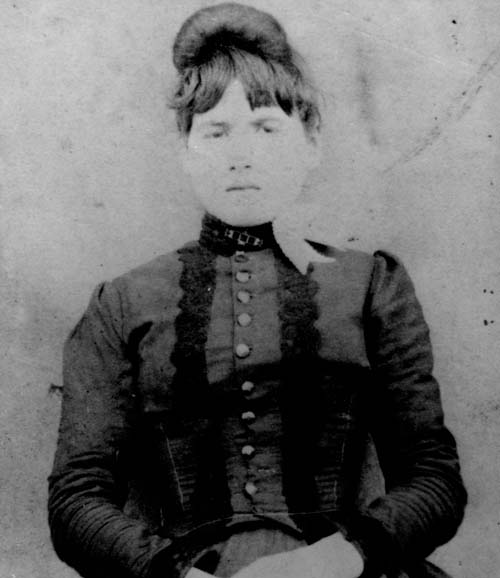
What the neighbors did not know, and what only came out after his arrest, was that Shue had been married twice before. His first marriage had ended in divorce, his wife accusing him of great cruelty. His second wife had died under mysterious circumstances less than a year after the wedding. Zona was his third wife. While he sat in the Lewisburg jail awaiting trial, Shue talked openly about wanting to marry seven women, and told reporters he was confident of acquittal because the evidence against him was so thin.
“Death by Heart Disease” and a Mother Who Would Not Accept It
Zona was found dead on January 23, 1897. The coroner’s jury returned a verdict of death by heart disease, and she was in the ground the following day. Her mother, Mary Jane Heaster, did not accept it.
Heaster later said that she had been contacted by her daughter’s spirit at a seance, and that Zona had insisted Edward killed her by breaking her neck. Armed with that account, Heaster went to see the local prosecutor, John Alfred Preston, and spent several hours in his office pressing him to reopen the case.
Whether Preston believed a word about the ghost is unknown. What is documented is that he acted. He sent deputies to reinterview several people of interest, including Dr. Knapp, who had attended the body. He was likely responding to public sentiment as much as to Heaster, since numerous locals had already begun saying out loud that Zona had been murdered. Preston then went to speak with Knapp himself, and the doctor admitted he had never made a complete examination. That admission was treated as sufficient grounds for an autopsy. An exhumation was ordered and an inquest jury formed.
Three Hours in a One-Room Schoolhouse
Zona’s body was examined on February 22, 1897, in a local one-room schoolhouse, and the autopsy took three hours. The findings, published on March 9, 1897, were blunt: “the discovery was made that the neck was broken and the windpipe mashed. On the throat were the marks of fingers indicating that she had been choked. The neck was dislocated between the first and second vertebrae. The ligaments were torn and ruptured. The windpipe had been crushed at a point in front of the neck.”
Edward Shue was arrested and charged with the murder of his wife.
The Cross-Examination That Backfired
The trial opened on June 22, 1897, with Mary Jane Heaster as the prosecution’s star witness. Preston kept his questioning to the known facts and deliberately steered around the subject of her daughter’s spectral visits. It was the defense that raised it. Shue’s lawyer, apparently hoping to expose Heaster as unreliable, questioned her at length on cross-examination about the ghost. She would not waver in her account despite intense badgering, and because the defense had introduced the subject, the judge found it awkward to instruct the jury to disregard it. A good many people in the community seemed to believe her anyway.
Shue was found guilty of first degree murder on July 11 and sentenced to life in prison after the jury recommended mercy. It is worth being precise about what the ghost did and did not do in that courtroom: the prosecution never mentioned it, and it played no part in the case built against Shue. The conviction rested on the autopsy and on what the living could testify to.
A lynch mob formed afterward, intending to take Shue from the jail and hang him. A deputy sheriff broke it up before any damage was done, and four of the organizers later faced charges. Shue died on March 13, 1900, in the West Virginia State Penitentiary at Moundsville, a victim of an unknown epidemic, and was buried in an unmarked grave in the local cemetery.
What the Greenbrier Ghost Is Said to Have Done
The reported phenomenon in this case is unusually narrow. There is no long catalog of sightings here, no rattling chains, no decades of staff reports. There is one claim, made by one woman: that Zona’s spirit came to her at a seance and described her own murder, naming her husband and the broken neck. Everything else attached to the Greenbrier Ghost over the past century has grown outward from that single assertion, repeated in books, plays, and a state historical marker.
The marker near the cemetery where Zona is buried reads: “Interred in nearby cemetery is Zona Heaster Shue. Her death in 1897 was presumed natural until her spirit appeared to her mother to describe how she was killed by her husband Edward. Autopsy on the exhumed body verified the apparition’s account. Edward, found guilty of murder, was sentenced to the state prison. Only known case in which testimony from a ghost helped convict a murderer.”
Did Mary Jane Heaster Invent the Ghost?
The most persuasive skeptical reading comes from writer and amateur historian Katie Letcher Lyle, author of The Man Who Wanted Seven Wives: The Greenbrier Ghost and the Famous Murder Mystery of 1897. Writing in a 1999 issue of Wonderful West Virginia, Lyle argued that Mary Jane Heaster probably made the story up in order to force the case open.
“Mary knew [Shue] to be clever, unprincipled, and persuasive,” Lyle wrote. “If he’d murdered once, he could murder again. Perhaps she feared that if no one validated her accusations, Shue would prove extremely dangerous. So pretending to receive the news directly from Zona, she could appeal to the superstitions of her mountaineer neighbors and get a lot of public attention. As it turned out, she didn’t need the ghost story, for Shue was convicted, according to every account, strictly on earthly considerations, without any unearthly ghosts.”
That reading does not require Heaster to be a liar in any ordinary sense. It requires her to be a woman with no legal standing, no evidence, and a strong suspicion, reaching for the one argument her neighbors could not easily dismiss.
Zona Shue on Stage, in Print, and in a Footnote
The case has outlasted everyone involved in it. Four stage adaptations exist. Jan Buttram’s play Zona was produced in 1998 by Greenbrier Valley Theatre, the state professional theater of West Virginia. Karen Benelli’s The Ghost of Greenbrier County ran at the New York Fringe Festival in 2004. A full-length musical, The Greenbrier Ghost, with book and lyrics by Cathey Sawyer and music by Joe Buttram, premiered at Greenbrier Valley Theatre in 2003 and has been revived repeatedly since. A second musical, Greenbrier, 1897, written and performed by the Lovewell Institute for the Creative Arts, debuted on June 28, 2018.
Sharyn McCrumb’s 2017 novel The Unquiet Grave is based on the case. Comedy Central’s Drunk History covered the murder and trial in the 2019 episode “Believe It or Not.” An opera, Everlasting Faint, with a libretto by Sandra Flores-Strand and music by Scott Gendel, had its world premiere in Madison, Wisconsin, on December 9, 2023. Strangest of all, Illinois State University professor Thomas Critchfield listed E. Z. H. Shue as a co-author on a 2018 behavior analysis paper, The Dead Man Test: a Preliminary Experimental Analysis, giving her affiliation as Soule Chapel Methodist Church, Smoot, West Virginia.
Visiting the Greenbrier Ghost Marker and Zona’s Grave
Zona Heaster Shue lies in what is now the Soule Chapel Methodist Cemetery, and the state historical marker stands near it on public roadside. This is a small rural burying ground, not an attraction, and it has no staff, no admission, and no tour. Read the marker, find the grave if you wish, and treat the place as what it is: an active cemetery where other families’ dead are also buried.
Edward Shue’s unmarked grave is in the local cemetery as well, with nothing to identify it.
Standard cautions apply. Do not trespass on neighboring private land, do not disturb headstones, and seek permission before conducting any kind of paranormal investigation.
Address: 300 West Main Street
See The Greenbrier Ghost for Yourself
Sources
- Mother-in-law's Vision as Evidence
- The Man who Wanted Seven Wives: Being the Account of a Famous Murder Mystery of 1897 Supposedly Solved by the Testimony of a Ghost, Together with an Explanation of Same
- The Greenbrier Ghost
- Ghost: The Only Ghost to Testify in a Murder Trial (Wvdnr (official))
- Drunk History – Video Clips
- Wikipedia: Greenbrier Ghost
Frequently Asked Questions
Where is The Greenbrier Ghost located?
The Greenbrier Ghost is located at 300 West Main Street.
Can you visit The Greenbrier Ghost?
The Greenbrier Ghost is open to the public. Always follow posted rules and respect private property.
Reader sightings
Nobody has reported anything here yet. If you have been, you would be the first.
Report your own visit to The Greenbrier Ghost: Testimony From a Murdered Wife
How haunted is this place?
Be the first to rate
Ghost Tours Nearby

Affiliate links: BeyondHaunted may earn a commission, at no extra cost to you.
Nearby Haunted Locations
- 1Room 208 and the Lady in WhiteWest Virginia7.6mi
- 2From Boys’ School to WardVirginia47mi
- 3Thirteen Graves Beneath Lake Shawnee Amusement Park, WVWest Virginia58mi
- 4The Attic Spirit at Major Graham’s Mansion, Wythe CountyVirginia68mi
- 5Swannanoa PalaceVirginia80mi
- 6The Haunted Trans-Allegheny Lunatic Asylum in West VirginiaWest Virginia87mi
Leave a Reply