
Reviewed by Josh N · Updated October 14, 2026 · How we verify
Reported Phenomena
- Ghost of a madam
- Multiple reported spirits
- Paranormal investigations
Reported by visitors & local legend. Stories, not verified claims.
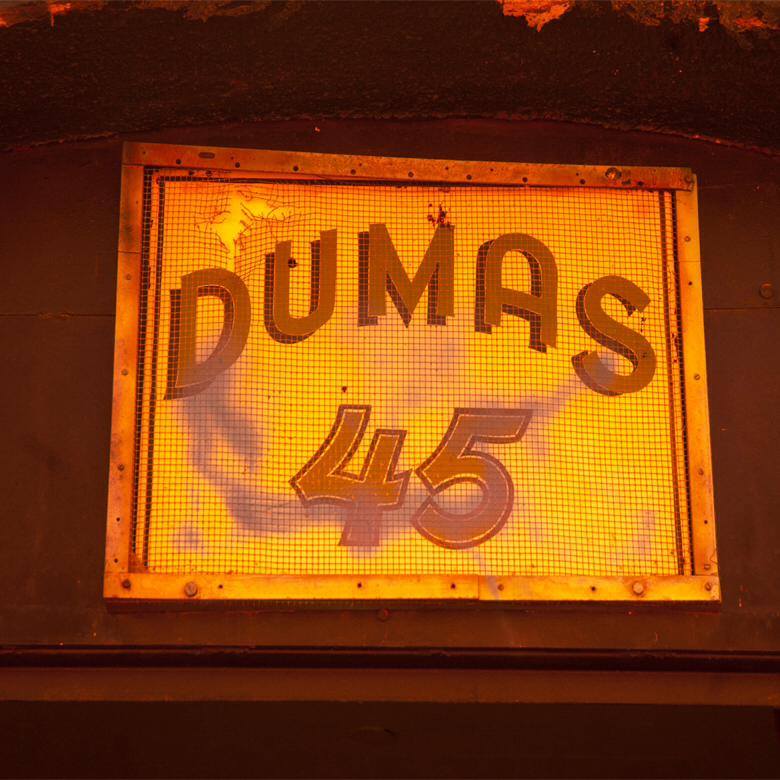
Few buildings in Montana carry a paper trail as long and as unsentimental as the one behind the haunted Dumas Brothel. The two-story brick house at 45 East Mercury Street in Butte opened in 1890 and did not stop trading until 1982, which made it, at closing, the longest continuously operating brothel in the United States, 92 years of business conducted mostly in defiance of the law. The ghost stories attached to it are a late addition. The documented history needs no embellishment.
Quick Facts on 45 East Mercury Street
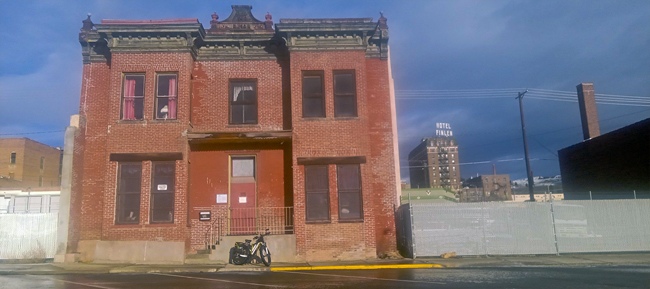
Built in 1890 by French-Canadian brothers Joseph and Arthur Nadeau, who named it for the nominal owner, Delia Nadeau, nee Dumas, Joseph’s wife. Two stories of brick on the north side of East Mercury Street, with a basement level containing clandestine tunnels and a rear single-story addition that opens directly onto the brick-lined Venus Alley. Listed on the National Register of Historic Places in 1970 as a “Victorian Brothel” while still operating as one. Closed in 1982. Open today for tours.
The Nadeau Brothers and the Business of Mercury Street
Butte’s trade in sex predated the Dumas by two decades. Women known as the “ladies of the line” worked Park Street in the 1870s, moved south when legitimate businesses displaced them, and by 1888 had filled East Galena Street to the point where nearly every building on it housed prostitution. The Nadeau brothers came to own more property in that district than anyone else, and the house they raised in 1890 became one of three establishments regarded as the city’s high end, alongside the Hotel Victoria and the Windsor Hotel.
The building still shows what it was built for. Vaulted skylights survive in the original structure, and the upper level is ringed by an interior balcony that gives an unobstructed view down onto the suites, or “cribs,” below. The basement, fitted out far more crudely, was connected by tunnel to Butte’s business corridor. The rear addition dates to 1912 by one account in the record and 1913 by another, that latter description noting it added eight cribs, four of them opening straight onto the alley.
Fifty Cents, Three Shifts, and Five Dollar Fines
At the turn of the twentieth century the price of sex at the Dumas was fifty cents, of which the working women kept roughly 40 percent. Madam Grace McGinnis held the house by 1900, and despite the size of the place she employed only five women and a musician by 1902. Business came largely from miners of the Anaconda Copper Mining Company, and in 1903 traffic grew heavy enough that the operation expanded downward, with cribs built in the basement.
The house ran 24 hours a day on three shifts, though by 1910 only two women actually lived there. The rest commuted in from elsewhere in Pleasant Alley. To keep the doors open the women paid the city’s police and officials five dollar “fines.” When reformers pressed, Butte’s answer was cosmetic: the mayor and police ordered longer skirts and high-necked blouses rather than closure, and the Butte Miner reported afterward that “nothing was seen in the district except long dresses and long faces.” Revivalist Reverend William Biederwolf called Butte “the lowest sinkhole of vice in the west.” In 1910 residents petitioned Mayor Charles Nevin to shut the district down, but with two thousand dollars a month flowing into the city’s coffers from it, the campaign died. Three years after another expansion, in 1916, the brothel added five partitions and a staircase, and the ground floor, once a grand parlor, was chopped into cribs.
The Steel Door Years: 1917 to 1950
World War I and Prohibition finally forced a crackdown, and by 1917 Butte’s red light district was effectively closed. The next census recorded no one in the city declaring prostitution as a profession. The Dumas simply kept going. Anne Vallet took over management for the Nadeau family in 1925, Madam Rose Davis in the 1930s, and Lillian Walden with her husband Dick in 1940, by which point the price had risen to two dollars.
In 1943 the federal government ordered all brothels closed to protect soldiers from venereal disease. The Dumas responded by posing as a boardinghouse. Window solicitation stopped altogether. A heavy steel door went in at the back with a small sliding window, and customers were admitted only once a face had been recognized through it. Doorbells and a code system for handling difficult guests completed the arrangement.
Elinore Knott, Ruby Garrett, and the Last Madams
Lillian Walden retired in 1950 with the price at five dollars, and the house passed to Elinore Knott. Her tenure was brief. In 1955 she took her own life after her lover died of a heart attack. Bonita Farren ran the Dumas from that year until her death from cancer in 1969, surviving an effort by several local officers in the late 1960s to shut down all three of the city’s remaining parlor houses.
Ruby Garrett, a Butte resident of some thirty years, bought the building in 1971, the year after its National Register listing. She paid officers and officials between two hundred and three hundred dollars a month for their silence, and charged twenty dollars for a prostitute. It was the Internal Revenue Service that ended it. Garrett was charged with tax evasion in 1981, convicted in 1982, and served six months in prison. The Dumas closed soon after, with a robbery occurring before the doors shut for good.
Museum, Lawsuit, Auction: What Happened After 1982
Garrett sold the building to antiques dealer Rudy Giecek on the condition that it be preserved as it stood. Giecek ran it as a museum through most of the 1990s before money ran short in 1998. The International Sex Worker Foundation for Art, Culture and Education stepped in with plans for a museum, gallery and convention center. Ellen Baumler of the National Register argued for saving it, writing that the Dumas “is not only significant as the last standing parlor house in this area of Butte, but also because of its length of operation as a rare, intact commentary on social history.” The partnership collapsed in September 2000 when Giecek sued for $52,000 in unpaid wages and won. The building went to auction twice.
In late May 2005, while escorting a New York Times reporter through the house, Giecek found it had been broken into. He discovered dismantled beds, stolen antique lamps and artwork, emptied display cases and missing artifacts. In June 2012 locals Michael Piche and Travis Eskelsen took it on, by which time there was water damage, a collapsed wall and no structurally sound roof. Piche died in 2018 and Eskelsen listed the property. In December 2018 David and Charlee Prince of Forsyth, Montana bought the Dumas for $29,000 at a tax sale.
What Is Reported Inside the Dumas
The paranormal reputation here is thinly sourced and should be treated as such. Rudy Giecek, who owned and ran the museum for years, claimed the building is haunted by the ghost of Elinore Knott, the madam who died in 1955. Author Karen Stevens has also recounted paranormal experiences connected to the brothel. Accounts suggest that Knott’s is one of several presences said to remain. Beyond that, the record offers no named witnesses, no catalog of specific incidents and nothing resembling evidence. What there is, in abundance, is a building where a great deal of unhappiness was transacted over nine decades, which is usually enough to start a ghost story on its own. The current owners conduct paranormal investigations of the property.
Touring the Dumas Brothel
The Princes have been working to restore the building and preserve its historic character, and as of July 2023 tours were being offered every other Saturday from 11 AM to 6 PM. Hours at a privately owned, slowly restoring historic building change, so confirm before traveling. Tour prices here have historically been modest, five dollars under Giecek and eight dollars under the 2012 owners. Expect a structure that is genuinely unrestored in places rather than a polished attraction. The real draw is the architecture of the trade itself: the balcony overlooking the cribs, the skylights, the basement, and the back doors onto Venus Alley.
Address: 45 East Mercury Street, Butte, Montana
Sources
- Historic Dumas Brothel up for sale
- Dark Days for a Reminder of the Wild, Wild West in Montana (The New York Times)
- NPGallery Asset Detail (National Park Service)
- Wikipedia: Dumas Brothel
Frequently Asked Questions
Where is Dumas Brothel Butte Montana located?
Dumas Brothel Butte Montana is located at 45 East Mercury Street, Butte, Montana.
Can you visit Dumas Brothel Butte Montana?
Dumas Brothel Butte Montana is accessible by guided tour only. Always follow posted rules and respect private property.
Reader sightings
Nobody has reported anything here yet. If you have been, you would be the first.
Report your own visit to 92 Years on Venus Alley: Butte’s Haunted Dumas Brothel
How haunted is this place?
Be the first to rate
Leave a Reply