
Reviewed by Josh N · Updated August 25, 2026 · How we verify
Reported Phenomena
- Unexplained sightings
Reported by visitors & local legend. Stories, not verified claims.
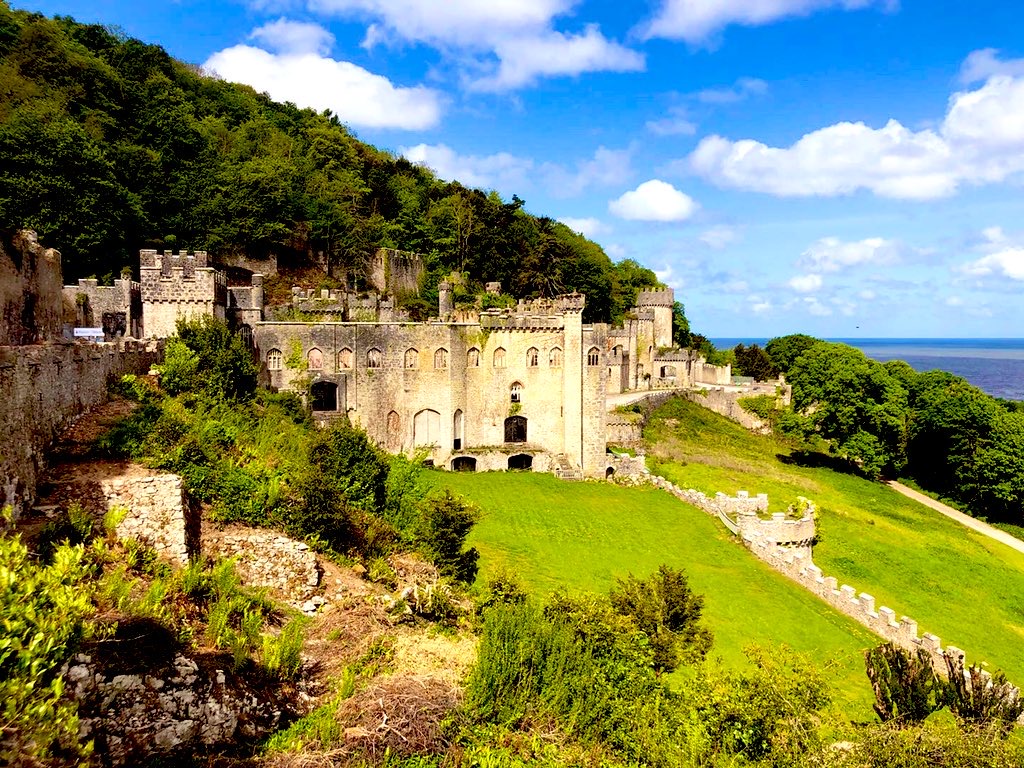
Anyone who goes looking for haunted Gwrych Castle should be warned at the outset that the documented ghost lore is far thinner than the building’s silhouette suggests. What sprawls across the hillside above Abergele in Conwy County Borough, north Wales, is one of the most theatrical pieces of architecture in Britain, and one of the most badly abused: a Grade I listed country house that spent thirty years being stripped of its own fabric before a charity got hold of it.
The essentials for a visitor: Gwrych is a Grade I listed country house near Abergele, its 236-acre estate is owned by the Gwrych Castle Preservation Trust, and it opens to the public seven days a week from 10am to 5pm for a fee. The main building is still a ruin and cannot be entered. A small number of rooms, some outbuildings and the grounds can be.
A Hedge, a Deed of 1536 and Two Hillforts
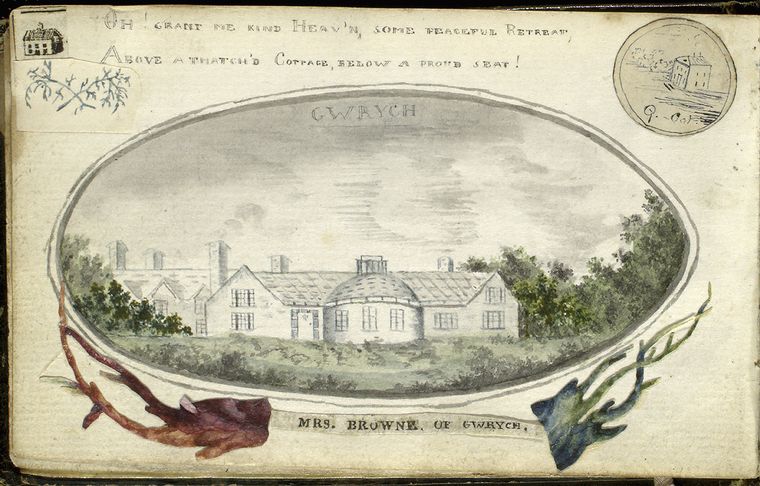
The name comes from Y Gwrych, meaning “The hedge”, and the site is far older than the towers. The earliest description of it appears in a deed of demise dated 20 April 1536, granting two parcels of land in the town of Abergele, one of them “in a place called ‘y gwrych,’ between the highway from Abergele to Conwey (Conwy) and the common pasture”. The Lloyds of Plas yn y Gwrych were the ancestral owners and traced their line back to the medieval period.
The wider estate is genuinely layered. Within its boundaries sit a pair of Iron Age hillforts, a Roman shrine, lead and silver mines, and medieval battle sites, the last of these recorded on stone tablets at the principal entrance. If you want to understand why the place attracts stories, that catalogue is a better explanation than any ghost.
Bamford-Hesketh’s Castle: Busby Out, Rickman In
Gwrych Castle was built between 1810 and 1825 by Lloyd Hesketh Bamford-Hesketh (1787 to 1861), in memory of his mother Frances Lloyd and her ancestors, and it swallowed an earlier house that the Lloyds had owned since the late medieval period. Designs by Charles Busby were exhibited at the Royal Academy in London in 1815. Busby was then sacked, Thomas Rickman was engaged, and the scheme mutated from a Regency country house into an enormous Gothic Revival castle. The foundation stone was laid in 1819.
Later hands kept going. C. E. Elcock and Detmar Blow both worked there, and by the Edwardian era the castle was running as a full-scale country house. Queen Victoria is claimed to have stayed during a visit to north Wales. Cadw’s listing entry calls it “a magnificent large scale example of a Romantic castellated mansion”, and singles out its relationship with its site.
Winifred, Countess of Dundonald, and the Gift the King Refused
The presiding figure at Gwrych was Winifred Bamford-Hesketh, granddaughter and sole heir of the builder, who inherited in 1894. She had married Douglas Cochrane in 1878 and became Countess of Dundonald when he succeeded to the earldom in 1885. The marriage was not a close one. She stayed at Gwrych and in London, and did not accompany her husband to Canada when he commanded the militia there between 1902 and 1904.
The castle remained her personal property, and on her death in 1924 she left it to King George V in the hope that it would become the principal Welsh residence of the Prince of Wales. The gift was refused. The castle passed instead to the Venerable Order of Saint John, and in 1928 her former husband bought it back for £78,000, then sold the contents to cover the cost. The family never lived there again.
Two Hundred Kindertransport Children, 1939 to 1941
The most affecting chapter of Gwrych’s history has nothing to do with hauntings. From 1939 to 1941 the government used the castle to house 200 Jewish refugee children brought to Britain under the Kindertransport programme, run by the Jewish Zionist youth movement Bnei Akiva. The scholar Daniel Sperber was born there during that period. Andrew Hesketh published a history of the episode, Escape to Gwrych Castle: A Jewish Refugee Story, in 2023.
The Showpiece of Wales, Then the Motorcycle Years
After the war the Dundonalds sold up, and in 1946 Robert Rennie bought the estate and opened it as a visitor attraction billed as “The Showpiece of Wales”. It later passed to Leslie Salts and was said to have drawn nearly 10 million visitors. The English world middleweight boxing champion Randolph Turpin trained there in the early 1950s. In the early 1960s it hosted the Dragon Rally, and in the 1970s it went in for jousting and medieval banquets.
By the 1980s the castle was attracting motorcyclists from across Britain and had gained a reputation for drunkenness and antisocial behaviour, with police attending frequently. It closed to the public in 1987.
Lead Off the Roofs: How Gwrych Became a Shell
In 1989 the American businessman Nick Tavaglione bought Gwrych for £750,000. His plans for a renovation and an opera centre never happened, and the castle was looted and vandalised into a derelict shell. During the 1990s it was occupied by New Age travellers who, in the account quoted by the record, “sold off fittings, including fireplaces and stained glass, and stripped the slates and lead from the roof”. Battlements were later toppled from the towers. In 1994 arsonists destroyed the power lines by setting an old caravan alight, and a replacement transformer and pole were not installed until June 2021, once the trust had raised the money.
Two hotel schemes came and went. Clayton Hotels bought the castle in 2007 for £850,000 and announced a three-year, £6,000,000 conversion into a 90-bedroom hotel, spending about £500,000 on clearance and rebuilding before going into administration. Fresh planning permission was obtained in 2012 for another hotel; that failed too.
Running through all of it was Mark Baker, who began campaigning for the castle’s preservation at the age of twelve and was instrumental in forming the Gwrych Castle Preservation Trust. In 2018 the castle and some 200 acres were sold to the trust, with a grant from the National Heritage Memorial Fund. Part of the estate is leased to Natural Resources Wales on a 999-year term. In 2024 Gwrych was placed in the highest category of risk on Cadw’s Buildings at Risk register, which is a fair measure of how far there is still to go.
What the Ghost Reports at Gwrych Actually Amount To
Here the honest answer is short. The published record notes only that reports of unexplained sightings in the area of the castle have occasionally appeared in the media. There is no documented named apparition, no dated incident, no roll of witnesses. Mark Baker himself compiled the local material in Myths and Legends of the Gwrych Castle Estate: An Archaeological, Historical and Oral History in 2006, which tells you the stories exist as oral tradition rather than as anything verified.
What Gwrych does have in abundance is atmosphere and a lot of half-remembered decades: a roofless mansion on an ancient site, hillforts and mine workings in the woods above, and a long stretch of years when the building stood open to anyone who walked in. Ruins of that kind generate stories reliably, and it is worth keeping the distinction clear between that and evidence.
Visiting Gwrych Castle and the Trust’s Work
The castle opens seven days a week, 10am to 5pm, and there is a charge. The main building is a ruin and closed off, but a small number of rooms, some outbuildings and the grounds are accessible. The trust depends heavily on volunteers and donors for the cost of repairs and replacing what was stripped out, so an admission ticket is not a formality here.
The views justify the climb on their own: the Irish Sea to the north, the Little Orme and Great Orme near Llandudno to the west, the hill carrying Castell Cawr to the east, Rhyl and Prestatyn along the coast, and Liverpool on a clear day.
Recent television has changed the castle’s fortunes. In late 2020 Gwrych stood in for Australia as the location of the twentieth series of ITV’s I’m a Celebrity…Get Me Out of Here!, which could not film abroad because of the COVID-19 pandemic, and the show returned in November 2021. During that second stint Storm Arwen damaged production facilities at Manorafon Farm Park, 1 km (0.6 miles) east, and filming paused, though the castle itself was unaffected: Bamford-Hesketh had sited it behind the hill of Cefn yr Ogof as a shield against the north-westerlies coming off the Irish Sea.
Address: Gwrych Castle, Abergele, Conwy County Borough, Wales
See Gwrych Castle for Yourself
Sources
- Gwrych Castle Estate Records
- History
- Tan-yr-Ogof Lodge including adjoining walls and towers to S, E and W, Abergele, Conwy
- Gwrych Castle: The astonishing fantasy castle saved by the dreams and bravery of a 12-year-old boy
- Castle to be auctioned for £1.5m
- Wikipedia: Gwrych Castle
Frequently Asked Questions
Where is Gwrych Castle Abergele Ruin located?
Gwrych Castle Abergele Ruin is located at Gwrych Castle, Abergele, Conwy County Borough, Wales.
Can you visit Gwrych Castle Abergele Ruin?
Gwrych Castle Abergele Ruin is open to the public. Always follow posted rules and respect private property.
Reader sightings
Nobody has reported anything here yet. If you have been, you would be the first.
Report your own visit to Stripped of Its Lead Roof: Haunted Gwrych Castle, Abergele
How haunted is this place?
Be the first to rate
Ghost Tours Nearby
 Haunted Chester and its Ghosts: A Self-Guided Walking Tourfrom $10
 Dark Chester – Let's take a walk on the dark sidefrom $20
 Barrels, Broomsticks and Witches: A Self-Guided Chester Tourfrom $8
Affiliate links: BeyondHaunted may earn a commission, at no extra cost to you.
Leave a Reply