
Reviewed by Josh N · Updated August 25, 2026 · How we verify
Reported Phenomena
- Spectral figures
Reported by visitors & local legend. Stories, not verified claims.
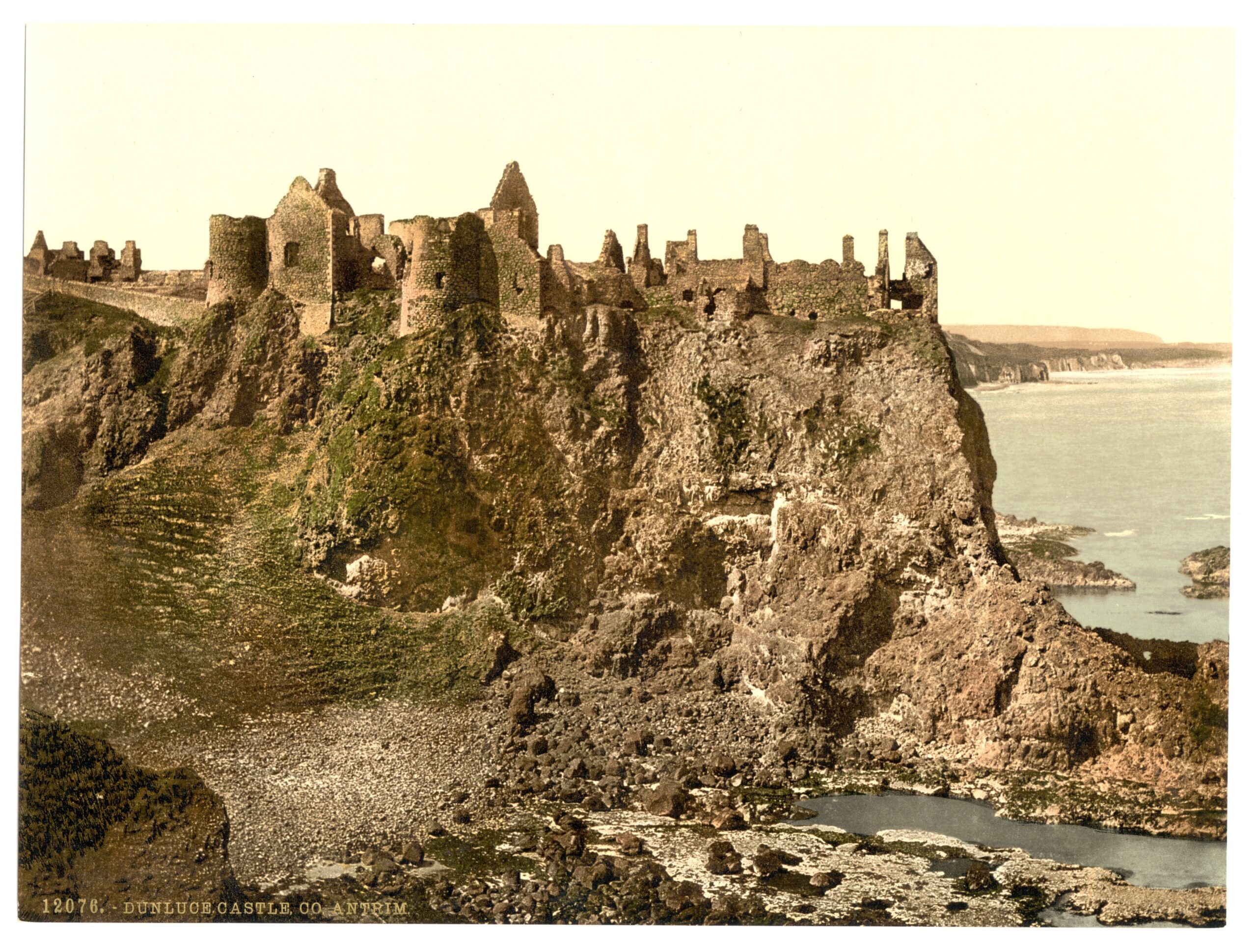
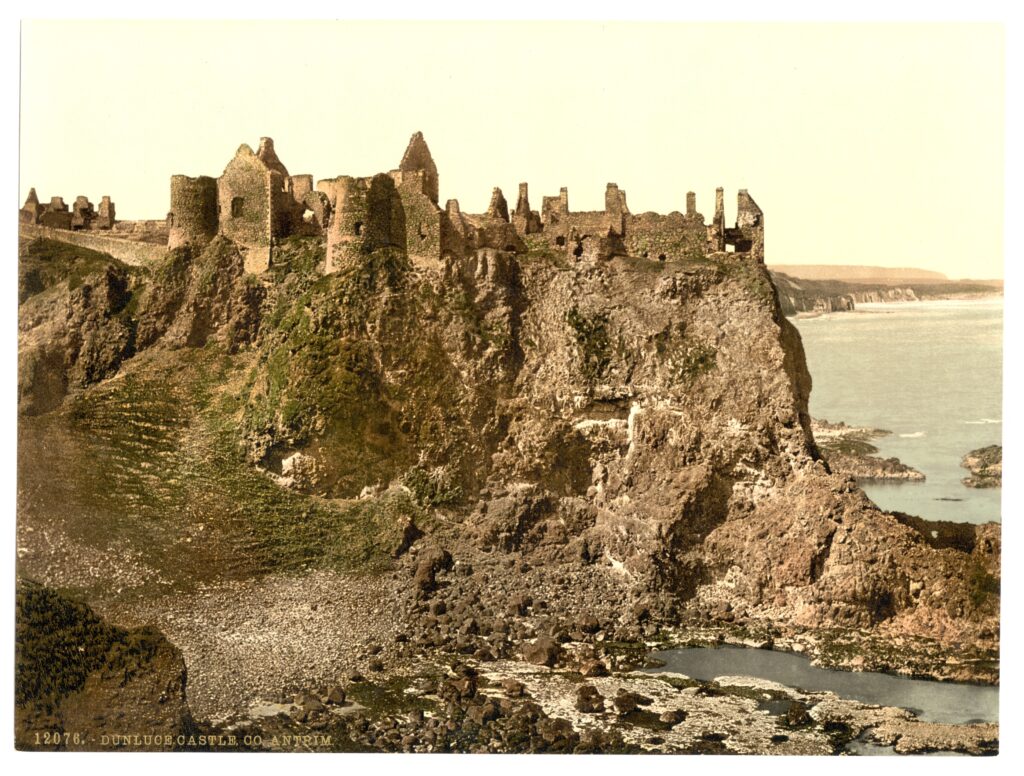
Basalt, salt air and a bridge over a drop: the setting does most of the work when people talk about haunted Dunluce Castle. The ruin sits on the edge of a basalt outcropping in County Antrim, Northern Ireland, between Portballintrae and Portrush, reached by a bridge connecting it to the mainland, with extremely steep drops on either side. Those drops may have been an important factor to the early Christians and Vikings drawn to the place, where an early Irish fort once stood. What follows is the documented history, and an honest note on where the ghost talk sits in relation to it.
Orientation for a Dunluce Visit
Where: the townland of Dunluce, County Antrim, on the north coast between Portballintrae and Portrush. What: a now-ruined medieval castle, seat of Clan MacQuillan. Who looks after it: the Northern Ireland Environment Agency, which holds it as a monument in state care in the Coleraine Borough Council area, at grid ref C9048 4137. Access: over the bridge from the mainland side.
De Burgh, the McQuillans and the Lords of the Route
The first castle at Dunluce was built in the 13th century by Richard Og de Burgh, 2nd Earl of Ulster. The site is first documented in the hands of the McQuillan family in 1513. The castle’s earliest surviving features are two large drum towers on the eastern side, each about 9 metres in diameter, relics of a stronghold raised by the McQuillans after they became lords of the Route. They held that lordship from the late 13th century until the MacDonnells displaced them, following the loss of two major battles in the middle and later 16th century.
Sorley Boy MacDonnell Takes the Rock
Dunluce later became the home of the chief of the Clan MacDonnell of Antrim and the Clan MacDonald of Dunnyveg from Scotland. In 1584, on the death of James MacDonald, 6th chief of the Clan MacDonald of Antrim and Dunnyveg, the Antrim Glens were seized by a younger brother, Sorley Boy MacDonnell. Sorley Boy took the castle, kept it and improved it in the Scottish style. He swore allegiance to Queen Elizabeth I, and his son Randal was made 1st Earl of Antrim by King James I.
The Girona’s Cannons in the Gatehouses
Four years after Sorley Boy’s seizure of the Glens, the Girona, a galleass of the Spanish Armada, was wrecked in a storm on the rocks nearby. The cannons were installed in the castle’s gatehouses and the rest of the cargo sold, with the proceeds spent on restoring the castle. MacDonnell’s granddaughter Rose was born at Dunluce in 1613. As the seat of the Earl of Antrim, the castle saw Randal McDonnell and his wife Katherine Villiers, Duchess of Buckingham, buy lavish furnishings for it. That period of money ended abruptly: the castle was abandoned in 1690 because of the impoverishment of the MacDonnells after the Battle of the Boyne, and since then it has deteriorated, with parts scavenged as building material for houses nearby.
The Lost Town Razed in 1641
The most striking Dunluce discovery is recent rather than legendary. In 2011, major archaeological excavations found significant remains of the lost town of Dunluce, adjacent to the castle and razed to the ground in the Irish uprising of 1641. The town was built around 1608 by Randall MacDonnell, the first Earl of Antrim, and pre-dates the official Plantation of Ulster. It may have contained the most revolutionary housing in Europe at the time, with indoor toilets, then only beginning to appear across Europe, and a complex street network laid out on a grid. As of 2011, 95 per cent of the town was still to be discovered. The earthworks beside the castle are a scheduled historic monument in their own right.
What the Dunluce Record Does and Does Not Contain
Read carefully, the documented account of Dunluce records a lordship changing hands by force, a shipwreck turned into building funds, a town burned in an uprising and a family broken by the Boyne. It does not record a single named apparition, no dated sighting, no witness statement. Whatever ghost stories circulate about the ruin belong to oral tradition and to the atmosphere of the place rather than to the archaeological or documentary record, and this guide will not dress them up as fact. If you arrive expecting a resident spectre with a biography, the honest answer is that the sources for Dunluce do not supply one. What they supply instead is a cliff-edge ruin with a burned town under the grass beside it, which is arguably the better reason to come.
Screen, Song and Narnia
Dunluce has a long second life in culture. It inspired the orchestral tone poem Dunluce, written in 1921 by the Irish composer Edward Norman Hay. It is thought to be the inspiration for Cair Paravel in C. S. Lewis’s Chronicles of Narnia. Ron Moody menaced Jack Wild and Helen Raye here in Flight of the Doves, a 1971 film. In 1973 the castle appeared on the inner gatefold of the Led Zeppelin album Houses of the Holy, and exterior shots stood in for Pyke of House Greyjoy on Pyke Island in Game of Thrones.
Visiting the Ruin on the Antrim Coast
The castle is in the care of the Northern Ireland Environment Agency and is held as a monument in state care, sited in the townland of Dunluce. Access is across the bridge from the mainland. Bear the terrain in mind: the outcrop is ringed by extremely steep drops on either side, so keep children close and watch your footing in wind and wet. The neighbouring earthworks, a scheduled historic monument, are part of what you are walking over rather than a separate attraction, and much of the buried town remains unexcavated.
Address: Dunluce, County Antrim, Northern Ireland, between Portballintrae and Portrush
See Dunluce Castle for Yourself
Sources
- from the Northern Ireland Tourist Board Discover Northern Ireland website.
- Dunluce Castle
- London Music
- Irish castle featured on Game of Thrones is haunted by ghost stories in real life
- Ireland, Historic and Picturesque
- Wikipedia: Dunluce Castle
Frequently Asked Questions
Where is Dunluce Castle Lost Town Antrim located?
Dunluce Castle Lost Town Antrim is located at Dunluce, County Antrim, Northern Ireland, between Portballintrae and Portrush.
Can you visit Dunluce Castle Lost Town Antrim?
Dunluce Castle Lost Town Antrim is open to the public. Always follow posted rules and respect private property.
Reader sightings
Nobody has reported anything here yet. If you have been, you would be the first.
Report your own visit to Ruins Above the Sea: Haunted Dunluce Castle and Its Lost Town
How haunted is this place?
Be the first to rate
Leave a Reply