

Reviewed by Josh N · Updated September 17, 2026 · How we verify
Reported Phenomena
- Phantom piano music
- Unexplained footsteps
- Disembodied whispers
- Woman at upstairs window
- Reports peaking near Halloween
Reported by visitors & local legend. Stories, not verified claims.
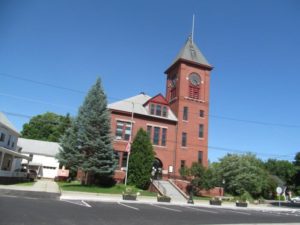
The Littlefield House in Austin sits on the University of Texas campus at 24th and Whitis, a red brick Victorian with turrets, marble steps, a wrought-iron fence and a wide veranda, all of it paid for by cattle and banking money. The house is a working university building today. It is also the subject of one of the more persistent campus stories in Texas: that the wife of the man who built it was kept in the attic, and that she has never entirely left.
Quick Facts on the Littlefield House
- Built: 1893, for Civil War veteran George Littlefield, at a cost of $50,000.
- Style: Victorian, with a red brick facade, turrets, marble steps and a veranda.
- Where: 24th and Whitis streets, on the University of Texas at Austin campus.
- Now: owned by the university. The refurbished ground floor hosts University functions; the upstairs is office space for the Office of University Events.
- Listed: added to the National Register of Historic Places in 1970.
- What people report: piano music, footsteps, voices, and a woman seen at an upstairs window.
A $50,000 House for a Cattleman and a Banker
George Littlefield made his money in cattle and banking, and by the 1890s he was one of the more prominent businessmen in the state. The house he commissioned in 1893 was built in the Victorian style that was then at its peak, and the $50,000 price tag was a serious statement of arrival for the period. The details still read that way: the ironwork, the marble at the entry, the turrets that give the roofline its silhouette against the modern campus buildings that now crowd it.
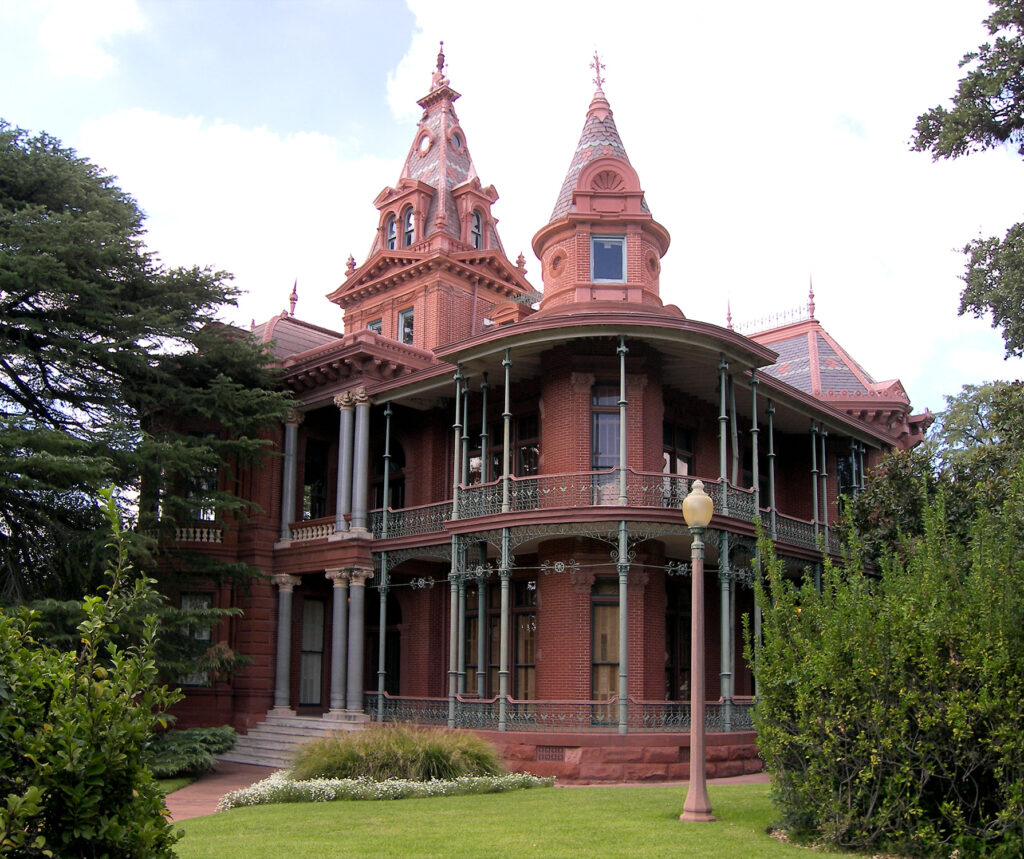
Littlefield had served in the Confederate Army, and accounts of his life in the house describe a household that mixed real prosperity with real grief. He and his wife Alice lost two children at birth. The couple had no surviving children of their own, and the house is described in local accounts as being at its liveliest when nieces and nephews were visiting. Littlefield also paid for the education of 29 relatives at the University of Texas, which is a detail that says as much about him as the marble does.
What the Littlefields Gave the University
The Littlefield name is all over the campus that now surrounds the house, and that is not an accident of geography. While they were living here, George and Alice funded the Littlefield Fountain, the Main Building and the Littlefield Dormitory. They also developed the Littlefield Building downtown, which was finished in 1912. When Alice died in 1935, she left the house itself to the university.
That bequest is the reason the building survives at all. Rather than being cleared for expansion, it was absorbed into the institution it had helped pay for. The ground floor has been refurbished and is used for university functions, and the upper floor, the one at the center of the ghost story, is now filled with desks belonging to the Office of University Events.
The Attic Rumor and What Alice’s Family Said
Here is where the record and the legend part company, and it is worth being clear about which is which.
The story told about the Littlefield House is that Alice suffered from mental health problems and that George, fearing she would be abducted, confined her to the attic. Some retellings make this sound like imprisonment. Others, including accounts attributed to members of the family, describe something quite different: a woman who was cared for by several nurses, and who went on to lead an active social life after George’s death in 1920. She outlived him by fifteen years and was still the owner of the house when she died in 1935, which sits awkwardly with the harsher version of the tale.
No documentation of an attic confinement appears in the material that circulates about the house. What exists is a rumor with two competing shapes, one grim and one sympathetic, and the grim one travels better on a college campus in October.
Piano Music and the Face at the Upstairs Window
The reported phenomena at the Littlefield House cluster almost entirely around Alice. Visitors and passers-by describe piano music coming from inside the building, which is tied to accounts of her playing in life. Others report footsteps on floors that should be empty, and whispers or voices with no identifiable source. The most repeated sighting is of a woman looking out from an upstairs window.
Reports reportedly increase around Halloween, which is the point at which any reader should apply some caution. A Victorian mansion with turrets, on a campus of tens of thousands of students, in the season when ghost stories are actively being sought, is going to generate sightings. Those who describe the presence are split on its character: some call Alice a benign figure attached to a house she loved enough to give away, while others find the whole subject unsettling. None of it has been verified, and the university does not present the building as a haunted attraction.
The Himalayan Cedar on the Southwest Lawn
One feature of the grounds is documented beyond argument, and it is arguably the best reason to walk over. George Littlefield had a deodar cedar, also called a Himalayan cedar, imported from the Himalayas and planted on the property. He was not casual about it: the soil where the tree was to go was dug out and replaced with soil brought from the Himalayas.
The tree stands on the southwest side of the house, now 57 feet tall, easy to pick out by the distinctive horizontal layering of its branches. The Texas A&M Forest Service ranks it as the number two State Champion deodar cedar on its Big Tree Registry. Local accounts connect the planting to Littlefield’s affection for Alice, which may be sentiment rather than record, but the tree and the imported dirt are fact.
Visiting the Littlefield House Grounds
The house is university property and is not open for public tours. The interior is in daily use for functions and staff offices, so the realistic visit is an exterior one, and it is a good one: the grounds are accessible, the building sits at a busy campus corner at 24th and Whitis, and the cedar is a few steps from the southwest wall.
Treat it as a short stop on a wider University of Texas walk rather than a destination in itself. The architecture and the tree deliver regardless of what you believe about the attic. If you are hoping to see a figure at the upstairs window, remember that the same window now belongs to an office with people working behind it.
See Littlefield House for Yourself
Sources
- The Alcalde
- Details – Littlefield Home – Atlas Number 5507014889 – Atlas: Texas Historical Commission (Texas (official))
- NPGallery Asset Detail (National Park Service)
- GeoHack – Littlefield House
- Wikipedia: Littlefield House
Frequently Asked Questions
Where is Littlefield House located?
Littlefield House is located at Littlefield House, 24th Street and Whitis Avenue, Austin, Texas, United States.
Can you visit Littlefield House?
Littlefield House is open to the public. Always follow posted rules and respect private property.
Reader sightings
Nobody has reported anything here yet. If you have been, you would be the first.
Report your own visit to Alice’s Piano and the Attic: Littlefield House in Austin
How haunted is this place?
Be the first to rate
Ghost Tours Nearby
 Austin’s Haunted Ghost & Murder Tourfrom $30
 Haunted Austin Walking History Tourfrom $31
 Austin Haunted Pub Crawl Walking Tourfrom $35
Affiliate links: BeyondHaunted may earn a commission, at no extra cost to you.


Leave a Reply