
Reviewed by Josh N · Updated August 17, 2026 · How we verify
Reported Phenomena
- Restless female spirit
- Graveyard apparition
Reported by visitors & local legend. Stories, not verified claims.
Two things bring people to the brick sanctuary at 502 DeKalb Street. The first is architectural: this is one of very few surviving churches designed by Robert Mills, the nineteenth century architect whose name carries real weight in South Carolina and beyond. The second is the Agnes of Glasgow ghost story, a piece of local folklore that places a young woman in the churchyard, still looking for a lover she never found. The first claim is documented in the national record. The second is tradition, and nothing more than that.
A few orienting facts, all from the record rather than the storytelling:
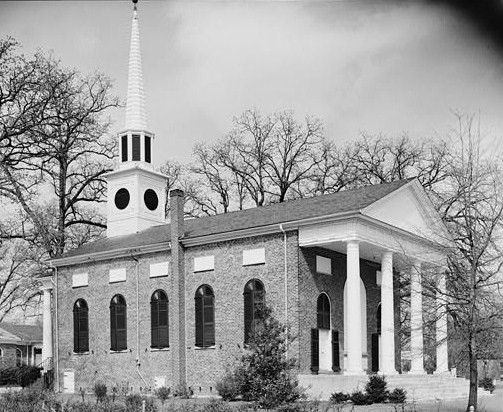
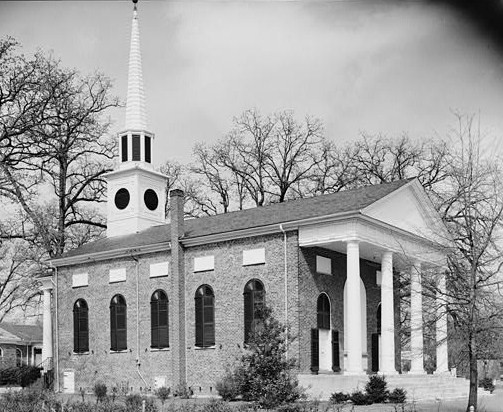
Bethesda Presbyterian Church stands at 502 DeKalb Street in Camden, on the north side of a road that doubles as United States Route 1, in the center of town. The main church building was completed in 1822. The church and its accompanying DeKalb monument were declared a National Historic Landmark in 1985, and the property also contributes to the City of Camden Historic District. The campus today holds six buildings: the main sanctuary, John Knox Hall, the Bethesda Christian School, Hammet Chapel, the McAm Building, and Westminster Hall.
Four Sanctuaries Before the Present One
The Presbyterian congregation in Camden predates the American Revolution. Its first sanctuary was destroyed during that war, and two more were raised, around 1790 and again in 1806, as the congregation outgrew each in turn. That churn matters when reading the ghost lore: the ground here was in religious use long before the current walls went up, and the building a visitor sees is the fourth attempt at housing the same congregation.
By the time Bethesda commissioned the present sanctuary, Robert Mills was already an architect of some reputation. The building was completed in 1822 and is stylistically more Classical than some of his later work. It is also one of his few surviving ecclesiastical designs, which is the specific reason it carries landmark status rather than simply local affection.
Reading the Brickwork on DeKalb Street
The sanctuary is a rectangular brick building with a four-columned portico facing the street to the south and a modest steeple at the north end. The front facade is laid in Flemish bond while the other three sides use American bond, a small economy of nineteenth century construction that is still plainly visible to anyone who looks closely. Behind the south portico sits a large central round arch niche flanked by symmetrical entrances. The side walls each carry five round-arch windows.
The north facade now serves as the main entrance, with a Tuscan portico sheltering a pair of staircases up to the gallery level. Inside, the pulpit and altar are at the south end and the balcony at the north, supported by unfluted columns, with dentillated elements, recessed panels, and fluted pilasters among its decorative work. The building was altered a number of times, particularly in the late nineteenth century, but most of those changes were reversed during the twentieth century, and what stands now bears a significant resemblance to Mills’ original design.
The Baron DeKalb Monument
In front of the sanctuary stands a monument dedicated to the memory of the Baron DeKalb, a Continental Army soldier killed in the 1780 Battle of Camden. Mills designed the monument as well as the sanctuary, and the two were landmarked together in 1985. Visitors expecting the churchyard to be the only reminder of eighteenth century death on this site should note that the war is memorialised right at the front door.
Agnes of Glasgow and What the Folklore Actually Says
Local folklore holds that the church is haunted by Agnes of Glasgow, said to have been buried in the graveyard and said to remain there searching for her lost lover. That is the whole of the documented claim, and it is worth being blunt about the wording: the burial itself is reported as supposed rather than established, and the searching figure belongs to oral tradition rather than to any record of the congregation or the building.
No verified incident, no dated sighting, and no named witness attaches to the story in the historical record for Bethesda. Camden is a town where Revolutionary War death, an old burial ground, and a landmark church sit within a few yards of one another, and stories of a woman still walking the graveyard are the sort of thing such a setting reliably produces. Treat Agnes as folklore worth knowing before a visit, not as an account of something demonstrated to happen here.
Seeing Bethesda Presbyterian Church for Yourself
The sanctuary sits in the center of Camden on the north side of DeKalb Street, which is also United States Route 1, so it is one of the easier landmarks in Kershaw County to reach and to see from the road. The Mills facade, the four-columned portico, the contrasting brick bonds, and the DeKalb monument out front are all visible from the public street without entering the building.
This is a working church campus with five further buildings alongside the sanctuary, including the Bethesda Christian School, so interior access depends on services, school hours, and the congregation’s own arrangements. Anyone hoping to see the interior columns and balcony, or to walk the graveyard where Agnes is said to lie, should contact the church rather than assume the doors are open. Photographs of the building are also held by the South Carolina Department of Archives and History and in the Historic American Buildings Survey record for the church.
Address: 502 DeKalb Street, Camden, South Carolina
See Bethesda Presbyterian Church for Yourself
Sources
- Bethesda Presbyterian Church
- Agnes Of Glasgow: A Ghost Story
- Agnes of Glasgow 1760 ~ 1780 Historical Marker
- SCDAH (Sc (official))
- NPGallery Asset Detail (National Park Service)
- Wikipedia: Bethesda Presbyterian Church (Camden, South Carolina)
Frequently Asked Questions
Where is Bethesda Presbyterian Church Camden located?
Bethesda Presbyterian Church Camden is located at 502 DeKalb Street, Camden, South Carolina.
Can you visit Bethesda Presbyterian Church Camden?
Bethesda Presbyterian Church Camden is open to the public. Always follow posted rules and respect private property.
Reader sightings
Nobody has reported anything here yet. If you have been, you would be the first.
Report your own visit to Robert Mills’ 1822 Sanctuary and the Agnes of Glasgow Ghost
How haunted is this place?
Be the first to rate
Ghost Tours Nearby
 Charlotte Haunted Booze and Boos Ghost Walking Tourfrom $35
 Charlotte Rydables Ghost Tourfrom $89
 Charlotte's Only Southern Charm Haunted/True Crime Golf Cart Tourfrom $49
Affiliate links: BeyondHaunted may earn a commission, at no extra cost to you.
Leave a Reply