
Reviewed by Josh N · Updated August 26, 2026 · How we verify
Reported Phenomena
- Phantom chanting
- Deerskin drumming
- Disembodied voices
- Unexplained laughter
- Moans behind brickwork
Reported by visitors & local legend. Stories, not verified claims.
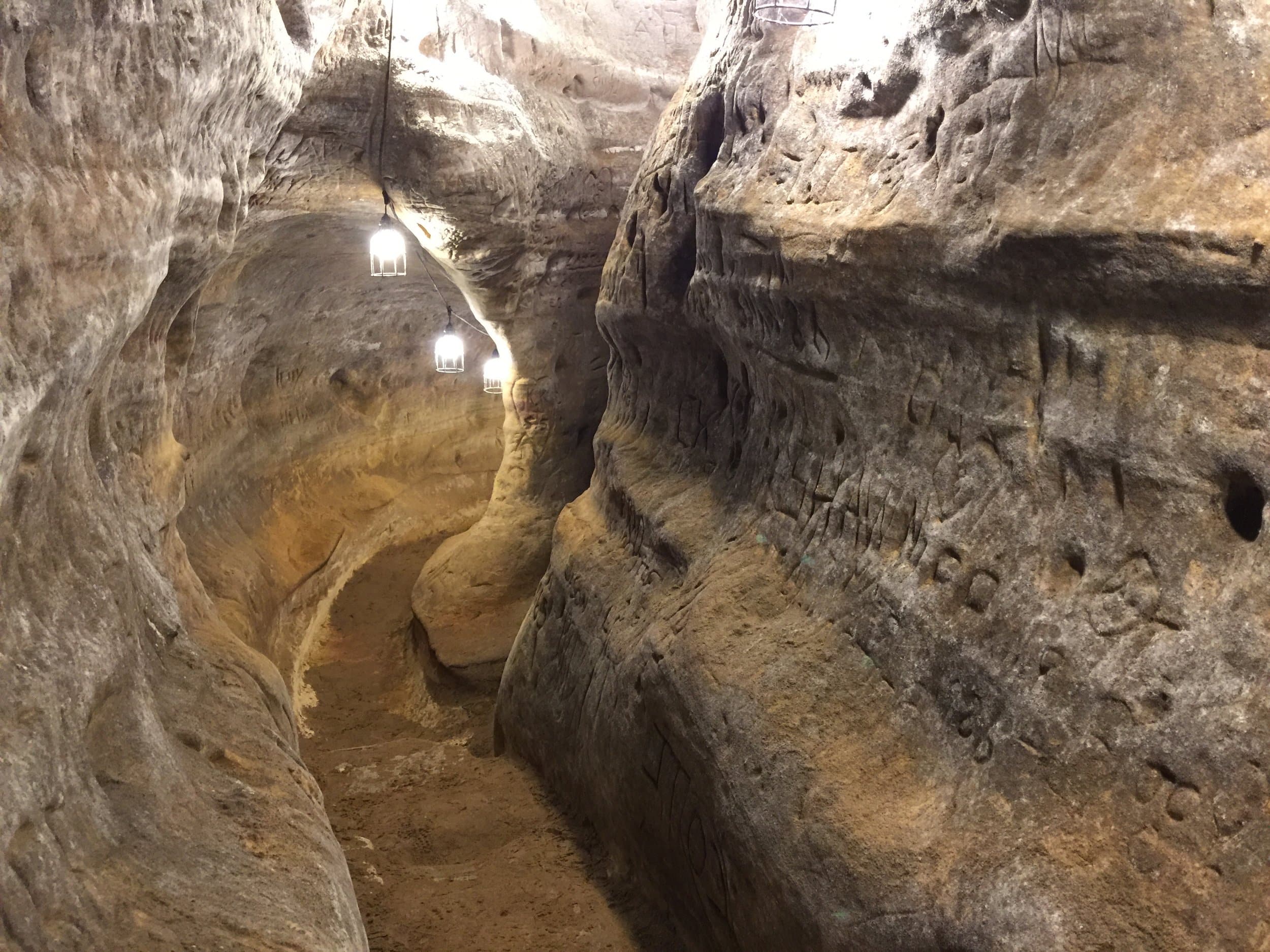
Robber’s Cave in Lincoln is not a cave you can walk into. The entrance sits under a sandwich shop, sealed off from the sidewalk traffic above it, which makes it one of the stranger heritage sites in Nebraska: a soft sandstone chamber with pictographs on its walls, hidden beneath a Subway counter. What is remarkable about the place is not any single ghost story but the sheer number of different people who are said to have used it, from Pawnee worshippers to Civil War deserters to men on the run from the law.
Robber’s Cave at a Glance
- Where: Lincoln, Nebraska, with the historic entrance now covered by a modern Subway shop.
- What it is: a sandstone cave, enlarged in the late 1800s to roughly 5,000 square feet.
- Claimed uses: Pawnee ceremonial site, Underground Railroad shelter, deserters’ hideout, brewery storage, alleged outlaw refuge.
- Access: closed to the public. There is nothing to tour from the street.
- Reported phenomena: chanting and drumming, voices and laughter, moans said to come from behind a bricked-up passage.
Tirawa, Pictographs and the Pahuk Bluffs
Long before the cave picked up its outlaw nickname, it was a spiritual place. The Pawnee are said to have used it as a site for connecting with Tirawa, the creator figure in their cosmology, and the pictographs on the cave walls are cited as evidence of that ceremonial function. The Osage are described as having used the cave as a strategic point during the 18th century, and French settlers working through the Pahuk Bluffs are said to have explored it later.
It is worth being honest about the evidentiary footing here. This is the layer of the cave’s story that rests most heavily on local retelling rather than on documentation a visitor can check, and because the site is closed, nobody is verifying the pictographs on a casual afternoon visit. The pictographs themselves are the one piece of the account that is physical rather than anecdotal.
A Hiding Place During the Civil War
The cave’s second life was as a place to disappear. It is credited with sheltering enslaved people travelling the Underground Railroad, and with hiding Civil War deserters who wanted to be somewhere no patrol would look. Both uses make practical sense for a chamber that is out of sight, out of the weather and close to a settlement, which is exactly why claims like these are easy to repeat and hard to prove. Successful concealment does not leave paperwork.
The Brewery Dig and the Jesse James Problem
In the late 1800s the Pioneers Brewery enlarged the cave into a cavern of some 5,000 square feet, presumably for the cool, stable temperatures a brewer wants. That expansion is the point at which the space stops being a natural hollow and becomes a room, and it is roughly the same period from which the cave’s outlaw reputation dates.
The James Gang and the Dalton Gang are both said to have used the cave as a hideout, and Jesse James in particular is attached to the story. Treat that with the caution any Jesse James claim deserves. His name is bolted onto caves, cellars and roadhouses across the middle of the country, usually with no more support than a good story told well. The nickname Robber’s Cave records what people believed about the place, which is not the same as recording what happened in it.
What People Say They Hear Underground
The reported hauntings at Robber’s Cave line up neatly with its layered history, which is either evidence of long spiritual residue or evidence that ghost stories tend to follow the story people already know. Visitors and locals have described the distant sound of chanting and of deerskin drums, and voices and bursts of laughter echoing through the chambers with no traceable source.
The detail that gets repeated most often is a bricked-up passage inside the cave. Moans and whispers are said to come from behind it, and that has fed speculation about spirits sealed in on the wrong side of the masonry. No account here establishes who, if anyone, was ever behind that wall.
A further strand of the folklore draws on the cave’s proximity to Nebraska’s state mental asylum and penitentiary, with the suggestion that escaping patients and prisoners used the tunnels as a last refuge and that their spirits stayed. That is presented as speculation in the local lore rather than as anything documented. None of the phenomena described here has been verified; they are reported experiences, and the closure of the cave means most of them are now second hand by definition.
Why You Cannot Visit Robber’s Cave
Robber’s Cave is not open to the public, and the entrance is covered by a working commercial building. There is no marked trail, no tour desk and no legitimate way in, so the practical advice is simple: do not go looking for a door. Anyone genuinely interested in the site is better served by Lincoln’s local history collections than by standing in a car park hoping to hear drums. The cave’s appeal at this point is largely imaginative, which is its own kind of pleasure: an unusually well-used piece of Nebraska underground, sitting quietly under an ordinary lunch queue.
See Robbers Cave for Yourself
Sources
Address: 925 Robbers Cave Rd
Frequently Asked Questions
Where is Robbers Cave located?
Robbers Cave is located at 925 Robbers Cave Rd.
Can you visit Robbers Cave?
Robbers Cave is on private property and best viewed from a distance. Always follow posted rules and respect private property.
Reader sightings
Nobody has reported anything here yet. If you have been, you would be the first.
Report your own visit to Pawnee Ceremony to Outlaw Hideout: Robber’s Cave in Lincoln
How haunted is this place?
Be the first to rate
Leave a Reply