
Reviewed by Josh N · Updated August 17, 2026 · How we verify
Reported Phenomena
- Disembodied moaning
- Phantom footsteps
- Shadowy figures
- Car radio interference
Reported by visitors & local legend. Stories, not verified claims.
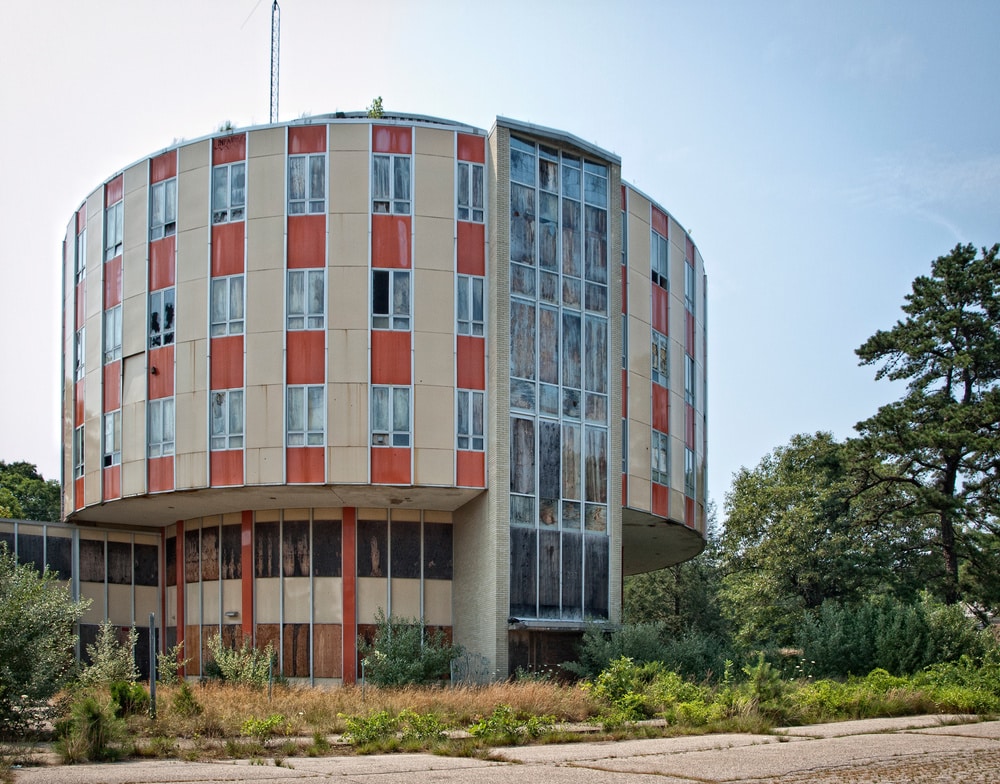
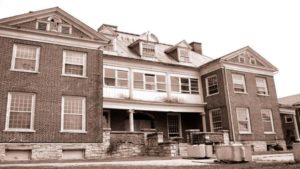
Almost nothing is left to walk through. The Ladd School in Exeter, Rhode Island, ran for eighty five years as a state institution for people with mental disabilities and developmental delays, and for most of that time it was one of the worst kept secrets in New England. The last four buildings came down in August 2013. What survives is a documented record of what happened there, and a set of ghost stories that grew up around the buildings while they still stood.
The distinction matters here more than at most sites. The cruelty at the Ladd School is a matter of state investigations, court rulings and newspaper reporting. The hauntings are anecdote.
Quick Orientation to the Ladd School
- Location: Exeter, Rhode Island
- Operated: 1908 to 1993
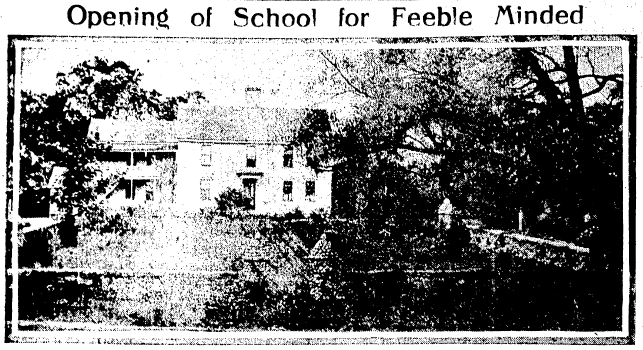
- Founded as: the Rhode Island School for the Feeble-Minded, a farm colony
- Renamed: Exeter School in 1916, Dr. Joseph H. Ladd School in 1958
- Closure announced: 1986 by Governor Edward D. DiPrete; final residents relocated 1993
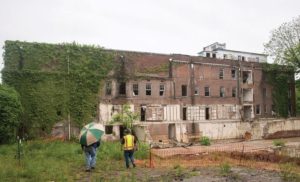
- Current state: the last four buildings were demolished in August 2013
A Farm Colony Built on Eugenic Theory
The institution opened in 1908 as a small farm colony in rural Exeter, modelled on the experimental Templeton Colony annex of the Massachusetts School for the Feeble-Minded, the oldest public institution of its kind in the country. On paper the aim was training: young people with disabilities would learn farm work and mechanical trades.
The intellectual parentage was less benign. Templeton’s guiding figure, Dr. Walter Fernald, was a prominent eugenicist who argued for removing the so-called feeble-minded from society in order to cleanse the national gene pool of “defective” stock. His protege and Templeton’s chief administrator, Dr. Joseph Ladd, became the Rhode Island school’s first superintendent. Ladd was a trained physician and a classically educated teacher, and his early administration was widely regarded as a credit to the state’s public welfare system. His reputation for mistreating the students grew as the decades passed.
In 1916 Ladd renamed the place the Exeter School, dropping “feeble-minded” to soften public distaste for the term. The record of the period includes the plain eugenic argument that Rhode Island had fallen behind other states in passing sterilization laws, and that allowing the “unfit” not only to survive but to multiply would produce a general deterioration of the population. That ideology shaped what the institution actually became.
The Exeter School as a Holding Pen
By the 1920s the school had been criticised for overcrowding and inadequate care, described as a “dumping ground” run by officials with a “fatalistic attitude” and little interest in releasing anyone. Through the middle of the century the Exeter School did very little educating or training. The school building was used mainly as living quarters for young children and so-called wayward girls, while dormitories ran well beyond capacity.
Its real function was custodial, closer to a penal institution than a school. People were detained indefinitely, segregated from the outside world, and many of them had committed no crime at all. Women were committed for prostitution, sodomy, extramarital sex and “illegitimate” pregnancy. Court commitment to Exeter was used in case after case as a way of ending a family’s bloodline. Compulsory sterilization was illegal in Rhode Island, so most women sent there under those pretexts were held until menopause or death; a smaller number were sterilized anyway by surgeons willing to work around the law. Until the end of the Second World War, that was the Exeter School’s primary purpose.
1947, and the 1955 Killing That Ended Ladd’s Career
After decades of overcrowding, shrinking money and deteriorating conditions, Ladd’s approach shifted. In 1947 he discharged nearly a third of the institution’s population, then numbering more than 900, blaming the state for an impending financial collapse. The gambit worked in that it brought more funding, but the school could not shed its role as a warehouse for those the courts labelled “defective delinquents.”
Over the following decade it expanded again, adding buildings and taking in more people with severe disabilities. Living conditions barely improved, and the shortage of qualified caregivers became acute. In 1955 a 20-year-old inmate, a lifelong state ward committed by the courts, was implicated in the murder of a severely disabled child. Some later retellings add specific details about the victim’s age and the manner of death that the institutional record does not confirm. What is documented is that the scandal ended an era and prompted Ladd’s swift resignation.
Dr. Smith, Modern Cottages and the Dental Clinic Report
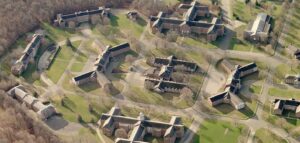
Dr. John Smith, formerly director of education at the Connecticut Training School for the Feeble-Minded, took over in 1956, and in 1958 the Exeter School was renamed the Dr. Joseph H. Ladd School in another attempt at image repair. Smith’s era brought a new school building, a state-of-the-art hospital and a cluster of single-story cottages that would later serve as models for the modern group home.
Television and newspaper campaigns promoted the school throughout the 1960s and early 1970s, while advocacy groups formed outside the gates and employees picketed for better pay and conditions. Behind closed doors, Smith’s political opponents repeatedly tried to remove him for mismanaging funds and abusing his authority.
The end came in November 1977, when a state-appointed investigation into the Ladd School hospital building documented disturbing health violations at the dental clinic. The report leaked to the press, and investigative journalists spent the following weeks uncovering a run of health and human rights violations, including several patient deaths attributed to negligence and medical malpractice. Governor J. Joseph Garrahy fired Smith in January 1978.
Deinstitutionalization and the Long Shutdown
A class action lawsuit against the State of Rhode Island, filed after the dental scandal, ended with a court order that the institution overhaul its policies and cut its population by half. Under George Gunther, the third and final appointed executive director, numbers kept falling as public and private community care agencies took over. In 1986 Governor Edward D. DiPrete announced the school’s closure. The last residents were moved to other facilities in 1993.
The 2015 supernatural thriller Exeter, released in the UK as The Asylum, was filmed on location at the abandoned Ladd School before the final four buildings were demolished in August 2013. Its plot is fiction, though it borrows pieces of the real history.
What People Say Happens at the Ladd School
During the years the empty buildings stood open to trespassers, the Ladd School became a fixture of Rhode Island’s abandoned-places circuit, and the reports that circulated from that period are consistent in tone if impossible to verify. Visitors and paranormal investigators described low moaning heard from empty wards, footsteps in corridors with nobody in them, and figures glimpsed moving across the grounds. Some claimed that car radios cut out near the property.
None of that has been substantiated, and the setting explains a good deal of it: a derelict institution with a genuinely appalling documented history is fertile ground for suggestion. It is worth saying that the people at the centre of these stories were real, that many of them were committed for no offence, and that the historical record of what was done to them is far more disturbing than any of the ghost accounts.
Visiting the Ladd School Site in Exeter
There is no building to tour. The demolition of the last structures in August 2013 removed the ruins that drew explorers and film crews, so anyone travelling to Exeter expecting corridors and peeling paint will be disappointed. Treat the location as a historical site rather than a haunted attraction, and respect posted signage and property boundaries.
Readers wanting the substance of the story are better served by the documentary record: the Ladd School Museum project and first-person accounts from former residents cover the institution’s eight decades in far more detail than any night walk on the grounds could.
See The Ladd School for Yourself
Sources
- Marcus Nispel: The Asylum, Texas Chainsaw Massacre, Friday the 13th
- The Ladd School Historical Society | Exeter, Rhode Island
- Alice's Story, Part 2: The Exeter School | Julianne Mangin
- GeoHack – The Ladd School
- True Hauntings of America
- Wikipedia: The Ladd School
Frequently Asked Questions
Where is The Ladd School located?
The Ladd School is located at 1958 the Exeter School was renamed the Dr.
Can you visit The Ladd School?
The Ladd School is no longer standing, only its history and stories remain. Always follow posted rules and respect private property.
Reader sightings
Nobody has reported anything here yet. If you have been, you would be the first.
Report your own visit to Ladd School in Exeter: A Eugenics Colony’s Empty Ground
How haunted is this place?
Be the first to rate
Ghost Tours Nearby
 Haunted History Walking Tour of Providencefrom $30
 Providence Ghost Tours: Phantoms, Poltergeists, & Pestilencefrom $26
 Haunted Boat Tours in Providencefrom $45
Affiliate links: BeyondHaunted may earn a commission, at no extra cost to you.

Leave a Reply