
Reviewed by Josh N · Updated August 3, 2026 · How we verify
Reported Phenomena
- Spirit called Sam
- Lights interfered with
- Disembodied voices
- Unexplained echoing sounds
- Feeling of being watched
Reported by visitors & local legend. Stories, not verified claims.
Portland’s Shanghai Tunnels run under the older blocks of Oregon’s largest city, a patchwork of brick-lined basements, connecting passages and hatchways that once let merchants move freight without ever touching the street. The name they carry now has nothing to do with cargo. It comes from crimping, the maritime kidnapping trade that flourished in West Coast port cities in the second half of the 19th century, and from the long-running claim that these particular passages were used to funnel drugged and beaten men out to waiting ships. That claim is an allegation rather than a settled matter of record, and it is worth understanding both halves of the story before deciding what you believe about the footsteps.
Quick Orientation
- Where: beneath the older commercial district of Portland, Oregon
- Origin: mid-19th century passageways built to move goods to the riverfront
- The name: from shanghaiing, the practice of kidnapping men to serve as sailors
- Access: public tours were halted following the COVID-19 pandemic and access has been restricted since
- Most-reported presence: a spirit visitors call Sam
Carts, Crates and the Riverfront: What the Passages Were Built For
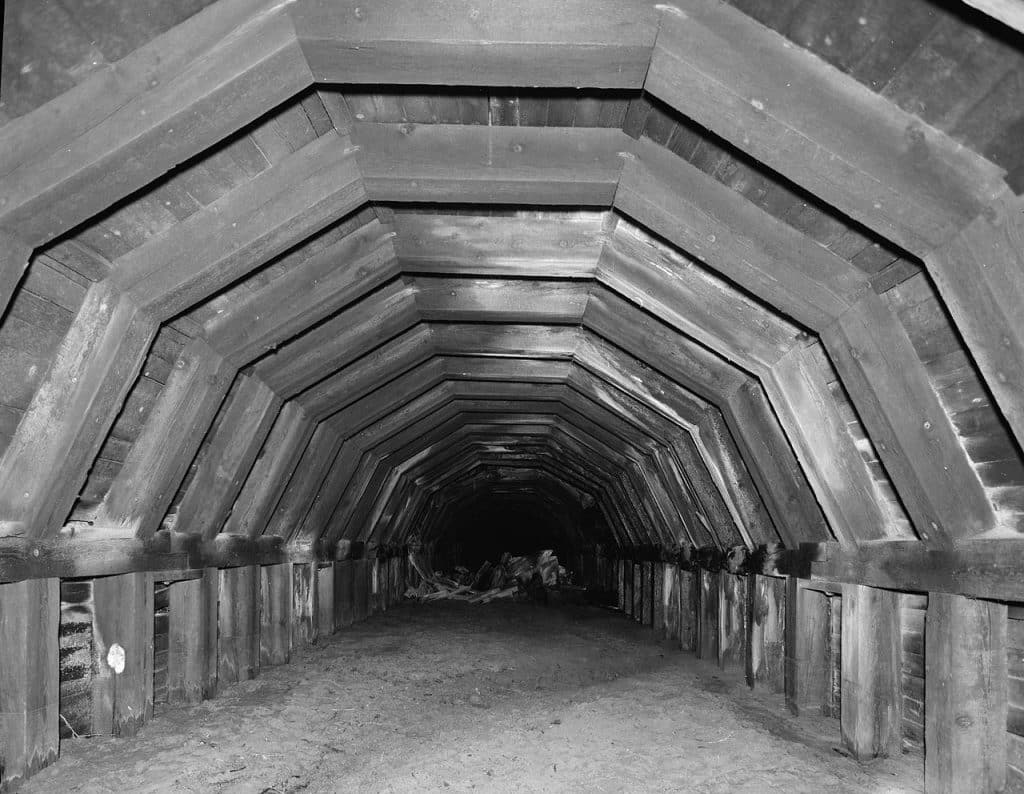
Strip away the folklore and the tunnels have an unglamorous origin. Constructed in the mid-19th century, they let goods move quickly and efficiently from buildings to the riverfront without competing with wagon traffic overhead. Deliveries arrived in a basement, went sideways through the block, and emerged where they were needed. It was a practical solution to a crowded working waterfront, and for decades that was the whole of their purpose: quieter, faster, out of the weather and out of the way.
That mundane function matters, because it explains why the network exists at all. A city with a busy port and a hard-drinking, hard-labouring dockside district would have had reason to dig regardless of whether anyone was ever carried through unconscious.
Crimping: The Trade the Tunnels Are Named For
Shanghaiing, also called crimping, was the practice of kidnapping men to serve as sailors through trickery, intimidation or outright violence. The men who did it were crimps. The verb entered English alongside “crimping” and “sailor thieves” in the 1850s, possibly because Shanghai was a common destination of ships sailing with abducted crews.
The trade was not a moral aberration so much as the predictable product of law and economics. Under federal legislation enacted in 1790, an American sailor who signed on for a voyage could not legally leave the ship before the voyage ended, and the penalty for doing so was imprisonment. At the same time the West Coast was starved of experienced crew: with sailors abandoning ships en masse for the California Gold Rush, a healthy body aboard was a boon. Into that gap stepped the boarding masters, whose business was finding crews. They were paid “by the body”, a fee known plainly as blood money, which gave them every incentive to put as many men on as many ships as possible.
The crudest method was also the most direct: render a man unconscious, forge his signature on the ship’s articles and collect the blood money. There were more profitable variations. A crimp could take the first several months of a man’s wages, or sell him goods and services at inflated prices and then claim the debt straight from the ship’s captain. Some crimps cleared as much as $9,500 a year, the equivalent of roughly $340,000 in 2025 money. Men earning that were also well positioned politically to protect the arrangement.
Bunko Kelly, James Turk and Portland’s Reputation
Crimping thrived in London and Liverpool, and in American ports including San Francisco, Astoria, Seattle, Savannah, Port Townsend and Portland. On the West Coast, Portland eventually surpassed San Francisco for shanghaiing. The city produced its own notorious operators, among them Joseph “Bunko” Kelly and James Turk, names that still attach themselves to the tunnel legend today.
What the historical record supports is that the practice happened in Portland on a significant scale. What remains contested is the tunnels’ role in it. The passages are described as allegedly used to shanghai labourers for ships in the early 20th century, and that word is doing real work: the underground network is documented, the crimping trade is documented, and the link between the two rests largely on tradition, anecdote and later retelling rather than on hard evidence. Rumours of smuggling and other hidden dealings persist for the same reason, encouraged by how extensive and labyrinthine the network is.
The trade itself ended by legislation, not by conscience. Congress moved against crimps with the Shipping Commissioners Act of 1872, requiring a sailor to sign on before a federal shipping commissioner so he could not be forcibly or unknowingly signed on by a crimp. Further reforms followed, and the shift to steam-powered vessels sharply reduced the demand for unskilled hands. The Seamen’s Act of 1915, pushed through by Andrew Furuseth and Senator Robert M. La Follette, made crimping a federal crime and finished it off.
Sam and the Sounds Under the Sidewalk
The tunnels’ best-known reported presence is a spirit visitors call Sam, described as an Asian man who moves through the passages and is blamed for interfering with the lights. Accounts generally describe him as friendly but mischievous rather than threatening, though people who report encountering him also describe a persistent sense of being watched.
Beyond Sam, the recurring reports are auditory: voices with no visible source, and unexplained sounds echoing off brick and stone. It is worth noting the obvious caveat. A damp, low-ceilinged, acoustically strange space beneath a working city will carry noise from pipes, traffic and adjoining basements in ways that are genuinely difficult to trace. That does not settle anything, but it belongs in the same paragraph as the stories.
Whether You Can Get Into the Shanghai Tunnels Now
For the moment, you cannot. Public access was restricted following the COVID-19 pandemic, which halted tours and independent exploration. The closure has done nothing to reduce interest; if anything it has thickened the mystique, since speculation about the tunnels’ condition and current use now runs without the correction of anyone actually walking through them.
Anyone hoping to go down should watch for news of tours resuming rather than looking for another way in. The network sits beneath private buildings and city infrastructure, and unsanctioned entry is neither legal nor safe. Until then, the Shanghai Tunnels remain what they have been for most of their existence: a working piece of Portland’s past that most of the city walks over without noticing.
See Shanghai Tunnels for Yourself
Sources
- San Francisco Shangaiers 1886 to 1890
- The Portland Underground: Shanghai Tunnels
- Astoria's history along the tracks
- Levy, Maxwell (d. 1931), Port Townsend's Crimper King
- American Merchant Marine Timeline, 1789 to 2005
- Wikipedia: Shanghaiing
Frequently Asked Questions
Can you visit Shanghai Tunnels?
Shanghai Tunnels is on private property and best viewed from a distance. Always follow posted rules and respect private property.
Reader sightings
Nobody has reported anything here yet. If you have been, you would be the first.
Report your own visit to Blood Money Beneath the Sidewalks: Portland’s Shanghai Tunnels
How haunted is this place?
Be the first to rate
Ghost Tours Nearby
 Shanghai Tunnels Underground Tour – with Beer Tastingfrom $44
 Phantoms, Penance, and Poltergeists: Portland Ghost Tourfrom $26
 The Dark Below Portland Adults Only Haunted Ghost Tourfrom $35
Affiliate links: BeyondHaunted may earn a commission, at no extra cost to you.
Leave a Reply