
Reviewed by Josh N · Updated August 27, 2026 · How we verify
Reported Phenomena
- Phantom screams
- Unexplained footsteps
- Doors opening alone
- Oppressive atmosphere
- Unease near cremains
Reported by visitors & local legend. Stories, not verified claims.
Few American institutions carry as much documented weight as the Oregon State Hospital in Salem, Oregon: a Kirkbride Plan asylum that has been admitting patients since 1883, a film set for One Flew Over the Cuckoo’s Nest, the site of a mass poisoning that killed 47 people in a single evening, and the building where more than 5,000 copper canisters of unclaimed human ashes sat in a basement for decades. The ghost stories attached to it are secondhand and unverified. The record underneath them is not.
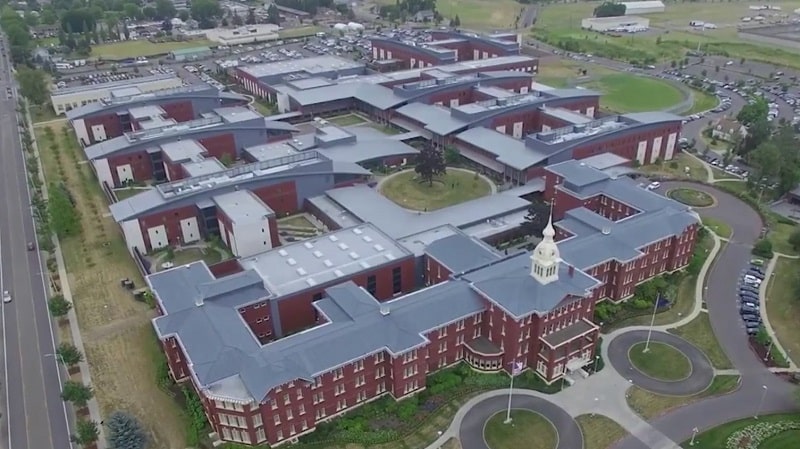
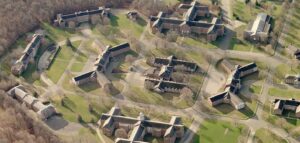
Quick orientation: the hospital is an active public psychiatric facility in the Oregon state capital, with a smaller satellite campus in Junction City opened in 2014. The whole campus was listed on the National Register of Historic Places in 2008. The surviving center of the original Kirkbride building now houses a mental health museum, which is the part of the site an ordinary visitor can actually walk into.

Hawthorne’s Asylum and the Move to Center Street
The lineage starts in Portland, not Salem. Physician James C. Hawthorne established the Oregon Hospital for the Insane in what was then East Portland in 1862. The street it stood on was named Asylum Avenue, until local residents objected and it was renamed Hawthorne in the founder’s honor in 1888.
Address: 2600 Center Street NE
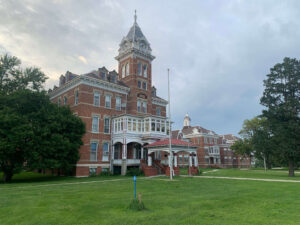
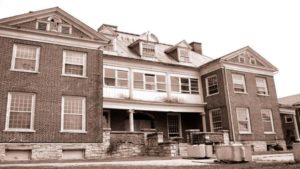
Because the Oregon constitution required state hospitals to be built in the capital, the state broke ground in Salem on May 1, 1881. The building was finished in 1883 and opened as the Oregon State Insane Asylum on October 23 of that year. It cost $184,000, was designed by W.F. Boothby in an Italianate style, and followed the Kirkbride Plan, the sprawling winged layout meant to give every patient light and air. The Salem street it fronts, Center Street, had also once been called Asylum Avenue.
Not everyone approved. The reformer Dorothea Dix had championed Hawthorne’s Portland hospital and visited it twice, but publicly criticized the opening of the new state institution, arguing that Oregon was not prepared to care for its patients properly. Read against the century that followed, that is an uncomfortable piece of foresight.
By 1891 the hospital held 478 men and 212 women. Two wings were added, gaslight gave way to electric light, and an infirmary went up in 1892. The record of what the institution believed it was treating survives too: in 1896, the most commonly listed causes of insanity at the hospital were epilepsy, intemperance, masturbation, and religious paranoia. The name changed to Oregon State Hospital in 1913, after trustees argued in an 1897 report that the word “asylum” caused patients and their families needless disgrace.
Sterilizations, Shock Therapy, and the Long Overcrowding
The hospital was active in electroconvulsive therapy, lobotomy, eugenics, and hydrotherapy. The 1912 Dome Building, the receiving ward designed by Edgar M. Lazarus, was built with hydrotherapeutic facilities. Insulin shock therapy and Metrazol shock therapy both arrived in 1937.
The eugenics program began in 1923 and sterilized more than 2,600 patients before it ended. Lobotomy was abolished at the hospital in 1981; the eugenics program was dismantled in 1983. Those are recent dates by any measure, and they are the reason the museum on site now devotes space to practices no longer considered acceptable treatment.
Population pressure was chronic. By 1924 the campus held 1,864 patients with roughly 200 staff and five physicians. The mid-century peak reached 3,545. Dammasch State Hospital opened in Clackamas County near Portland in 1961 specifically to relieve the crowding, and closed in 1995. Even so, by 1991 the Salem hospital was reportedly so full that beds had been placed in corridors and in ward smoking rooms.
November 18, 1942: Sodium Fluoride in the Scrambled Eggs
The single worst night in the hospital’s history had nothing to do with psychiatry. On the evening of November 18, 1942, patients were served scrambled eggs. Within minutes people were complaining of stomach and leg cramps, vomiting, and struggling to breathe. In total, 467 people fell ill and 47 died.
Forensic examination traced it to a kitchen mix-up. Sodium fluoride, kept on the premises as a cockroach poison, had been used in place of powdered milk. It remains one of the deadliest institutional poisonings in American history, and it happened in a dining hall on this campus.
The Copper Canisters in Building 60
For decades the hospital stored the cremated remains of patients whose families never claimed them: more than 5,000 copper canisters, kept in the basement of the original building. They came to public attention in 2004, when state senator Peter Courtney encountered them during a tour. By then the canisters had been moved to Building 60, and many were corroded and oxidized from exposure to moisture, the copper blooming into strange blue and green patterns.
The Oregonian’s reporting on the remains won a Pulitzer Prize in 2005. In 2007 the state gave the hospital permission to release the names of the dead in the hope of reuniting remains with descendants, and in 2011 Building 60 was renovated into a public memorial housing them. The story does not end tidily: as of July 2014, state officials had determined that around 1,500 sets of remains may have been lost.
Tunnels, Purple Glass, and a Bamboo Railroad
A narrow gauge railroad was laid on the grounds during construction, running into tunnels linking the hospital buildings. The point was practical and also discreet: patients could be moved between buildings without the public watching. The tunnels were lit from above through purple-colored glass prisms set into the roads overhead, which are still a recognizable feature of the campus.
Day to day, the tunnels carried food, laundry, and supplies, and occasionally people. Cars made of bamboo were pushed along the rails by hand; later, transport shifted to electric carts and sometimes bicycles. Several bamboo cars were eventually converted by swapping rail wheels for casters, and one of them is on display in the hospital’s mental health museum. The narrow gauge line once ran as far as the penitentiary, though not through a tunnel. The Oregon State Capitol has its own separate tunnel system, and despite persistent assumptions, it has never connected to the hospital’s.
Cuckoo’s Nest, Ward 81, and Library of Dust
In 1975, superintendent Dr. Brooks allowed Milos Forman to film One Flew Over the Cuckoo’s Nest inside the hospital and across its grounds. The openings of Dammasch and the Eastern Oregon State Hospital had brought resident numbers low enough to make room for a production crew.
The following year, photographer Mary Ellen Mark and writer Kay Folger Jacobs were commissioned by The Pennsylvania Gazette to report on the hospital. They spent over a month living inside a security ward among female patients, work published as the photographic collection Ward 81. The discovery of the cremains later became the subject of the 2011 documentary Library of Dust. Between them, these three works are why the building is recognizable to people who have never been to Oregon.
Modern Scrutiny and the Rebuilt Hospital
Criticism intensified in the 2000s. A two-month Salem Statesman Journal investigation in 2004 described overcrowded living conditions and outdated facilities, and reported systemic failures including drug addicts and alcoholics being wrongly admitted, severe understaffing, and a failure to properly investigate patient assaults on staff. A 2005 architectural assessment concluded the site was unsafe. That same year the Oregon Advocacy Center filed a federal suit alleging that overcrowding and understaffing endangered patients and staff, and the Child and Adolescent Secure Treatment Program was dismantled. In 2006 the hospital was fined $10,200 for asbestos violations.
In 2008 the U.S. Department of Justice issued a report criticizing patient care, focusing in part on the death of Moises Perez, a patient with paranoid schizophrenia admitted in 1995 after being found guilty except for insanity of attempted murder. Perez went missing on October 17, 2009, and was later found dead inside the hospital; an autopsy gave the cause as coronary artery disease. The hospital responded with a list of twenty-five improvements, including enhanced patient monitoring and increased medical and nursing staff levels.
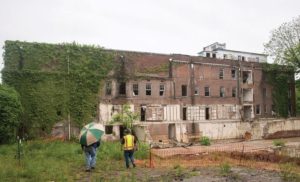
The Oregon Legislative Assembly approved a $458 million rebuilding plan in 2007. Demolition of parts of the 125-year-old Kirkbride building began in September 2008, the new Salem facility was completed around 2011 with capacity for 620 beds, and the Junction City facility followed. Overcrowding did not vanish with the new walls: in September 2022 the hospital settled a lawsuit with disability rights advocates that produced a federal injunction against new admissions when the facility is over capacity.
What People Say Happens on the Campus
- A heavy, oppressive atmosphere reported around the older and disused structures, often described as dread or despair rather than anything hostile.
- Sounds interpreted as distant screams or crying, attributed by those who hear them to former patients.
- Footsteps in the tunnel system with no one visible, and doors reported opening and closing on their own.
- An intense sense of unease reported by visitors in the space holding the unclaimed cremains.
It is worth being honest about the mechanics here. This is a 140-year-old institutional complex with echoing corridors, a subterranean transit network, and a genuinely grim documented history that any visitor arrives already knowing. Expectation does a great deal of work in a place like this. That does not mean people are lying about what they experienced; it means the building supplies the atmosphere before anything unexplained needs to.
Visiting the Oregon State Hospital Museum of Mental Health
This is a working public psychiatric hospital, and most of the campus is closed to the public for obvious and non-negotiable reasons. What you can visit is the Museum of Mental Health, housed in the salvaged and renovated center of the Kirkbride building and operated by a non-profit organization separate from the hospital administration. Its exhibits cover the discontinued practices that shaped the institution’s first century as well as current approaches to treatment, and the collection includes one of the converted bamboo tunnel cars.
Do not attempt to enter the tunnels or any non-public building. Check current hours before travelling, since a museum run by volunteers on an active hospital campus keeps limited and changeable hours. Go for the history first. It is the strongest thing this site has.
See Oregon State Hospital for Yourself
Sources
- A Visit to the Oregon State Hospital
- IMDB:Library of Dust
- Oregon National Register List
- Years in the Shadows
- Oregon State Hospital – Salem, Historic Review. Narrow-Gauge Rail Lines and Building 73
- Wikipedia: Oregon State Hospital
Frequently Asked Questions
Where is Oregon State Hospital located?
Oregon State Hospital is located at 2600 Center Street NE.
Can you visit Oregon State Hospital?
Oregon State Hospital is open to the public. Always follow posted rules and respect private property.
Reader sightings
Nobody has reported anything here yet. If you have been, you would be the first.
Report your own visit to Copper Canisters and Cuckoo’s Nest: Oregon State Hospital
How haunted is this place?
Be the first to rate
Ghost Tours Nearby
 Shanghai Tunnels Underground Tour – with Beer Tastingfrom $44
 Phantoms, Penance, and Poltergeists: Portland Ghost Tourfrom $26
 The Dark Below Portland Adults Only Haunted Ghost Tourfrom $35
Affiliate links: BeyondHaunted may earn a commission, at no extra cost to you.
Leave a Reply