
Reviewed by Josh N · Updated July 27, 2026 · How we verify
Reported Phenomena
- Statue weeping black tears
- Presidential apparition
- Fog-like shapes
- Feeling of being watched
Reported by visitors & local legend. Stories, not verified claims.
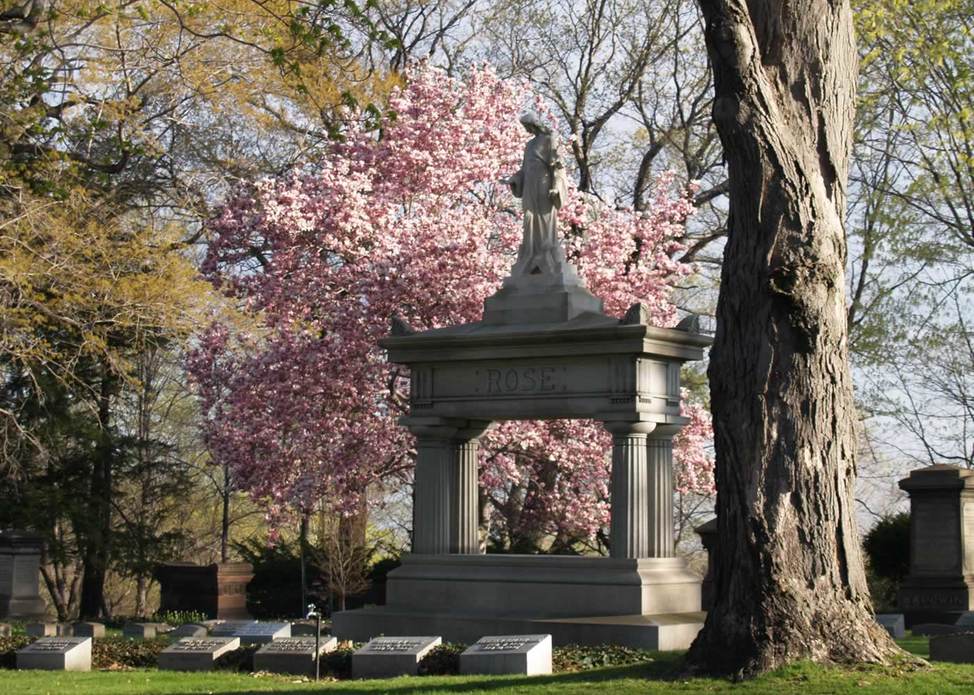
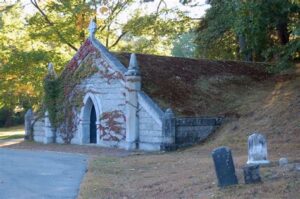
Cleveland’s Lake View Cemetery was designed to be looked at. When a group of Gilded Age industrialists laid it out in 1869 on a ridge above Euclid Avenue in Ohio, they wanted terraces, ravines, ponds and sculpture, a landscape people would visit for pleasure as much as for grief. That ambition is why the place still draws crowds, and it is also why its ghost stories have the shape they do: nearly all of them attach to a monument rather than a building. The most famous involves a bronze angel said to weep black tears.
Three Businessmen Who Thought Woodland Was Too Small
In 1868, Jeptha Wade, Henry B. Payne and Joseph Perkins began arguing that Cleveland had outgrown Woodland Cemetery, which they considered overcrowded, poorly maintained and not scenic enough for a rising industrial city. On May 8, 1869, they invited roughly forty of the city’s other leading businessmen to a meeting. Thirty turned up on May 24, and on July 28 that group incorporated the nonprofit Lake View Cemetery Association.
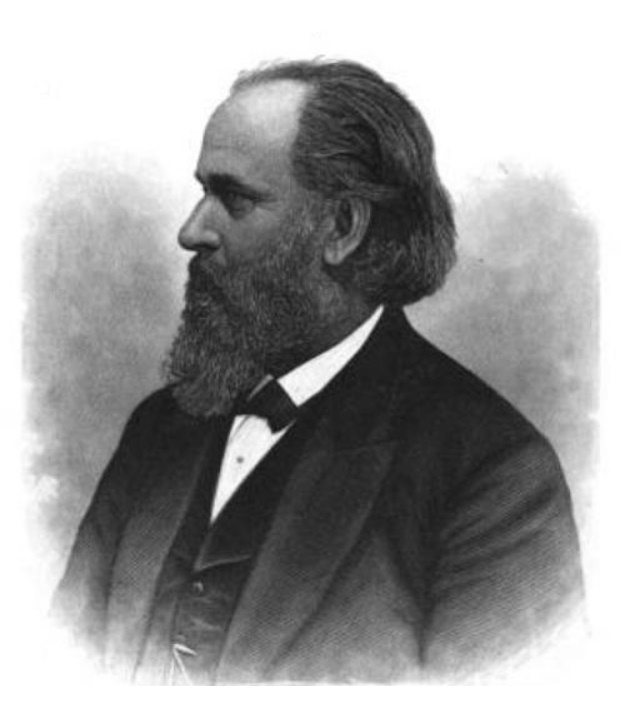
The trustee list reads like a directory of Cleveland capital: hardware man William Bingham, banker Hinman B. Hurlbut, Payne and Perkins, U.S. District Court Judge Charles Taylor Sherman, steelmaker Amasa Stone, railroad men Worthy S. Streator and Stillman Witt, and Wade, a co-founder of Western Union. Wade became president. Liberty E. Holden, owner of The Plain Dealer, served as clerk. Sherman supplied the name.
The founders wanted a garden cemetery in the manner of Mount Auburn near Boston or Spring Grove in Cincinnati. They sold bonds paying 7 percent annual interest, aiming at $150,000, hit the target within six weeks, raised the goal to $200,000, and hit that too. The cemetery was described as non-sectarian and open to all, which in the nineteenth century meant its expected clientele was Protestant.
Smith Run, Dugway Brook and Adolph Strauch’s Plan
A site committee wanted lake frontage and could not find anything suitable. Holden then stumbled on the eventual site by chance while travelling on Euclid Avenue. The area was known as Smith Run. It began on the Erie Plain and climbed into the foothills of the Portage Escarpment, cut north by Dugway Brook and several smaller streams that had carved out a series of ravines. The Dugway Brook ravine was especially deep, and Euclid bluestone had once been quarried there.
By late September 1869 the association had bought 175 acres beside Euclid Avenue for a combined $148,821.84, giving it about three quarters of a mile of frontage. Within a year the holding was 211 acres. Adolph Strauch, designer of Spring Grove, was hired in October 1869, with Joseph Earnshaw of Cincinnati as civil engineer and O.D. Ford as first superintendent. Crews spent the winter of 1869 and 1870 grading roads, terracing ground for plots and mausoleums and clearing underbrush. The first 300 plots went on sale on June 23, 1870, a standard in-ground grave priced at $4.00 and larger family or mausoleum sites at 20 cents a square foot. Distance and price together meant Lake View was, from the start, a middle class and wealthy burial ground.
Expansion came fast. The first ravine was bridged in November 1870. Dugway Brook was dammed in places to make ponds. By June 1873 the cemetery covered 266 acres with eight sections open for burials, and by 1876 it ran to 304 acres. As much as 40 percent of burials between 1870 and 1873 were bodies moved out of Woodland.
Weeping Stone Long Before the Weeping Bronze
By 1877 The Plain Dealer estimated that more than $100,000 worth of funerary monuments stood on the grounds. The list is worth reading slowly, because it explains the cemetery’s atmosphere better than any legend does. There were obelisks and shafts over the Doan, Kelley, McDermott, Potter and Tisdale plots. There was the Keynes column topped with a funerary urn, and the Jeptha Wade shaft topped with an angel. There was the Hurlbut pillar crowned by a weeping figure, weeping women over the Bucher and Hanna graves, a group of angels supporting a cross on the Cross plot, a sculptural group called Hope above the Perkins monument, and carved figures on the Johnson and Garretson slabs.
That volume of stone carving had consequences beyond the cemetery wall. The demand for monument work at Lake View helped give rise to Cleveland’s Little Italy neighbourhood. It also cost money. Over-expansion nearly bankrupted the cemetery in 1888, a decade and a half after it had already closed the 1872 to 1873 fiscal year technically insolvent, carrying roughly $198,000 in debt against its assets. Financial recovery did not begin until 1893 and then took several years. Under president Henry R. Hatch, from 1896 to 1915, Lake View grew and modernised substantially, and its cautious management later carried it through the Great Depression without the retrenchment that hit many American cemeteries.
The Garfield Memorial and Wade Memorial Chapel
Two structures inside the grounds are listed on the National Register of Historic Places. The first is the James A. Garfield Memorial, erected in 1890 as the tomb of the assassinated president. The second is Wade Memorial Chapel, begun in 1898 and finished in 1901, built in memory of co-founder Jeptha Wade and donated by his grandson. Between them they account for most of the visitor traffic, and, not coincidentally, most of the ghost reports.
The Angel Said to Weep Black Tears
Lake View’s best known piece of folklore concerns a bronze angel over the plot of a prominent early twentieth century family, popularly called the Angel of Death Victorious. Visitors report that the figure appears to weep black tears. The plainest explanation is chemistry rather than grief: weathering and the oxidation of bronze produce dark streaks that run from the eyes down the face. That has not slowed the story, and the statue is now one of the most photographed objects in the cemetery.
The other recurring claim is a presidential one. Some visitors and paranormal enthusiasts say they have seen an apparition of James A. Garfield near his memorial. There is no evidence for this beyond the reports themselves. Alongside it, people describe fog-like shapes drifting between monuments and a persistent sense of being watched, particularly on evening tours. None of this is documented in any verifiable way. What can be said honestly is that a 300 acre landscape of ravines, mature trees and life sized carved mourners is unusually good at producing the impression of a figure standing just off the path.
Walking the Grounds at Lake View
Lake View is a privately owned, nonprofit garden cemetery spread across the cities of Cleveland, Cleveland Heights and East Cleveland, with its main frontage on Euclid Avenue. It remains an active burial ground, and it is also a working historic site that offers educational tours and events. Both the Garfield Memorial and Wade Memorial Chapel have their own visiting arrangements and seasonal hours, so check the cemetery’s official website before setting out rather than assuming access. Behave as you would at any cemetery where funerals are held: stay on the roads and paths, keep noise down, and do not touch or climb the monuments, including the angel everyone comes to see.
See Lake View Cemetery for Yourself
Sources
Frequently Asked Questions
Where is Lake View Cemetery located?
Lake View Cemetery is located at 12316 Euclid Avenue.
Can you visit Lake View Cemetery?
Lake View Cemetery is open to the public. Always follow posted rules and respect private property.
Reader sightings
Nobody has reported anything here yet. If you have been, you would be the first.
Report your own visit to Black Tears and Garfield’s Tomb at Lake View Cemetery
How haunted is this place?
Be the first to rate
Ghost Tours Nearby
 Phantom's Parade on Prospect: Cleveland Ghost Toursfrom $26
 Buckland Museum of Witchcraft and Magick- Cleveland – Admissionfrom $10
Affiliate links: BeyondHaunted may earn a commission, at no extra cost to you.
Leave a Reply