
Reviewed by Josh N · Updated February 10, 2026 · How we verify
Reported Phenomena
- Cold spots
- Sense of being watched
Reported by visitors & local legend. Stories, not verified claims.
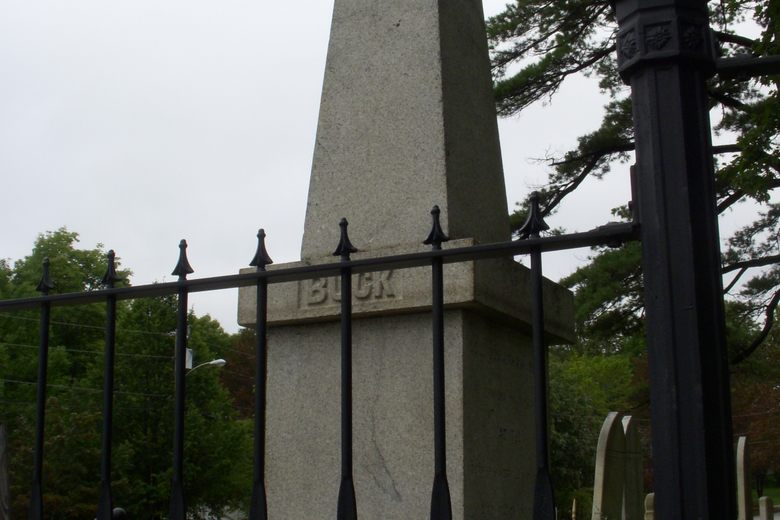
The so called Cursed Tomb of Colonel Buck is one of the most talked about paranormal landmarks in Maine. Sitting quietly in a small cemetery overlooking the Penobscot River, the grave of Colonel Jonathan Buck has sparked centuries of local legend, ghost stories, and debate over whether its eerie markings are coincidence or curse.
Location and Visitor Information
- Location: Bucksport Village Cemetery, Franklin Street, Bucksport, Maine
- Known For: Skull-and-crossbones carving associated with a local curse
- Access: Public cemetery, daylight hours recommended
- Town Website: https://www.bucksportmaine.gov
Who Was Colonel Jonathan Buck?
Colonel Jonathan Buck was a prominent figure in colonial Maine. Born in 1719, Buck was a wealthy landowner, military officer, and the founder of Bucksport, which was originally known as Buckstown. He played a significant role in the area’s early development, controlling land grants and encouraging settlement along the Penobscot River.
Buck died in 1795 and was buried with full honors in what is now Bucksport Village Cemetery. What makes his grave unusual is not his status, but what appears on his tomb.
The Skull-and-Crossbones Tombstone
Carved into Colonel Buck’s tomb is a large skull and crossbones. While skull imagery was not unheard of in 18th-century funerary art, this specific symbol has fueled decades of speculation.
Locals point out that no written records explain why Buck’s tomb bears this design. This absence of documentation helped the legend grow, especially as stories passed orally through generations.
The Curse Legend
According to long-standing local lore, Colonel Buck once sentenced a woman accused of witchcraft to be burned at the stake. As the story goes, the woman placed a curse on Buck before her death, vowing that her mark would appear on his grave forever.
After Buck’s burial, townspeople allegedly noticed the skull-and-crossbones carving on the tombstone, believing it to be the manifestation of the curse. The legend claims that attempts to remove or alter the symbol only resulted in it reappearing later.
There is no historical evidence that Bucksport ever carried out witch burnings, and historians generally agree that the witchcraft execution story is folklore rather than fact. Still, the tale remains deeply ingrained in local tradition.
Historical Explanations vs. Paranormal Claims
Historians offer a far more grounded explanation. Skull-and-crossbones imagery, sometimes called a “death’s head,” was used in Puritan-era gravestones to symbolize mortality and the fleeting nature of life. Some scholars believe Buck’s tomb may have originally featured a different carving that weathered into its current appearance or was later restored inaccurately.
Others suggest the design could have been intentionally chosen to reflect Buck’s military background, though no definitive records confirm this.
From a paranormal perspective, visitors and residents over the years have claimed:
- A heavy or uneasy feeling near the tomb
- Sudden cold spots around the grave
- An overwhelming sense of being watched
These reports are anecdotal and vary widely, but they continue to draw curious visitors and ghost hunters to the site.
Modern-Day Reputation
Today, the tomb of Colonel Buck is a popular stop for those exploring Maine’s haunted history. It is often featured in local ghost tours and paranormal books focused on New England folklore.
While historians dismiss the curse as legend, the mystery surrounding the tomb’s symbolism ensures that the story remains alive. Whether viewed as an eerie coincidence or a lingering supernatural mark, the tomb has become one of Bucksport’s most enduring legends.
Sources
- Maine Memory Network, Colonel Jonathan Buck overview: https://www.mainememory.net
- Town of Bucksport official website: https://www.bucksportmaine.gov
Ghost hunting and exploring historic cemeteries can be dangerous. Never trespass on private property, and always use caution and respect when visiting historic or allegedly haunted locations.
Frequently Asked Questions
Where is Cursed Tomb Colonel Buck located?
Cursed Tomb Colonel Buck is located at Bucksport Village Cemetery, Franklin Street, Bucksport, Maine.
Can you visit Cursed Tomb Colonel Buck?
Cursed Tomb Colonel Buck is open to the public. Always follow posted rules and respect private property.
Reader sightings
Nobody has reported anything here yet. If you have been, you would be the first.
Report your own visit to Cursed Tomb of Colonel Buck in Bucksport, Maine: The Skull-and-Crossbones Legend
How haunted is this place?
Be the first to rate





Leave a Reply