Reviewed by Josh N · Updated August 29, 2026 · How we verify
Reported Phenomena
- Ghost of a woman
- Cloven-footed stranger
- Reported devil haunting
- Organised paranormal investigations
Reported by visitors & local legend. Stories, not verified claims.
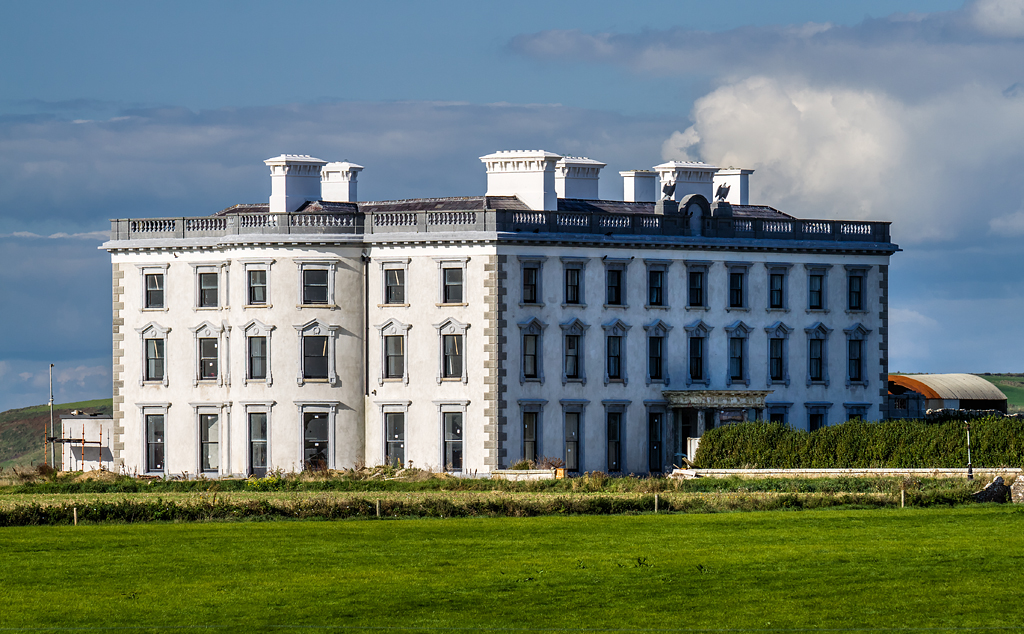
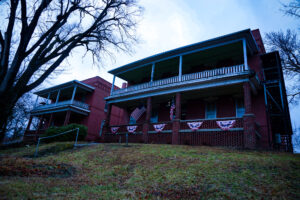
The Loftus Hall ghost story is the best known thing about a house that has plenty else to recommend it. On the Hook peninsula in County Wexford, Ireland, this large country house stands on the site of the original Redmond Hall, and it is said to have been haunted by the devil and by the ghost of a woman. Strip the devil out and you still have a building that was besieged in the Irish Confederate Wars, rebuilt at ruinous expense for a royal visit that never came, and passed through the hands of nuns, hoteliers and tour operators before the shutters went up again.
Loftus Hall at a Glance
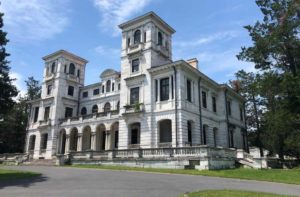
Location: Loftus Hall townland, Hook peninsula, County Wexford. Earlier names: Houseland Castle, Redmond’s Hall. Present house: refurbished between 1872 and 1884, classed as a three-storey non-basement mansion, nine bays to the front with a balustraded parapet. Best known legend: the card game of 1775 and the cloven-footed stranger. Current status: closed in 2020, sold in 2021, under renovation and not open to the public by 2022, and listed as sold as of late 2025.
Raymond FitzGerald, Baginbun and the First Redmond Hall
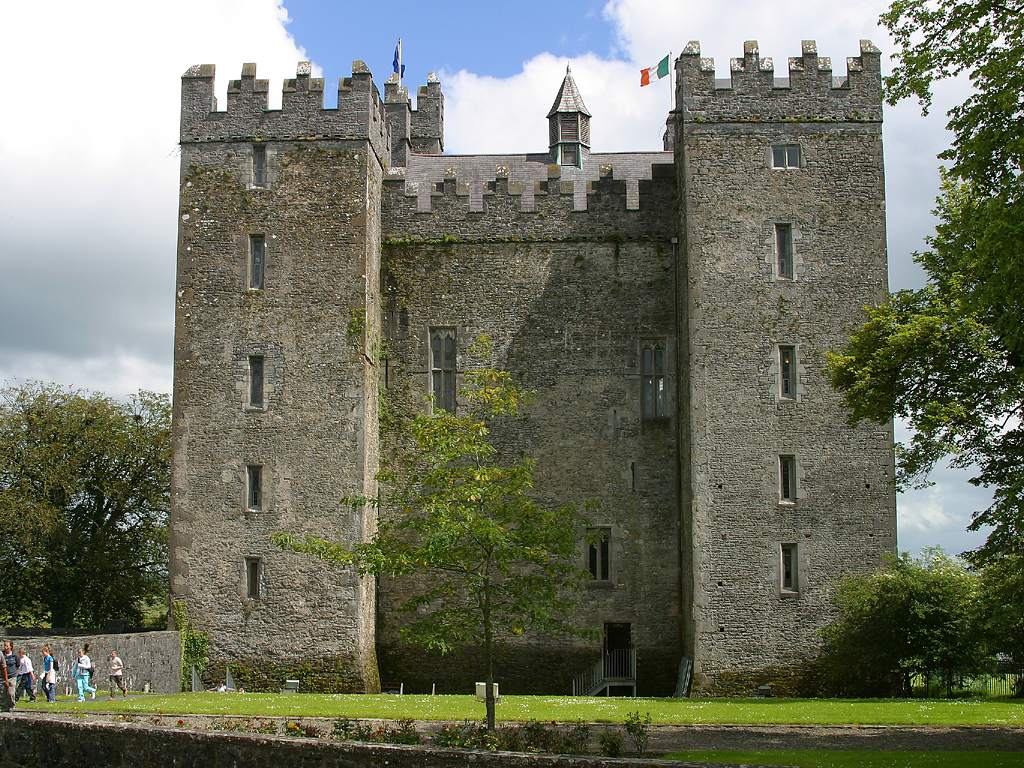
In 1170 Raymond FitzGerald landed at what is now known as Baginbun, named after his two ships La Bague et La Bonne. He acquired land in the area in County Wexford, upon which he built a castle known as Houseland Castle. The Redmond family replaced their original castle with another in about 1350, during the time of the Black Death, and this second castle was also known as Redmond’s Hall. Nothing of the ghost story attaches to this period, but the site’s habit of being fought over begins here.
Ten Defenders and Two Small Cannon: 20 July 1642
During the Irish Confederate Wars, which broke out in 1641, Redmond’s Hall was the scene of a skirmish in 1642. The hall was owned at the time by Alexander Redmond, who was known to be sympathetic to the rebels and had provided them with aid, and it was clearly visible from the Irish Army garrison at Duncannon.
Captain Thomas Aston believed the hall could be easily taken, and on 20 July 1642 he set sail from Duncannon with around 90 Irish Army troops and two small cannon, landing nearby. Although he was 68 years old, Alexander Redmond barricaded the hall and prepared to defend it, assisted by his sons, four tenants, two men at arms and an itinerant tailor who happened to be at work in the building. The defenders numbered 10 in all and were armed with long-barrelled fowling pieces.
Aston drew his men up in front of the building and demanded admission in the name of King Charles I. Redmond retorted that Aston was welcome to come in providing that he left his soldiers and weapons outside. The firefight that followed went badly for the attackers: the cannon were too small to make much impression on the main door, about half the men abandoned Aston to pillage the countryside, and a thick sea mist descended on the Hook peninsula. Confederate rebels encamped at Shielbaggan marched to the defenders’ aid under cover of the fog. About 30 attackers escaped to their boats, while Aston and several of his men were killed. Prisoners fared worse still: on 20 August, 11 prisoners of war were hanged at New Ross, including one of Lord Esmonde’s nephews.
Family tradition holds that the defenders stuffed sacks of wool into breaches opened by enemy cannon. Alexander Redmond is said to have died in the hall in 1650 or 1651, after which his surviving family were evicted and allowed to retain only a third of their original estates in County Wexford.
How the Loftus Name Ended Up on the Gate Piers
The Loftus family were English planters who had owned land in the area from around 1590, when Sir Dudley Loftus was granted the lands around Kilcloggan. It was only in 1666, when Henry Loftus moved to the hall from Dungulph, that it became the principal residence of the family. He made the change of name official in stone at Portersgate, with the inscription “Henry Loftus of Loftus Hall Esq. 1680”, and in 1684 he carried out extensive repairs to a house battered by the previous decades. The family climbed the peerage steadily, and in 1800 the then owner, Charles Loftus, Baron Loftus, was created Marquess of Ely.
The Rebuilding for a Queen Who Never Came
The house a visitor sees today is largely the work of John Loftus, 4th Marquess of Ely, who between 1872 and 1884 refurbished the old hall using the existing structure. Under the guidance of his mother Lady Jane Hope Vere Loftus, a Lady in Waiting to Queen Victoria, he added the grand staircase, a mosaic tiled floor, elaborate parquet flooring and technical elements not previously seen in Irish houses, including flushing toilets and blown air heating. Some of the inspiration came from Osborne House, the Queen’s summer residence on the Isle of Wight. The works were believed to have been undertaken to facilitate a royal visit, but the visit never happened, the 4th Marquess died very young without issue, and the estate passed to a cousin in a poor financial state and was eventually put on the market.
Convent, Hotel, Tour Attraction
Loftus Hall’s later ownership reads like a list of Irish institutional afterlives: private residence, landlords, two different orders of nuns, and a hotel. In 1917 it was bought by the Sisters of Providence and turned into a convent and a school for young girls interested in joining the order. In 1983 Kay and Michael Devereaux purchased it and opened the Loftus Hall Hotel, which operated until its closure in the late 1990s. Shane and Aidan Quigley bought the house in 2011 and opened it to the public in 2012 with guided tours and a fully restored walled garden, along with seasonal events and paranormal investigations, the latter following an episode of Ghost Adventures with Zak Bagans, Aaron Goodwin and Nick Groff.
The Card Game and Anne Tottenham’s Tapestry Room
Everything in this section is legend rather than record. Charles Tottenham became Lord of the manor by marrying the Honourable Anne Loftus, daughter of the first Viscount Loftus, taking the Loftus name to inherit. His wife died while their daughters were still young, and two years later he married his cousin Jane Cliffe.
One evening in 1775, according to the story, Charles was at home with his second wife and his daughter Anne when a storm drove a ship unexpectedly onto the Hook peninsula. A young man was welcomed into the mansion, and he and Anne became very close. One night the household sat at cards in the game room. Each player received three cards, apart from Anne, who was dealt only two by the stranger. A card fell to the floor, and when Anne bent to retrieve it she looked beneath the table and saw that the mysterious man had a cloven foot. She stood and said so aloud, at which the man went up through the roof in a ball of flames, leaving a large hole in the ceiling.
The rest of the tale is grimmer than the fireworks. Anne is said to have lost her reason and been shut away in the Tapestry Room, her favourite room, out of everyone’s view. She refused food and drink and sat with her knees under her chin, looking out across the sea towards where Dunmore East is today, waiting for the stranger to return, until she died in that room in 1775. The story holds that her muscles had seized so completely that the family could not straighten her body, and she was buried in the sitting position in which she died.
What People Say They Encounter Here
The reported phenomena at Loftus Hall are unusually narrow for a house of this size, and they track the legend closely: a woman’s ghost, and the devil who left through the roof. That is the substance of the claim, that the hall is said to be haunted by the devil and the ghost of a woman, and no documented incident supports either. During the years of public tours, visitors took part in organised paranormal investigations on the premises, which is worth noting for what it is: an activity offered to guests, not evidence of anything. Anyone weighing up the hall’s reputation should keep the 1775 card game filed firmly under folklore. Its details are too neat, too moralised and too cinematic to be read as history.
Fowl Manor, Toad Hall and The Lodgers
Loftus Hall has done well on screen. Waterford man Rick Whelan made a partially independent documentary released in 1993 as The Legend of Loftus Hall, dramatising parts of the story, including the card game. The gothic thriller The Lodgers was shot on location at the hall in 2016 and premiered at the 2017 Toronto International Film Festival. The house also has a quieter literary afterlife: it was the inspiration for Fowl Manor in the Artemis Fowl books, author Eoin Colfer having worked there as a child, and elements of the exterior, the main banqueting hall and the grand staircase shaped the design of Toad Hall in the stop motion film of The Wind in the Willows.
Whether You Can Get Inside Loftus Hall Today
Not at present. The hall was put on the market in 2020 and closed the same year, sold in 2021, and by 2022 it was under renovation and not open to the public. As of late 2025 it has again been listed as sold. Anyone travelling to the Hook peninsula in hope of a tour should treat the house as private property and check its current status before setting out.
There is one consolation for the trip. The entire townland of Loftus Hall, including the building itself, can be seen from Hook Lighthouse, which is a legitimate destination in its own right and gives you the mansion in its landscape: the sea it faces, the coast that put a ship ashore in the story, and the flat exposed peninsula that made the place worth besieging in 1642.
Address: Loftus Hall, Hook Peninsula, County Wexford, Ireland
See Loftus Hall for Yourself
Sources
- Dictionary of Irish Architects
- Burke's Genealogical and Heraldic History of the Landed Gentry
- Maps of the Lordships and Manors of Loftus Hall, Fethard, and Templetown in the County of Wexford
- Gary turns movie cameras on the legend of Loftus Hall
- Samantha Mumba Spooked in Loftus Hall
- Wikipedia: Loftus Hall
Frequently Asked Questions
Where is Loftus Hall Cloven Foot Legend located?
Loftus Hall Cloven Foot Legend is located at Loftus Hall, Hook Peninsula, County Wexford, Ireland.
Can you visit Loftus Hall Cloven Foot Legend?
Loftus Hall Cloven Foot Legend is on private property and best viewed from a distance. Always follow posted rules and respect private property.
Reader sightings
Nobody has reported anything here yet. If you have been, you would be the first.
Report your own visit to Loftus Hall Ghost: The Cloven Foot and the Tapestry Room
How haunted is this place?
Be the first to rate
Leave a Reply