

Reviewed by Josh N · Updated October 1, 2026 · How we verify
Reported Phenomena
- Protective female apparition
- Disembodied footsteps
- Whistling in the halls
- Child's laughter
- Taunting basement voice
- Figure in overalls
- Doors opening alone
- Shadow movement
Reported by visitors & local legend. Stories, not verified claims.
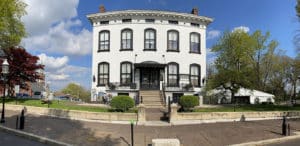
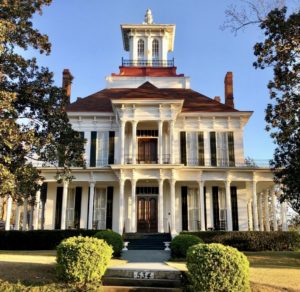
Set above the streets of St. Joseph, Missouri, the Beattie Mansion has been known locally as the “House on the Hill” since the 1850s, and almost everything that has happened inside it since the original family died out has involved people who had nowhere else to go. Orphans, unwed mothers, women leaving brothels, the elderly, the mentally ill. That long institutional afterlife, far more than the Beatties themselves, is what the ghost stories here are built on.
Quick Facts on the House on the Hill
- Where: St. Joseph, Missouri
- Built: 1854, by Armstrong and Eliza Beattie
- Original owner: Armstrong Beattie, a banker who served five terms as mayor of St. Joseph
- Later uses: the Home for the Friendless, then from 1895 the Memorial Home for the Aged, then a group home in the 1990s
- Now: privately owned since 2004 and operating as a tour and overnight paranormal investigation site
- Reported activity: a protective female presence on the second floor, a child’s laughter, footsteps and whistling, and a hostile male presence in the basement. All anecdotal.
Armstrong and Eliza Beattie Build on the Hill, 1854
The house went up in 1854 for one of the most prominent couples in St. Joseph. Armstrong Beattie was a banker and a five-term mayor, which in a river town of that era meant he had a hand in nearly everything that moved through it. Eliza ran the household on the hill at the height of the family’s standing.
Their end came quickly and in order. Armstrong died of cholera in 1878. Eliza followed two years later, in 1880. They left no heirs, and with no family line to inherit it, the mansion passed to the Ladies Union Benevolence Association. A private house built as a display of success became, almost immediately, a charitable institution. That shift is the hinge the whole building turns on.
The Home for the Friendless and the Memorial Home for the Aged
For decades the Beattie house operated as a Home for the Friendless. The name is blunt in the way nineteenth century charity often was, and the population it served was exactly who it sounds like: the homeless, orphaned children, unwed mothers, and women trying to leave work in the city’s brothels. People arrived at the door in the worst stretch of their lives, and some of them did not leave.
In 1895 the institution changed character, becoming the Memorial Home for the Aged, a role it held for roughly a century. By the 1990s the property had become a group home serving people with mental illness and substance abuse problems. When that closed, the house was bought in 2004 by owners who intended to open a boutique inn. The inn never happened. What the mansion became instead was one of the most heavily investigated buildings in Missouri.
Worth holding onto when you read the ghost accounts: a building used continuously for about 150 years as a shelter, a nursing home and a group home will have seen a great many deaths, most of them ordinary, undocumented and quiet. No single catastrophe is attached to the Beattie Mansion. The claims that follow are reported experiences, not recorded incidents.
Eliza on the Second Floor
The most consistent account in the house involves Eliza Beattie, described by witnesses as the dominant presence on the second floor. She is not characterized as frightening. The repeated description is protective, and particularly protective of women who come into the building, which is a strikingly apt role for a house that spent a century sheltering women with nowhere to go. Whether that reflects something in the house or something in the story people brought to it is the obvious question, and nobody has answered it.
Armstrong comes up far less often. When he does, it is through sound rather than sight: footsteps along the halls, and whistling with no one visible producing it.
The Child Named Mabel Iden
Investigators and visitors also report a child in the house, identified in local accounts as Mabel Iden, said to have died in the building at the age of four. The reported phenomena attached to her are the usual register for a child ghost story: giggling, light footsteps, and whispering at the edge of hearing. There is no documented event behind this one that visitors are shown, only the name and the age, repeated consistently enough that it has become part of how the house is toured.
The Basement and the Figure in Overalls
The basement is where the accounts turn unpleasant. Visitors describe a male presence there that laughs at them and taunts them, distinct in tone from everything reported upstairs. Several witnesses have claimed to see a figure in overalls looking in through the basement windows from outside. No identity has ever been convincingly attached to it, which is part of why it unsettles people more than the named spirits do.
Beyond those three focal points, the commonly reported activity includes doors opening and closing on their own, disembodied voices and humming, shadow movement on the first floor and around the kitchen, cameras malfunctioning and batteries draining faster than they should, and a persistent sense of being watched. Equipment failure in a house of this age is worth treating with caution before it is treated as evidence.
Touring and Staying Overnight at the Beattie Mansion
The mansion is privately owned and operates as a paranormal destination rather than a conventional historic house museum. Daytime tours, overnight ghost hunts and organized paranormal events are offered, and numerous investigative teams have filmed here. If you want time in the basement or on the second floor, the overnight format is what gives it to you.
Do not attempt to access the grounds outside of a booked event. This is private property, and old buildings with original stairs, cellars and floors carry real physical risk in the dark. What most people take away from a night here is not terror but something closer to the impression the regulars describe: a house that still feels occupied by the people who ran it, watching the latest set of strangers come through the door.
Sources
- KONITZ AFFAIR – JewishEncyclopedia.com
- 'Sensational' Towitta murder mystery of 1902 keeping residents guessing to this day
- Mentor, OH Train Wreck, Jun 1905, Dead and Injured | GenDisasters… Genealogy in Tragedy, Disasters, Fires, Floods
- HAD PAWN TICKET FOR BARREL VICTIM'S WATCH; Tomasso Petto Formally Accused of Madonia's Murder. Was Morello's Constant Companion — Says the Ticket Was Given Him by a Man He Knows Only as "John." (The New York Times)
- Great Nigerians: First Series, Volume 1
- Wikipedia: List of unsolved murders (1900–1979)
Address: 1120 Main Street
Frequently Asked Questions
Where is Haunted Beattie Mansion located?
Haunted Beattie Mansion is located at 1120 Main Street.
Can you visit Haunted Beattie Mansion?
Haunted Beattie Mansion is accessible by guided tour only. Always follow posted rules and respect private property.
Reader sightings
Nobody has reported anything here yet. If you have been, you would be the first.
Report your own visit to Eliza’s Floor: The Beattie Mansion in St. Joseph
How haunted is this place?
Be the first to rate
Leave a Reply