
Reviewed by Josh N · Updated August 27, 2026 · How we verify
Reported Phenomena
- Aggressive female presence
- Phantom train whistle
- Woman screaming at night
- Car pushed on bridge
Reported by visitors & local legend. Stories, not verified claims.
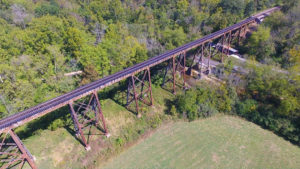
Ask for directions to Banwell Bridge in Webster County and you may get a blank look. Ask for Tara Bridge in Fort Dodge and, in Iowa, you will get a knowing one. The steel span carries a quiet road over the Union Pacific Railroad tracks, and it carries something else besides: two competing legends about a mother, her children, and a fall onto the rails below. Neither story has ever been pinned to a documented death. Both are told locally as though they were.
Banwell Bridge, Better Known as Terror Bridge
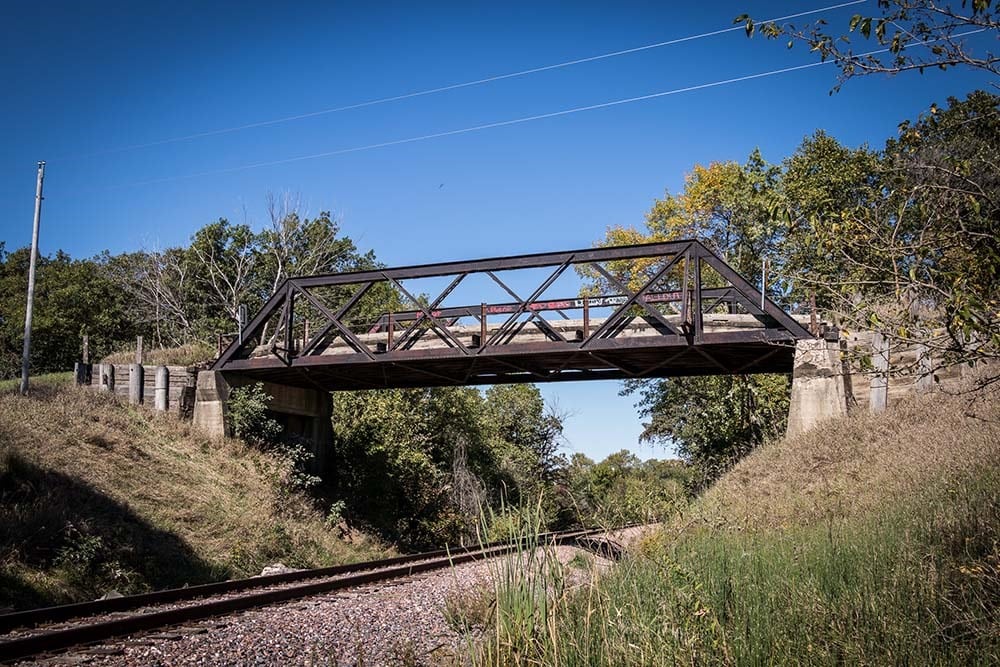
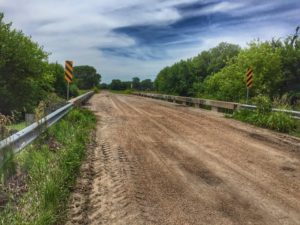
The structure’s official name is Banwell Bridge. Almost nobody uses it. To generations of Fort Dodge teenagers it has been Tara Bridge, and to a smaller circle it is simply Terror Bridge, a name that says more about the reputation than the engineering. What it is, physically, is unremarkable: a bridge deck and steel framework crossing an active railroad corridor. That last detail matters more than any of the folklore, and it is worth holding on to before you drive out there.
The bridge’s fame is entirely a matter of story. There is no plaque, no visitor centre, no official history of tragedy attached to the site. What exists is a body of local legend that has been repeated long enough to feel like record.
Two Versions of the Same Terrible Night
The legends of Tara Bridge circle a single figure: a mother who killed her own children at the crossing. Where the tellings diverge is in the details, and the divergence is instructive.
In the first version, a woman described as deranged threw her children from the bridge onto the railroad tracks below, then jumped after them. It is short, brutal and unadorned, the shape a story takes when it has been passed along quickly.
The second version supplies motive. Here the woman is a widow, her husband dead of yellow fever, her grief curdling into madness. She is said to have brought her children to the bridge, tied them to the tracks, and then hanged herself from the steel framework above. This telling has the machinery of a Victorian melodrama: the fever, the tied children, the noose.
Two accounts of one event, with different methods and different reasons, is a hallmark of folklore rather than of history. No name is attached to the woman in either version. No date is given. No newspaper account, coroner’s record or grave is ever cited by those who tell the story. That does not make the bridge harmless, but it does mean the reader should treat the mother of Tara Bridge as a legend and nothing more until someone produces the paperwork.
What Visitors Say Happens on the Span
The reported phenomena at Tara Bridge follow the legend closely, which is often how these things work: people tend to experience the story they arrived carrying.
- An aggressive presence pushing at parked cars. The best-known dare involves stopping on the bridge and switching the engine off. Visitors have described the sensation of a hostile female presence trying to shove the vehicle off the edge, and they identify her as the mother of the legend.
- A phantom train whistle. Some who go out after dark say they hear a whistle sounding along the corridor with no train in sight. The tracks below are a working line, so this is one claim where an ordinary explanation is close at hand.
- A woman screaming. The most consistently reported sound is a woman’s scream carrying out of the dark, sometimes described as agonised, sometimes as distant.
Every one of these is a reported experience, not a measured event. Nothing has been recorded at Tara Bridge that stands up to scrutiny, and sceptics point out the obvious: a steel bridge over a live railway at night generates wind noise, structural groans, vibration through a stationary car and the acoustic oddities of a cutting. The stories are real. Their cause is not established.
Going Out to Tara Bridge After Dark
The bridge sits on a public road and can be reached freely, which is precisely why it needs a warning rather than an invitation. The tracks beneath it belong to the Union Pacific and are in use. Climbing down to the rails, walking the corridor or scrambling on the steelwork is trespassing and genuinely dangerous, and the drop is real whatever is or is not pushing at your bumper.
The signature dare, parking on the deck with the engine off, puts a stationary vehicle on a bridge on a dark rural road. Traffic is light, not absent. If you go, go in daylight first to see the layout, keep off the railroad property entirely, and do not block the crossing for the sake of an experiment. Fort Dodge has plenty of local history to look into by day; Tara Bridge is best treated as a story you visit, not a place you occupy.
Trespassing on land that is not yours is never worth it, and ghost hunting around active infrastructure carries risks that have nothing to do with the supernatural. Use your judgement.
Sources
- Home
- US Parks, Depots
- Executive Order of Abraham Lincoln, President of the United States, Fixing the Point of Commencement of the Pacific Railroad at Council Bluffs, Iowa. dated March 7, 1864
- NPS Historical Handbook: Golden Spike (National Park Service)
- Flood of 1881
- Wikipedia: Council Bluffs Transfer Depot
Address: 220th Street
Frequently Asked Questions
Where is Tara Bridge Fort Dodge located?
Tara Bridge Fort Dodge is located at 220th Street.
Can you visit Tara Bridge Fort Dodge?
Tara Bridge Fort Dodge is open to the public. Always follow posted rules and respect private property.
Reader sightings
Nobody has reported anything here yet. If you have been, you would be the first.
Report your own visit to The Phantom Train Whistle at Tara Bridge in Fort Dodge
How haunted is this place?
Be the first to rate
Leave a Reply