
Reviewed by Josh N · Updated October 6, 2026 · How we verify
Reported Phenomena
- Figure at second-floor windows
- Curtains that reopen
- Male apparition in hall
- Shadow figures in basement
- Walls seeping blood
Reported by visitors & local legend. Stories, not verified claims.
Most of the Iowa State University ghost stories that circulate in Ames attach themselves to three buildings: the oldest house on campus, a residence hall on the east side, and the basement of one of the largest dormitories in the country. None of the three appear in the university’s documented history, which runs from a model farm bought in Story County to a federal research laboratory still operating on campus. That gap between what is recorded and what gets retold is the honest starting point for anyone visiting this corner of Iowa expecting more than architecture.
Iowa State at a Glance
- Where: Ames, Iowa, on a campus of roughly 2,000 acres holding over 160 buildings
- Established: March 22, 1858, by the Iowa General Assembly as the Iowa Agricultural College and Model Farm
- Oldest building: the Farm House, completed in 1861, now the Farm House Museum and a National Historic Landmark
- Known for: the Atanasoff-Berry Computer, the Ames process for high purity uranium, Reiman Gardens, the Campanile
- Access: open public campus, with museums and gardens free to walk into during posted hours
- Reported phenomena: a figure at second floor windows, curtains that will not stay shut, an apparition in a stairwell, shadow figures in a residence hall basement
A Model Farm in Story County
The Iowa General Assembly passed legislation for an agricultural college and model farm in 1856 and formally established the institution on March 22, 1858. Story County won the location on June 21, 1859, beating bids from Johnson, Kossuth, Marshall and Polk counties, and the original farm of 648 acres was bought for $5,379. Iowa was the first state in the nation to accept the provisions of the Morrill Act of 1862, taking them up on September 11 of that year, and the state designated Iowa State as its land-grant college on March 29, 1864.
The campus likes to call itself America’s first land-grant university. It is worth noting that Kansas State, Michigan State and Penn State all make the same claim, so treat the superlative as a contested one rather than a settled fact. What is not contested is the school’s early commitment to teaching both liberal and practical subjects to anyone who could reach it. The institution was coeducational from the first class admitted in 1868, and the first graduating class, in 1872, consisted of 24 men and two women.
The research history is just as dense. Mathematics and physics professor John Vincent Atanasoff worked out the basic principles of the first electronic digital computer during a drive to Illinois in 1937, and the 1939 prototype was built with graduate student Clifford Berry in the basement of the Physics Building. On October 19, 1973, Judge Earl R. Larson invalidated the ENIAC patent and named Atanasoff the inventor of the electronic digital computer. During World War II, one third of the uranium metal used in the world’s first controlled nuclear chain reaction was produced here under Frank Spedding and Harley Wilhelm, work that earned the Ames Project the Army/Navy E Award on October 12, 1945. Today Iowa State is the only university in the country with a Department of Energy laboratory physically on its campus.
The Farm House and the Figure Behind the Curtains
The Farm House was the first building on the Iowa State campus, completed in 1861 before students or classrooms arrived. It housed the superintendent of the Model Farm and later the deans of Agriculture, among them Seaman Knapp and James “Tama Jim” Wilson, who lived there for much of the 1890s before joining President William McKinley’s cabinet as Secretary of Agriculture. Agriculture Dean Charles Curtiss and his family followed Wilson and became the longest residents. Adonijah Welch, the college’s first president, stayed briefly and wrote his inaugural speech in a second floor bedroom. In 1976 the house became a museum, and it now holds nineteenth and early twentieth century furnishings, including pieces associated with Carrie Chapman Catt and the Curtiss family.
The campus legend fixes on that same second floor. Students and staff have long described a shadowy figure standing behind the curtains of the upper windows, said to be a former resident remembered only as Edith, who in life was fond of looking out of them. The story goes further: close those curtains and they will not stay closed, and small disturbances follow until they are reopened. That is lore, passed along among residents and student guides, and it should be read as lore. The documented roster of Farm House residents is unusually well kept, and it is built around superintendents, deans and their families rather than anyone the record identifies as Edith.
Birch-Welch-Roberts Hall and the Discovery in the Attic
The grimmest of the campus stories belongs to Birch-Welch-Roberts, a residence hall on the east side of campus whose name carries three familiar from the college’s first decades, including Adonijah Welch, its first president, and I. P. Roberts, the professor of agriculture who in 1870 helped run the earliest off-campus farmers’ institutes held by any land-grant institution. Students have reported the apparition of a man in the building, described as moving or leaping to heights no person could manage.
Attached to that sighting is a far darker claim: that officers investigating what they took to be a trespasser found the body of a missing student in the attic. No date, name or report is attached to the version that circulates on campus, and nothing in the university’s published history records the incident. It is repeated here because it is the story people tell about the building, not because it has been confirmed.
Down in the Friley Hall Basement
Friley Hall, part of the Union Drive Association on the west side of campus, has been described as one of the largest residence halls in the country, which is reason enough for a building of its size to accumulate stories. The one that sticks concerns a basement room students call the Devil’s Legion. Accounts collected among residents describe shadowy figures and walls that appear to seep blood, and the room has acquired the kind of reputation that keeps most students out and draws a few in. Again: these are reported experiences in a student residence, not documented events, and Friley is not a tourist attraction. Residence halls are for the people who live in them.
Walking the Ames Campus
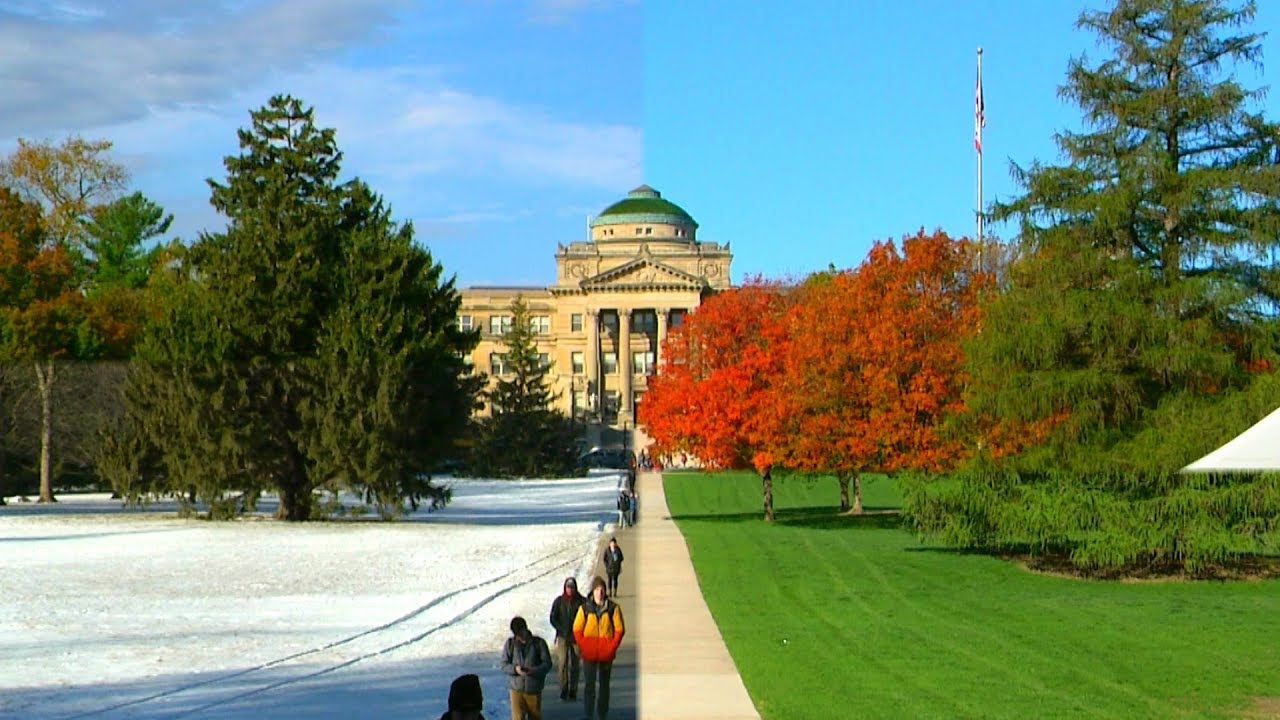
The campus is open and genuinely worth a day. The central lawn was named a medallion site by the American Society of Landscape Architects in 1999, and the Campanile, built in 1897 and 1898 as a memorial to Margaret MacDonald Stanton, Iowa State’s first dean of women, who died on July 25, 1895, stands 110 feet tall just north of the Memorial Union. The Farm House Museum, the Christian Petersen Art Museum in Morrill Hall, the Brunnier Art Museum and the Anderson Sculpture Garden are all accessible, as is Reiman Gardens south of Jack Trice Stadium, whose first five acres were dedicated on September 16, 1995. A working replica of the Atanasoff-Berry Computer, unveiled in 1997, is on display in the Durham Computation Center.
Visitors can walk the historic core freely. The Farm House, where most of the ghost lore lives, is the one haunted site here that is also a public museum, which makes it the sensible stop. The residence halls are not open to the public, and the stories told about their attics and basements are student tradition rather than anything the university’s record supports.
See Iowa State University for Yourself
Sources
- Iowa State Sesquicentennial: History of Iowa State | Digital Scholarship & Initiatives | Iowa State University (Iastate (official site))
- U.S. and Canadian 2025 NCSE Participating Institutions Listed by Fiscal Year 2025 Endowment Market Value
- Fact Book: Personnel – Institutional Research (Iastate (official site))
- Enrollment Statistics (Iastate (official site))
- College Navigator – Iowa State University (Ed (official))
- Wikipedia: Iowa State University
Frequently Asked Questions
Can you visit Iowa State University?
Iowa State University is open to the public. Always follow posted rules and respect private property.
Reader sightings
Nobody has reported anything here yet. If you have been, you would be the first.
Report your own visit to Curtains on the Second Floor: Iowa State University Ghost Stories
How haunted is this place?
Be the first to rate
Leave a Reply