
Reviewed by Josh N · Updated August 27, 2026 · How we verify
Reported Phenomena
- Shadow figures in corridors
- Unexplained footsteps
- Disembodied voices
- Unseen physical contact
- Tunnel disturbances
Reported by visitors & local legend. Stories, not verified claims.
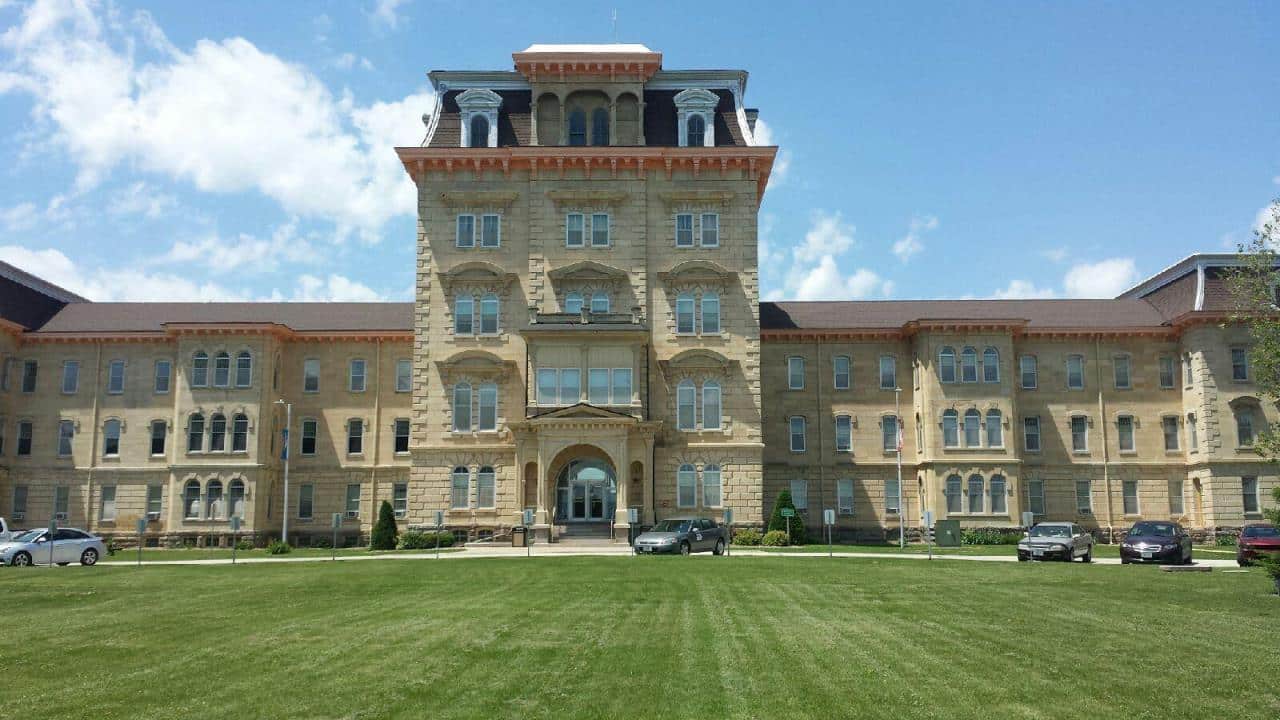
The Independence State Mental Hospital was the second asylum built in the state of Iowa, opened in 1873 in the small eastern Iowa city of Independence, and it has never stopped working. That single fact separates it from most of the country’s famous haunted asylums: there is no roofless ruin here, no collapsed ward open to trespassers. The Kirkbride building still stands in good condition, still treats patients under a newer name, and still keeps a museum of the instruments that made its early decades hard to look at.
Orientation: What the Independence Kirkbride Actually Is
- Opened: 1873, the second asylum in Iowa
- Design: the Kirkbride Plan, architect Stephen Vaughn Shipman
- Names it has carried: the Independence Lunatic Asylum, the Independence State Asylum, the Independence Asylum for the Insane, the Iowa State Hospital for the Insane, and today the Independence Mental Health Institute
- Still operating: a psychiatric hospital with a drug and alcohol rehabilitation program and a training school for nurses
- Access: tours by appointment only, plus an on-site museum
Built Because Mount Pleasant Was Full
The hospital exists because of a bottleneck. Overcrowding at the Mount Pleasant State Hospital was becoming a serious problem, and the state commission, seeing how fast demand was rising, pushed for a second institution. Independence was chosen as the site.
The intake it was designed for tells you a great deal about nineteenth century Iowa’s approach to anyone who did not fit: the plan was to hold alcoholics, geriatric patients, drug addicts, the mentally ill, and the criminally insane, all under one enormous roof. There was no meaningful separation of those categories in the original conception. Relieving pressure on Mount Pleasant came first.
Stephen Vaughn Shipman and the Kirkbride Blueprint
The architect was Stephen Vaughn Shipman, whose name recurs across the Midwest’s asylum landscape. He also designed the mental institutions at Elgin and Anna in Illinois, and at Oshkosh and Mendota in Wisconsin. The Independence building follows the Kirkbride Plan, the mid-century model of long staggered wings radiating from a central administration block, meant to give every ward light and air on the theory that architecture itself could be therapeutic.
Beneath it all runs a labyrinth of tunnels connecting every building on the grounds, a practical answer to Iowa winters and to moving patients, laundry, and coal without going outside. Those tunnels are the single feature that shows up most often in stories told about the place.
Like the Kirkbrides at Clarinda and Cherokee, the Independence building has been altered over the years, but it still reads much as it does in early photographs and postcards. Some areas of the Kirkbride now sit unused. The rest has been maintained and has recently undergone renovations.
The Graveyard, the Hydrotherapy Tubs, and the Lobotomy Equipment
The hospital’s own account of itself does not soften the record. Like most asylums of its era, Independence has a gruesome and dark history, and the physical remnants of it survive on site: the graveyard, the hydrotherapy tubs, and lobotomy equipment. Several of these objects are held in the hospital museum alongside other relics from its older years.
It is worth being clear about what that means for a visitor. The unsettling part of Independence is not a rumour. It is a tub in a room and a set of surgical instruments in a display case, representing treatments that were performed on real people whose names are mostly lost to the public record. Whatever you make of the ghost stories, that history is documented.
What People Say Happens in the Wards and Tunnels
Everything in this section is reported experience, not established fact. No paranormal claim about the Independence State Mental Hospital has been verified, and the building’s continuous use as a working psychiatric facility means most accounts come from staff and from visitors on arranged tours rather than from investigators with free rein.
The recurring reports fall into a few categories. Figures are described in corridors and stairwells, seen briefly and gone when approached. Sounds with no located source are the most common complaint: footsteps in unused sections, doors, voices at the edge of hearing. A smaller number of accounts involve physical sensation, the feeling of being touched or pushed by something the witness could not see. The tunnel network attracts a disproportionate share of these stories, which is unsurprising in a dark, echoing, temperature-variable space that runs under the entire campus.
The 2006 Security Guard Story
The single incident most often repeated about Independence is an account from 2006 in which a security guard was said to have been attacked by an assailant nobody could see, a story that has been carried in local media coverage and that did more than anything else to put the hospital on ghost hunting itineraries. Treat it as a story rather than a documented event. It is retold second and third hand, the details shift between versions, and it should not be mistaken for a verified assault by an unexplained force. Its real significance is reputational: it is the reason a functioning Iowa hospital keeps turning up on lists of haunted asylums.
Touring the Independence Mental Health Institute
This is not a place to wander. The Independence Mental Health Institute is an active psychiatric hospital with patients, staff, and a nursing school, and the unused portions of the Kirkbride are not open for exploration. Tours of the institution are open to the public by appointment, and the museum inside the hospital is the best way to see the older material, including the artifacts from the asylum era.
Book ahead, arrive expecting a history tour rather than a ghost hunt, and remember that people are receiving treatment on the other side of some of these walls. Never trespass on the grounds or attempt to enter the tunnels or closed wings. Ghost hunting can be dangerous, and at a working hospital it is also an intrusion on patients who did not ask to be part of anyone’s legend.
Sources
- Independence State Hospital – Kirkbride Buildings
- Loc (official)
- Library of Congress
- GeoHack – Independence State Hospital
- Wikipedia: Independence State Hospital
Address: 2277 Iowa Avenue
Frequently Asked Questions
Where is Independence State Mental Hospital located?
Independence State Mental Hospital is located at 2277 Iowa Avenue.
Can you visit Independence State Mental Hospital?
Independence State Mental Hospital is accessible by guided tour only. Always follow posted rules and respect private property.
Reader sightings
Nobody has reported anything here yet. If you have been, you would be the first.
Report your own visit to Independence State Mental Hospital: Inside Iowa’s Second Asylum
How haunted is this place?
Be the first to rate




Leave a Reply