
Reviewed by Josh N · Updated August 25, 2026 · How we verify
Reported Phenomena
- Spectral figures
Reported by visitors & local legend. Stories, not verified claims.
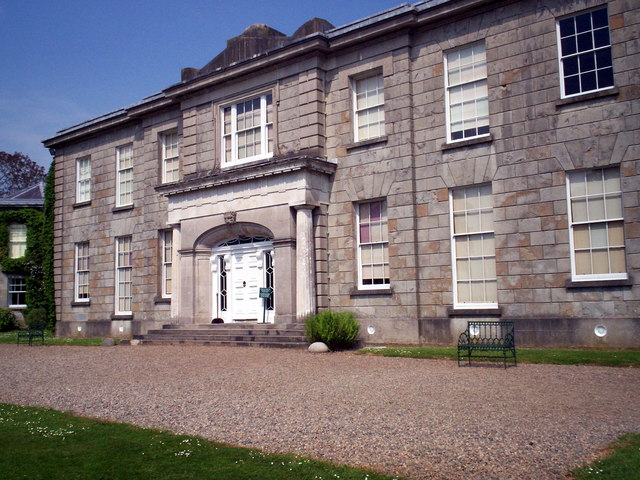
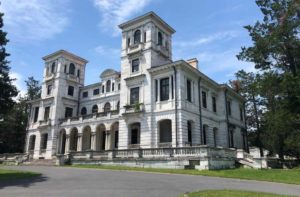
Search the Argory Armagh for a haunting and you come up short. What you find instead is one of the most intact country houses in Northern Ireland: a neo-classical block of ashlar limestone above the River Blackwater, near Moy in County Armagh, still furnished with the wallpapers, heirlooms and personal effects of the family that lived in it for over 150 years. No apparition is attached to it in the available record, and this guide is not going to invent one. The house is remarkable for a different reason. Very little in it has been allowed to change.
Walter MacGeough Bond Builds Above the Blackwater
Construction began in 1820 and the house was finished in 1824, built for Walter MacGeough Bond, a barrister who commissioned the place in the 1820s and lived until 1866. The design came from the Dublin architects Arthur and John Williamson: restrained, symmetrical, with a shallow hipped roof and rooms arranged over two storeys. The family name itself was a merger. It came out of the marriage of William McGeough and Elizabeth Bond, heiress of Walter Bond of Bondville in County Armagh, and their descendants carried both surnames forward.
Walter married twice. His first wife, Mary Isabella Joy, married him in 1826 and died in 1829, leaving a daughter. In 1830 he married Anne Smyth of Gaybrook, County Westmeath, and they had six children, four of whom are named in the family record: Joshua, Ralph, William and Edward. The estate later passed to Sir Walter William Adrian MacGeough Bond, grandson of the builder, who sat as a judge in the Cairo Court of Appeal from 1888 until 1916.
The Bishop Barrel Organ in the Entrance Lobby
The single object most visitors remember is the barrel organ. MacGeough Bond ordered it in 1822 for the entrance lobby, built by James Bishop of London, and it was installed in 1824 to accompany family prayers. It is still in situ, in the same lobby, nearly two centuries on. Elsewhere the collection runs from the seventeenth-century Doomer Cabinet, attributed to the Dutch cabinetmaker Herman Doomer, to an acetylene lighting system preserved in several rooms. The service wing and courtyard keep their original bell system and kitchen fittings, which is the sort of detail that usually gets ripped out first.
The Fire of 1898 and the Alterations That Never Happened
A fire in 1898 damaged the north wing and part of the organ’s mechanism. Alterations to the lobby were proposed afterwards and never carried out, which is one reason the space reads today much as it did before the fire. The twentieth century brought one further institutional chapter: during the Second World War the house served as a military hospital.
Tommy MacGeough Bond, the Last of the Family
Sir Walter was succeeded by his nephew, Captain Walter Albert Nevill “Tommy” MacGeough Bond, born in 1908 and son of Edward Staples MacGeough Bond. He was the last family member to live at the Argory and he kept the house largely unchanged, which is precisely why the interiors survive. He was buried on the estate grounds in 1986. Seven years before that, in 1979, the last resident family member handed the house, its contents and the surrounding lands to the National Trust.
What Is Actually Reported Here, and What Is Not
It matters to say this plainly, because a great many old Irish houses acquire ghost stories by association rather than by testimony. The documented record for the Argory describes no apparitions, no phenomena, no reported experiences of any kind. There is a fire, a wartime hospital, a family grave on the grounds and a house full of dead people’s belongings, which is the raw material out of which such stories are usually assembled, but the assembly has not happened in any source cited here. Anyone offering you a named ghost at the Argory is going beyond the evidence.
Visiting the Argory Under the National Trust
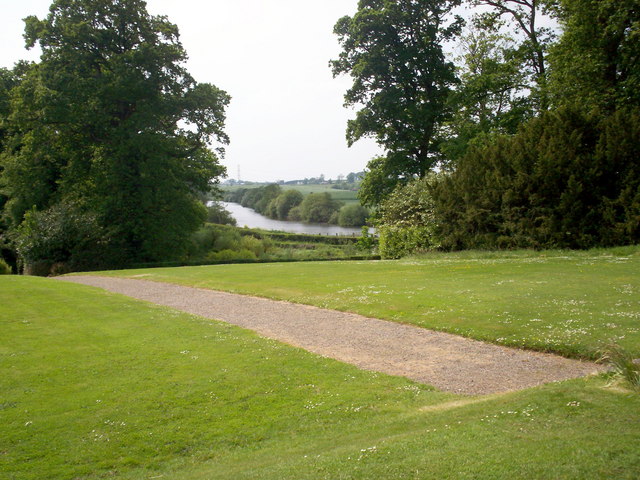
The estate is open to the public as a historic house museum. The grounds run to 130 hectares, roughly 320 acres, of wooded riverside landscape overlooking the Blackwater, taking in formal gardens, pleasure walks and mature parkland, with spring bulbs and rhododendrons in season. Researchers should note that additional family papers dating from 1692 to 1861 are held at the Public Record Office of Northern Ireland, separately from the large archive of correspondence, diaries, photographs and estate documents kept with the house.
Address: Near Moy, County Armagh, Northern Ireland
Sources
- History of The Argory
- The Argory
- Armagh, Hugh's Genealogy Notes
- MacGeough Bond Papers (D288)
- Gaybrook Demesne, Westmeath
- Wikipedia: The Argory
Frequently Asked Questions
Where is The Argory County Armagh located?
The Argory County Armagh is located at Near Moy, County Armagh, Northern Ireland.
Can you visit The Argory County Armagh?
The Argory County Armagh is open to the public. Always follow posted rules and respect private property.
Reader sightings
Nobody has reported anything here yet. If you have been, you would be the first.
Report your own visit to A Barrel Organ, an 1898 Fire and No Ghost: the Argory Armagh
How haunted is this place?
Be the first to rate
Leave a Reply