
Reviewed by Josh N · Updated August 31, 2026 · How we verify
Reported Phenomena
- Spectral figures
Reported by visitors & local legend. Stories, not verified claims.
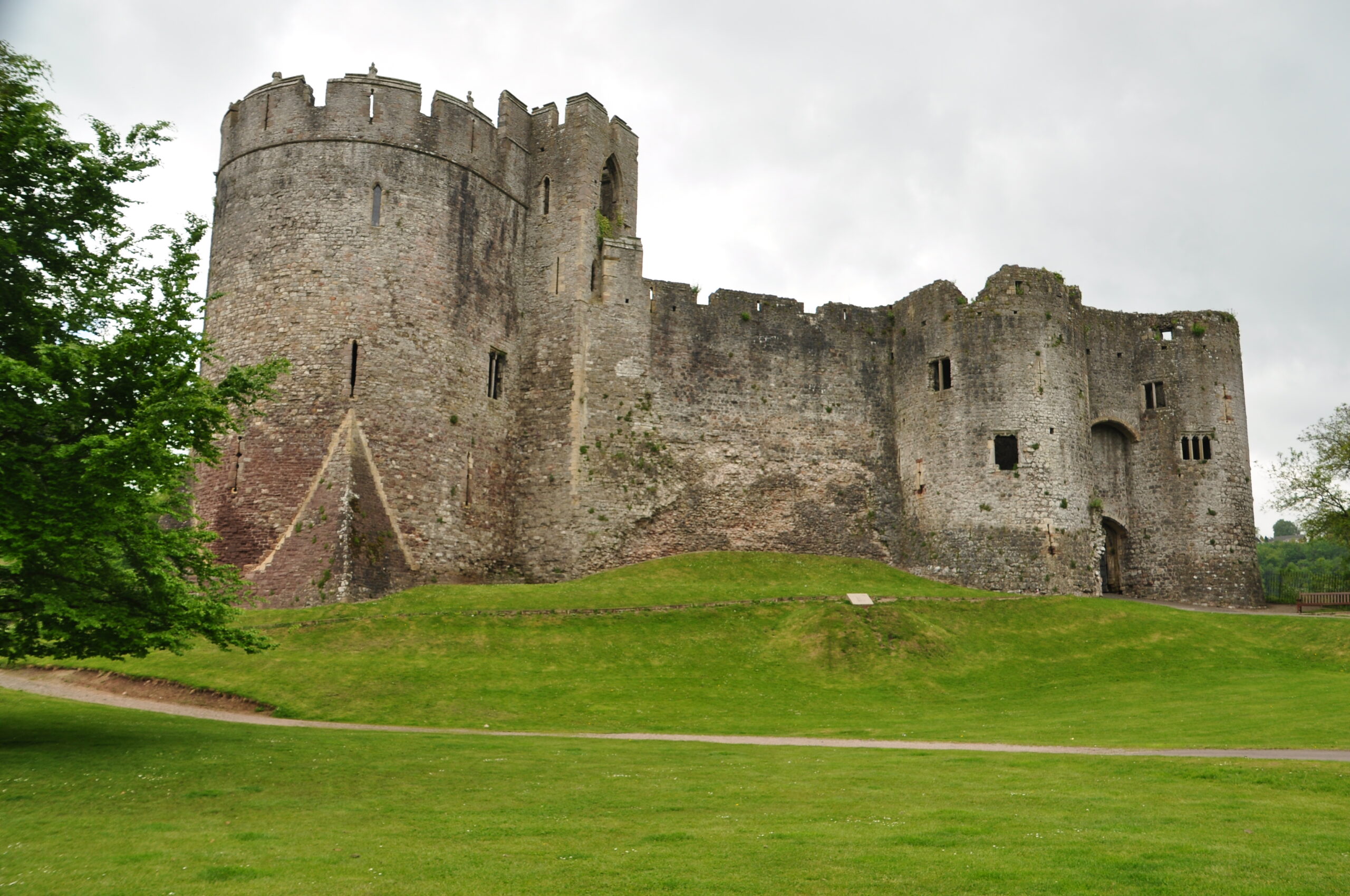
Anyone searching for haunted Chepstow Castle will find plenty of atmosphere and very little documentation. The fortress stands above the cliffs of the River Wye at Chepstow in Monmouthshire, Wales, and it is the oldest surviving post-Roman stone fortification in Britain. It has held prisoners, buried a Royalist commander in its keep and spent a century as a picturesque ruin. What it has not produced, in the historical record consulted for this entry, is a single named ghost. That gap is worth stating plainly before anything else.
What FitzOsbern Started in 1067
Building work began in 1067, or shortly afterwards, under the Norman lord William FitzOsbern. The site sits on a narrow ridge between the limestone river cliff and a landward valley known locally as the Dell, and its full extent is still best appreciated from the opposite bank of the Wye. The Great Tower was probably finished by about 1090. Unusually for the period it was stone from the first rather than timber, and while most of the material was quarried nearby, some blocks appear to have been lifted from the Roman ruins at Caerwent.
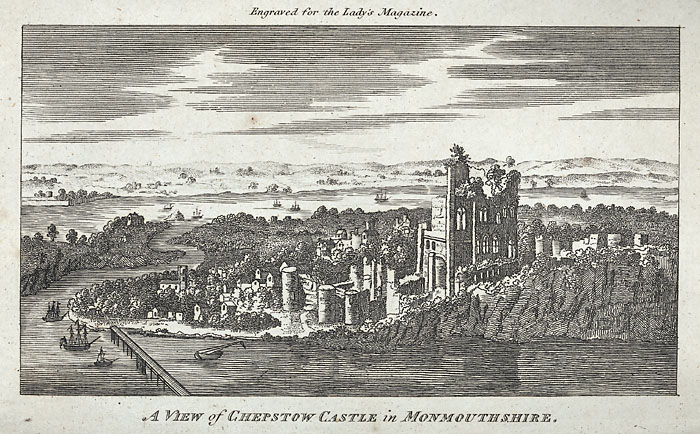
The castle was originally called Striguil, the southernmost of a chain of strongholds built in the Welsh Marches. It kept that name, along with its Marcher lordship, until the late 14th century, when it took the name of the market town beside it.
Marshal, Bigod and the Tower That Took a Prisoner’s Name
Further fortifications were added by William Marshal, Earl of Pembroke, from the 1190s. He built the present main gatehouse and strengthened the Middle Bailey with round towers before his death in 1219. In 1270 the castle passed to Roger Bigod, 5th Earl of Norfolk, who put up a new range of buildings in the Lower Bailey as accommodation for himself and his family. King Edward I visited in 1284 at the end of his tour through Wales, and soon afterwards Bigod raised the tower that now dominates the landward approach.
That tower is called Marten’s Tower, and the name belongs to a man who arrived four centuries later. The castle has four baileys, added in turn, which is why it reads as a sequence of building campaigns rather than a single coherent defensive plan.
The Siege of 1648 and Sir Nicholas Kemeys
By the 16th century the military purpose had faded and the buildings were being remodelled for comfortable occupation. In 1508 the castle passed to Sir Charles Somerset, later Earl of Worcester, who converted much of it into private accommodation. The English Civil War put it back on the front line, between Royalist Monmouthshire and Parliamentarian Gloucestershire. Held for the King, it was besieged in 1645 and again in 1648, falling to Parliamentarian forces on 25 May 1648. Sir Nicholas Kemeys, who led the defence in the Second Civil War, refused to surrender and was killed in combat after the castle fell. His memorial lies within the keep, and it is the most tangible reminder of violent death anywhere on the site.
Henry Marten, Regicide, Died Here in 1680
After the war the castle was garrisoned as an artillery fort and barracks, and it was also used as a political prison. Bishop Jeremy Taylor was held here. So was Henry Marten, one of the Commissioners who signed the death warrant of Charles I, who was imprisoned at Chepstow until his death in 1680. The tower Bigod built takes its modern name from him. If any single figure has attracted later storytelling here, it is Marten, a man who outlived the republic he helped create and ended his days inside a Norman fortress on the Welsh border.
Farmyard, Glass Factory, Tourist Attraction
The castle came into the ownership of the Duke of Beaufort in 1682. The garrison was disbanded in 1685 and the buildings were partly dismantled, leased to tenants and left to decay. Parts of it were used as a farmyard and a glass factory. By the late 18th century the ruins had become a Picturesque stop on the Wye tour, the pleasure boat trips running down the river from Ross-on-Wye by way of Monmouth. Charles Heath of Monmouth wrote the first guidebook to the castle and town, published in 1793, and J. M. W. Turner painted the castle above the river in 1794. That painting was sold at auction to Chepstow Museum on 28 March 2023.
Tourism kept growing through the 1840s with day trips by steam ship from Bristol, and the courtyard filled up with horticultural shows, fetes and, from the 1880s, historical pageants. The Duke tried to sell the place in 1899 and found no buyer. In 1910 and 1911 the castle and the adjoining river bed were dug over by Dr Orville Ward Owen, who was hunting for secret documents to prove that Shakespeare’s plays were written by Francis Bacon. He did not find them. The film Ivanhoe, starring King Baggot, was shot in the grounds in 1913, and the following year the businessman William Royse Lysaght of Tutshill bought the castle and began conservation work. In 1953 the Lysaght family put it into the care of the Ministry of Works.
Why the Ghost Stories Here Are Thin
Chepstow appears regularly on lists of haunted Welsh castles, which is unsurprising for a ruin of this age with a regicide, a siege death and a prison history attached. The documented record set out above supports none of it. There is no reliable account here of an apparition, no named witness, no recurring phenomenon reported by staff or visitors that can be traced to a source. What exists is raw material: Kemeys killed refusing surrender, Marten dying in confinement, a tower named after a prisoner, and nearly a thousand years of occupation, dismantling and decay.
Treat any ghost story you are told on site as folklore until someone shows you where it came from. The castle is remarkable enough without it, and a guide that reports rumour as fact does the building no favours.
Visiting Chepstow Castle
The ruins were Grade I listed on 6 December 1950. The castle is open to the public and has been in the care of Cadw, the Welsh government’s historic environment body, since 1984. Visitors can walk the battlements and go into Marten’s Tower, and special events are held in the castle regularly. Screen fans will recognise it: Terry Gilliam shot part of Jabberwocky here in 1977, HTV’s Robin of Sherwood used it as a location between 1984 and 1986, and scenes for the Doctor Who 50th anniversary broadcast were filmed on site. The Brazilian band Sepultura recorded part of Chaos A.D. inside the walls in 1993.
Come for the fabric of the place, which is genuinely first rank, and view it from the far bank of the Wye if you want to understand what FitzOsbern chose.
Address: Chepstow, Monmouthshire, Wales
See Chepstow Castle for Yourself
Sources
- Proceedings at Meetings on the Royal Archaeological Institute, Annual Meeting at Bristol, July 19-26, 1904. Friday, 22nd July
- Glamorgan-Gwent Archaeological Trust Historic Landscape Characterisation: Chepstow
- Geograph:: Chepstow Castle – Sir Nicholas Kemeys… © Roy Parkhouse
- JMW Turner painting of Chepstow Castle sold at auction for more than £90,000
- Chepstow Castle | Cadw
- Wikipedia: Chepstow Castle
Frequently Asked Questions
Where is Chepstow Castle Marten Tower located?
Chepstow Castle Marten Tower is located at Chepstow, Monmouthshire, Wales.
Can you visit Chepstow Castle Marten Tower?
Chepstow Castle Marten Tower is open to the public. Always follow posted rules and respect private property.
Reader sightings
Nobody has reported anything here yet. If you have been, you would be the first.
Report your own visit to Britain’s Oldest Stone Castle: Haunted Chepstow Castle
How haunted is this place?
Be the first to rate
Ghost Tours Nearby
 Fully guided Bristol Ghost Toursfrom $23
 Ghosts, Ghouls & Gallows :The Original Bristol Ghost Walkfrom $30
Affiliate links: BeyondHaunted may earn a commission, at no extra cost to you.
Nearby Haunted Locations
- 1The Durdham Down Gibbet and the Ghost That Emptied a Widow’s RoomsEngland12mi
- 2Tarred, Caged and Rumoured to WalkEngland12mi
- 3The Gibbet on Gallows Acre LaneEngland12mi
- 4Macbeth’s Tower, Roaring Meg and Goodrich Castle GhostsEngland16mi
- 5Priests’ Fortified PlaceEngland33mi
- 6Six Featherbeds and a Bell TowerEngland34mi
Leave a Reply