
Reviewed by Josh N · Updated August 10, 2026 · How we verify
Reported Phenomena
- Vanishing hitchhiker
- Woman in white
- Roadside apparition
- Phantom passenger
Reported by visitors & local legend. Stories, not verified claims.
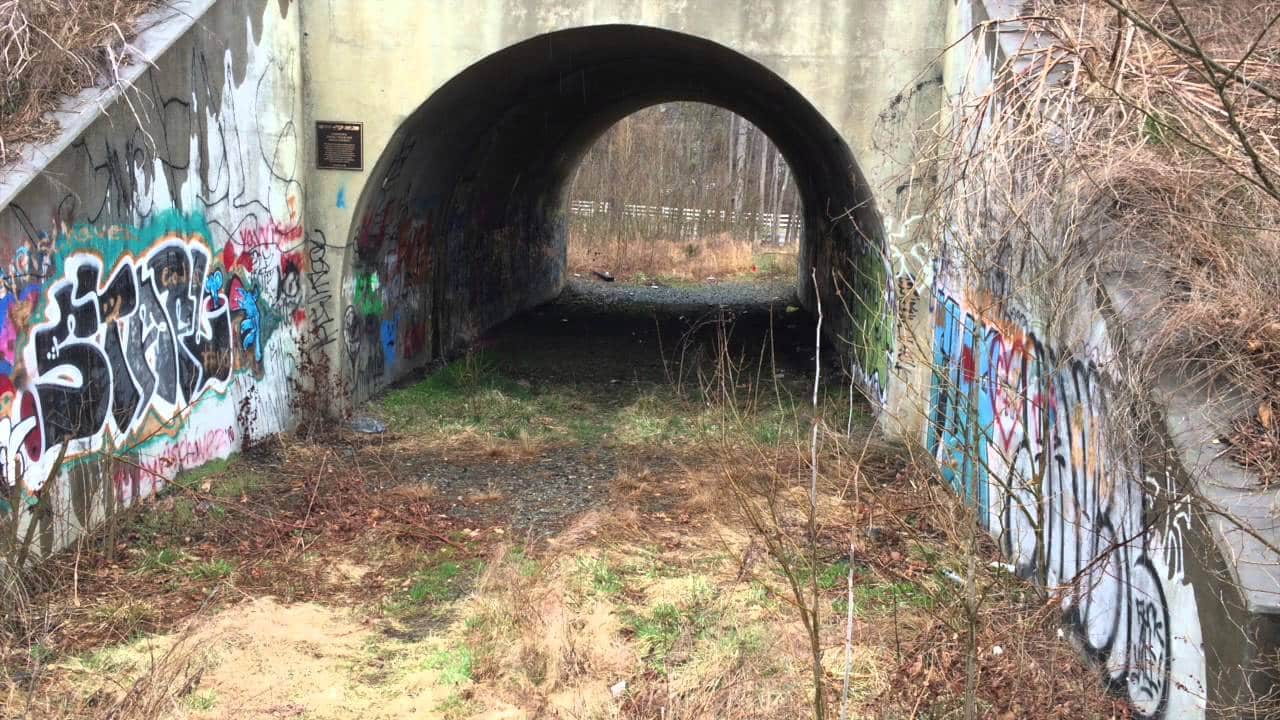
Ask around Guilford County long enough and someone will tell you about Lydia’s Bridge, the low span on the edge of Jamestown, North Carolina, where a young woman in a white dress is said to step out of the fog and ask for a ride home. The story is one of the most durable pieces of roadside folklore in the state. It is also, by every measure that matters to a careful reader, a legend: a tale told about a place rather than an event anyone has been able to pin to a date, a name and a record.
What follows separates the two things the bridge is famous for. First, the story as drivers tell it. Second, what actually holds that story up.
Getting Your Bearings at Lydia’s Bridge
- Where: just outside Jamestown, North Carolina, 27282
- What it is: a roadside bridge with no visitor centre, no signage and no attraction built around it
- Cost: nothing, because there is nothing to buy
- What draws people: a single, endlessly retold ghost story about a hitchhiker in a white dress
The Girl Who Wanted a Ride Home from the Dance
The version passed down locally runs like this. A driver comes along the road on a foggy night and sees a young woman near the bridge, waving to be noticed, sometimes frantically. She is wearing a white dress. She asks for a lift home, and she tells the driver she has been at a dance. She gives an address.
The ride itself is the quiet part of the story. Lydia says almost nothing. She sits withdrawn, apparently lost in her own thoughts, while the driver makes conversation and gets little back. Then the car reaches the house she named. The driver goes round to open the door for her, and the seat is empty.
The final beat is the one that gives the legend its sting. The driver knocks at the house, and whoever answers explains that Lydia was their daughter, and that she was killed in a car accident near that bridge in 1923. The knock at the door is what turns a strange drive into a ghost story, because it supplies a name, a cause of death and a grieving parent all in one breath.
Why the 1923 Accident Is the Weak Link
Repetition is not corroboration. The accounts attached to Lydia’s Bridge are remarkably consistent, and that consistency is often offered as proof, but a story that everyone in a county has heard before they experience it will tend to be reported in the shape they already know. Consistency is what folklore looks like from the inside.
The 1923 crash is the part of the tale most worth being honest about. It is a detail of the story, delivered inside the story, by a character in the story. Nothing in the legend as it circulates points a visitor toward a verified death record, an inquest, a newspaper report or a grave. That does not make it impossible. It does mean that anyone repeating the date is repeating the ghost story rather than citing history.
It is also worth knowing that Lydia is not one of a kind. The vanishing hitchhiker is one of the most widely recorded motifs in American folklore, told at bridges, crossroads and cemetery gates in state after state, usually with a young woman, a party or a dance, a borrowed coat or a given address, and an empty seat at the end. The Jamestown telling may have taken hold partly because it is set in the early automobile era, when a fatal car wreck was still an unusual and shocking event in a small community, the kind of thing a place would remember and reshape.
Visiting Lydia’s Bridge Without Wasting the Trip
Be clear about what is here. Lydia’s Bridge is not a site with anything to see. There is no ruin, no plaque, no tour and no interpretation. Visitors come for the atmosphere of a dark, damp stretch of road and for the chance, if they want to call it that, of a figure by the verge.
Which means the practical advice is mostly about traffic. This is a live road with a bridge on it, not a pull-off built for sightseers. Anyone stopping here at night is standing near moving vehicles in exactly the conditions the legend describes as foggy and poor for visibility. Park legally and well clear, stay off the carriageway, keep torches pointed away from oncoming drivers, and respect the surrounding private property rather than wandering up to houses looking for the one in the story.
Go in expecting folklore rather than evidence and Lydia’s Bridge is a genuinely interesting stop: a place where a community’s memory of a death, real or imagined, has outlasted almost everything else about it.
See Lydias Bridge for Yourself
Sources
- Record of Thomas Gillespie, Ancestor # A044835
- Some Early Settlers of Upper Sumner County, Tennessee
- The Preston and Virginia Papers of the Draper Collection of Manuscripts
- United States Census, 1790, Rowan County, North Carolina
- North Carolina and Tennessee Land Grants
- Wikipedia: Thomas Gillespie (North Carolina plantation owner)
Frequently Asked Questions
Can you visit Lydias Bridge?
Lydias Bridge is open to the public. Always follow posted rules and respect private property.
Reader sightings
Nobody has reported anything here yet. If you have been, you would be the first.
Report your own visit to A Lift Home That Never Ends: Lydia’s Bridge, Jamestown
How haunted is this place?
Be the first to rate
Ghost Tours Nearby
 Carolina History & Haunts Winston-Salem Historical Ghost Tourfrom $26
 Old Salem's Ghost Self Guided Outside Walking Tourfrom $8
 Winston-Salem True Crime Tourfrom $19
Affiliate links: BeyondHaunted may earn a commission, at no extra cost to you.
Leave a Reply