
Reviewed by Josh N · Updated August 20, 2026 · How we verify
Reported Phenomena
- Disembodied whispers
- Moaning sounds
- Clinking chains
- Light orbs
- Shadow figures
- Apparitions
Reported by visitors & local legend. Stories, not verified claims.
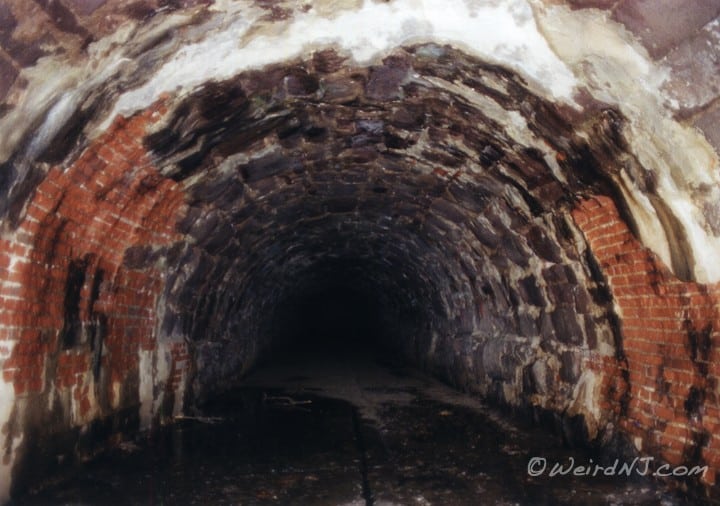
Beneath the streets of Clifton, New Jersey, a system of brick and concrete stormwater tunnels has picked up a name that has nothing to do with drainage engineering: the Gates of Hell. The name is doing a lot of work. What sits underground is a piece of municipal flood control from the late 19th century, built to carry runoff from the nearby cliffs down to the Passaic River. What has grown around it, over decades of trespassers, teenagers and ghost hunters, is one of the most repeated pieces of urban legend in northern New Jersey.
What the Gates of Hell Actually Are
Strip away the folklore and the site is a drainage network. The tunnels were constructed in the late 19th century to deal with the swampy conditions produced when the Passaic River overflowed, channelling stormwater away from the surrounding land and preventing floods. Gates were installed at the tunnel entrances, intended to open during heavy rain and let the water through.
That mechanism is the origin of the word “gates” in the popular name, and it is the least supernatural detail in the whole story. Over time the gates began to falter. Maintenance lapsed, debris and pollution collected against them, and what was designed as a clean piece of civic infrastructure became a clogged, dark, graffiti covered passage that looked exactly like the sort of place a legend attaches itself to.
How a Drainage Tunnel Earned an Infernal Name
Nobody needed to invent much. The name conjures the entrance to the underworld, the classical image of Hades with its gate, and the tunnels deliver on that imagery without any help: low openings, standing water, decaying walls, layers of spray paint applied by generations of visitors. The reputation is at least partly architectural. A hole in the ground that swallows light is going to collect stories.
It is worth being clear about the distinction. The engineering history of the tunnels is a matter of record. Everything that follows is reported experience and rumour, passed along in person and online, without documentation behind it.
What Visitors Say Happens Underground
The Gates of Hell has a long standing reputation in paranormal circles, and the accounts that circulate are consistent in a way that says as much about expectation as about evidence. The most common reports include:
- Whispers and moaning heard from further along the tunnels, with no visible source.
- The sound of chains clinking, one of the more frequently repeated details in accounts of the site.
- Orbs of light in the darkness, often photographed and offered as evidence. Sceptics point out that dust, moisture and camera flash produce exactly this effect in a damp enclosed space, and there is no way to distinguish one from the other in a still image.
- Shadow figures and apparitions, described by some witnesses as menacing rather than merely present.
None of this has been verified. There has been no investigation that produced anything approaching concrete evidence, and the acoustics of a long masonry tunnel carrying running water are more than capable of generating voices, footsteps and metallic noises for anyone already primed to hear them.
The Ritual Rumours
Alongside the ghost reports run persistent stories of satanic rituals and other dark rites having taken place in the tunnels. These are urban legends. They circulate widely, they are repeated confidently, and no source connected with the site substantiates them. Their real function is atmospheric: they explain why a place feels the way it feels, and they give a stormwater culvert a mythology it does not otherwise have. Graffiti in an abandoned underground space is easily read as something more sinister than it is.
Going to the Gates of Hell in Clifton
This is not a heritage site, a tour or an attraction. It is aging, neglected drainage infrastructure, and the hazards are the ordinary ones of any such structure: unstable footing, standing polluted water, total darkness, poor air, and the very real possibility of fast rising water during or after heavy rain. Access is not sanctioned, and people do get into legal trouble as well as physical trouble here.
Anyone drawn by the story is better served treating it as a piece of New Jersey folklore to read about than as a place to crawl into. If you do go anywhere near the site, stay outside, do not go alone, never enter when rain is forecast, and do not trespass on property that is not yours without permission. Ghost hunting can be genuinely dangerous, and a flooded tunnel does not care whether you believe in ghosts.
See Gates of Hell for Yourself
Sources
- Engineering History
- A Connecting Railroad
- Day Long Throng Inspects New Tube; 35,000 Persons Were Carried on the First Day of Pennsylvania's Tunnel Service (The New York Times)
- Documents of the Senate of the State of New York
- Pennsylvania Railroad tunnels and terminals in New York City
- Wikipedia: Hell Gate Bridge
Reader sightings
Nobody has reported anything here yet. If you have been, you would be the first.
Report your own visit to Storm Drains and Legend: Clifton’s Gates of Hell
How haunted is this place?
Be the first to rate




Leave a Reply