
Reviewed by Josh N · Updated June 29, 2026 · How we verify
Reported Phenomena
- Spectral figures
- Shadow figures
- Phantom footsteps
- Objects moving
- Sense of being watched
- Screams & cries
- Unexplained sounds
Reported by visitors & local legend. Stories, not verified claims.
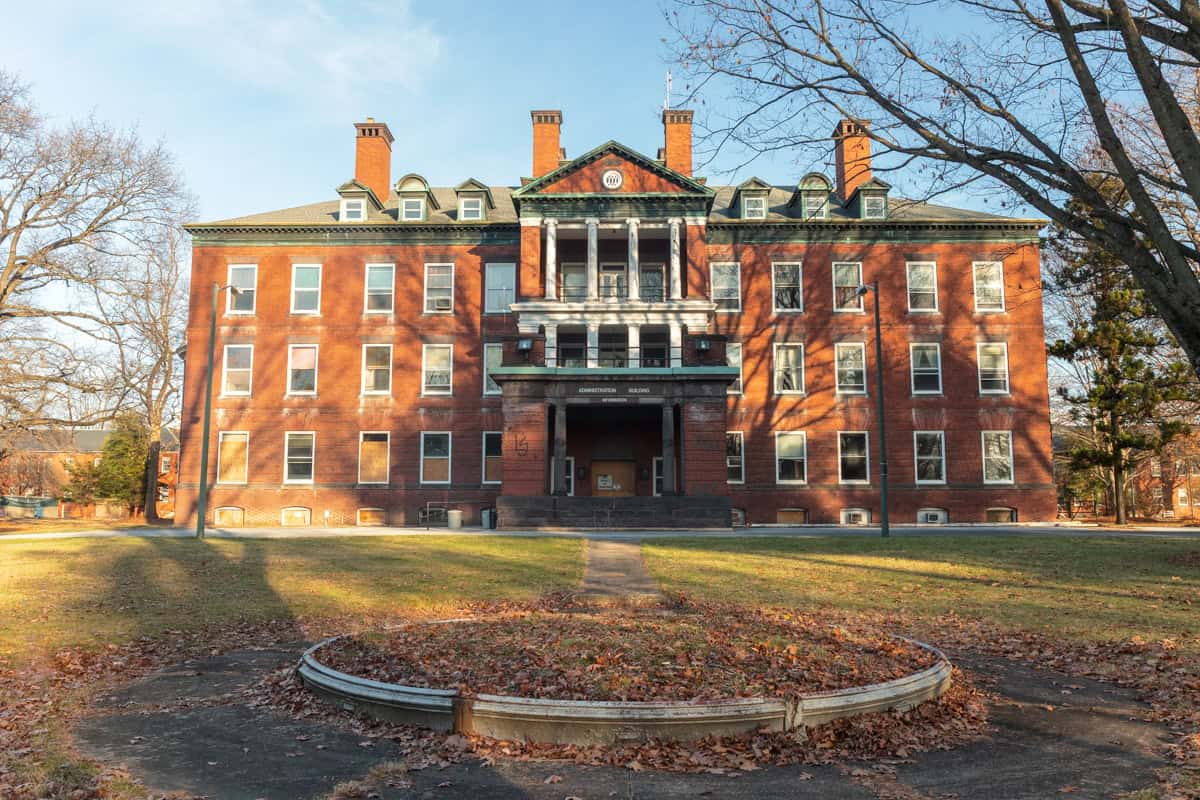
Harrisburg State Hospital sits near Cameron and Maclay Streets in Harrisburg, Pennsylvania. The former state mental hospital is also associated with the address 20 Azalea Drive, which Historic Harrisburg Association used as a meeting point for past landmark tours. The property is not open for regular public visits, does not have public hours, and is not currently a legal ghost hunting location. Historic Harrisburg Association has listed the owner as the Commonwealth of Pennsylvania, and the state is now redeveloping the former hospital grounds into a major laboratory complex.
Quick facts:
- Location: Cameron and Maclay Streets, Harrisburg, PA
- Former name: Pennsylvania State Lunatic Hospital
- Opened: 1851
- Closed: 2006
- Historic status: Listed on the National Register of Historic Places
- Current access: Not open to the public for exploring or ghost hunting
- Known for: Pennsylvania mental health history, the “City on the Hill” campus, tunnels, cemetery stories, reported hauntings, and filming for Girl, Interrupted
History of Harrisburg State Hospital
Harrisburg State Hospital began as the Pennsylvania State Lunatic Hospital, one of the earliest public mental health institutions in the United States and the first state hospital in Pennsylvania designed specifically for the treatment of mental illness. The National Park Service notes that authorization for the site began in 1845 after mental health reformer Dorothea Dix lobbied for better care in Pennsylvania.
The hospital opened in 1851 on a hilltop north of downtown Harrisburg. Its early mission reflected the “moral treatment” movement of the 19th century, which promoted calmer surroundings, fresh air, work, recreation, and structured daily life instead of simply confining people with mental illness. The original main buildings were designed by John Haviland, the architect also known for Eastern State Penitentiary in Philadelphia.
Over time, the hospital grew into a large, self-contained campus. It earned the nickname “City on the Hill” because it functioned almost like its own small town, with its own farm, power plant, stores, water tower, chapels, morgue, cemetery, and agricultural buildings. Historic Harrisburg Association says the campus eventually grew from its original 130 acres to well over 1,000 acres and included more than 70 buildings.
The institution changed significantly in the late 19th and early 20th centuries. Many older asylum buildings were replaced or supplemented by a cottage-plan layout, which separated patients into smaller buildings rather than housing everyone in one massive structure. This gave parts of the campus a village-like feel, with tree-lined roads, lawns, and individual buildings for different uses.
During World War II, Harrisburg State Hospital was also connected to Civilian Public Service Camp 93. According to the National Park Service, 69 conscientious objectors worked at the hospital between 1943 and 1946, with many serving as ward attendants.
The hospital remained active for more than 150 years. It closed in 2006, following the long national decline of large state psychiatric hospitals and the move toward community-based mental health care.
What Happened to the Hospital After It Closed?
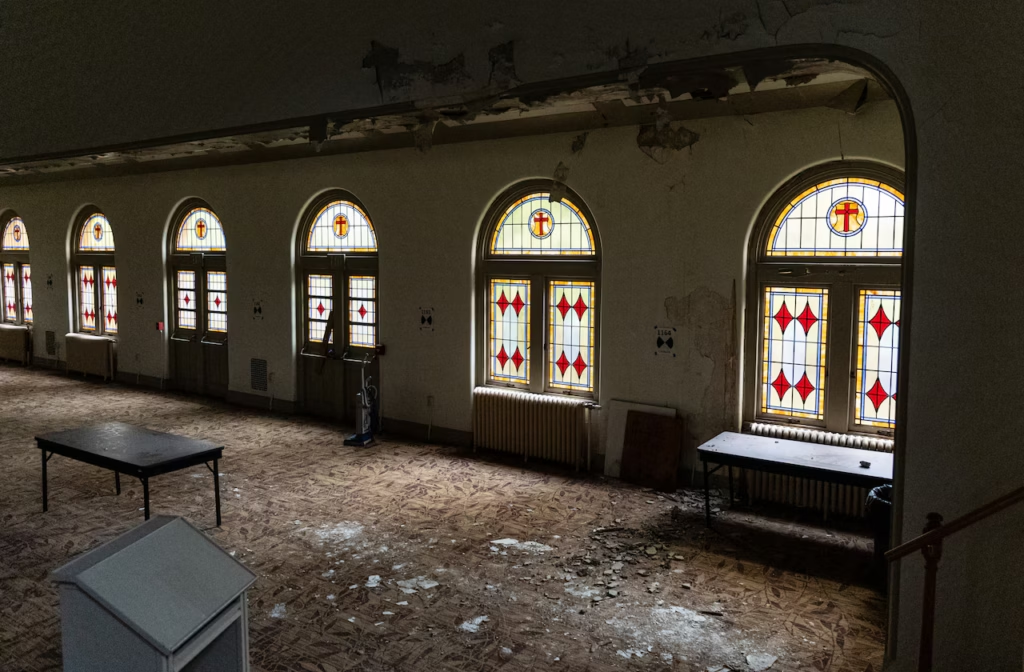
After the hospital closed, many buildings sat mostly vacant, though some were used for storage or government-related purposes. For years, the campus attracted curiosity from historians, photographers, urban explorers, and paranormal fans.
The site is now in the middle of a major transformation. In 2024, the Pennsylvania Department of General Services announced final plans for an approximately $450 million joint laboratory complex on the former hospital property. The project includes a $325 million joint lab facility for several Commonwealth agencies and a $125 million Pennsylvania State Police forensics lab.
The state’s plan includes historic preservation work on four buildings: the Dix Museum, the Administration Building, the Chapel, and Dixmont Cottage. The larger redevelopment is expected to continue in stages, with the complex expected to be occupied by late 2029.
The Cemetery, Morgue and Underground Tunnels
Part of the darker fascination with Harrisburg State Hospital comes from the physical features that often appear in asylum ghost stories: underground tunnels, a morgue, and patient cemeteries.
City on the Hill, a historical site dedicated to Harrisburg State Hospital, states that there were three known burial locations connected to the hospital. The first cemetery on hospital grounds was likely created around 1857 and was used until around 1890. In 1927, the court was petitioned to remove what was described as an “unsightly public cemetery” on state hospital grounds. At the time of removal, the cemetery reportedly held the remains of 230 people.
Historic Harrisburg Association also notes that the complex expanded to include a morgue, cemetery, chapels, solarium, and agricultural buildings. These are the kinds of features that helped Harrisburg State Hospital become one of Pennsylvania’s most talked-about abandoned hospital locations.
The tunnel system may be the most famous part of the site’s haunted reputation. These tunnels were practical, not supernatural by design. Large hospital campuses often used underground tunnels for utilities, staff movement, supplies, and weather-protected travel between buildings. Still, long, dark service corridors beneath an abandoned hospital are exactly the kind of setting that feeds ghost stories.
Is Harrisburg State Hospital Haunted?
There is no verified proof that Harrisburg State Hospital is haunted, but it has a long reputation as one of the more unsettling abandoned hospital sites in Pennsylvania. The most common reported activity includes screams, shadow figures, disembodied footsteps, strange noises, moving objects, and a feeling of being watched. Harrisburg Magazine identified the morgue and the underground tunnel network as the two areas most often described as haunted.
The site’s paranormal reputation is helped by several factors:
- It operated for more than 150 years.
- Thousands of patients and staff passed through the campus.
- It had a morgue and patient cemeteries.
- Several buildings stood abandoned for years after closing.
- Its tunnels became a focus of ghost stories and urban legend.
One reported encounter cited by Harrisburg Magazine involves John G. Sabol, who wrote about working in an office building on the grounds. Sabol claimed that his MP3 player suddenly increased in volume without him touching it, which he considered unexplained because the device required the toggle control to move.
PAHauntedHouses.com, which collects haunted location listings and user reports, includes claims from visitors and former patients who described hearing footsteps, seeing apparitions, feeling watched in the tunnels, and experiencing an oppressive feeling on the grounds. Those reports are personal accounts and should be treated as unverified, but they are part of the modern ghost lore surrounding the hospital.
The Morgue and Tunnel Stories
The morgue is often described as one of the most haunted areas of Harrisburg State Hospital. Harrisburg Magazine repeated a claim from PAHauntedHouses.com that blood-like stains were said to appear in the morgue’s exam room without an obvious cause. That story is part of the hospital’s paranormal folklore, not a confirmed historical fact.
The tunnels have even more stories attached to them. Some accounts describe shadowy figures moving through the corridors, cold breezes, strange voices, and the feeling that someone is nearby even when no one can be seen. One 2023 user review on PAHauntedHouses.com described a long tunnel under the Hilltop Building area and claimed the person heard faint voices and felt an icy breeze while inside.
Again, these stories are not proof of a haunting. They are firsthand or secondhand reports that have become part of the site’s haunted identity.
Harrisburg State Hospital and Girl, Interrupted
Harrisburg State Hospital is also known as a filming location. In 1999, the hospital was used for the hospital setting in Girl, Interrupted, the film starring Winona Ryder, Angelina Jolie, Whoopi Goldberg, and others. City on the Hill says most of the hospital scenes were filmed in Building 22 and the Administration Building while the hospital was still an active facility, though its patient population had declined.
The film crew reportedly created ward sets, nurses’ stations, bedrooms, medical rooms, and other period details inside Building 22. They also used offices in the Administration Building and several hundred yards of the underground tunnel system.
This connection gave the hospital a second life in pop culture. Even people who do not know its real history may recognize its red brick buildings from the movie.
Can You Visit Harrisburg State Hospital?
No, not as a casual visitor or ghost hunter. The property is not open for public exploring. Uncovering PA reported after a late 2024 tour that there were no more tours of the property, that it was strictly off-limits, and that trespassing could likely lead to arrest.
Historic Harrisburg Association previously offered limited landmark tours, but those were controlled events with tickets, waivers, and specific meeting instructions. Those past tours should not be confused with open public access.
Can You Ghost Hunt at Harrisburg State Hospital?
No. Harrisburg State Hospital is not a legal public ghost hunting location. There are no public paranormal investigation hours, and the site is undergoing redevelopment. Even if buildings look abandoned, they are still controlled property.
For paranormal fans, the safest way to explore Harrisburg State Hospital is through historic photos, archived accounts, news coverage, and legal public information. Do not enter the buildings, tunnels, or grounds without written permission from the proper authority.
Why Harrisburg State Hospital Still Fascinates People
Harrisburg State Hospital is not just another abandoned asylum story. Its history is more complicated than that. It began with reform-era ideas about humane care. It grew into a massive self-sufficient campus. It housed generations of patients, doctors, nurses, staff, and wartime civilian workers. It later became a preservation challenge, a filming location, a target for urban explorers, and a centerpiece of haunted Pennsylvania folklore.
Its ghost stories endure because the setting is powerful. A hospital that operated for 155 years leaves behind a lot of memory, even when the buildings are empty. The tunnels, morgue, cemetery stories, and abandoned wards make it easy to understand why people imagine something still lingering there.
Still, the most important story is the human one. Harrisburg State Hospital was a place where real people lived, worked, suffered, recovered, and died. Any haunted retelling should remember that first.
Never trespass on property that is not yours without permission. Ghost hunting can also be dangerous, especially in abandoned or restricted buildings, so always use caution.
Sources
Historic Harrisburg Association, Harrisburg State Hospital
Frequently Asked Questions
Where is Harrisburg State Hospital located?
Harrisburg State Hospital is located at 20 Azalea Drive.
Reader sightings
Nobody has reported anything here yet. If you have been, you would be the first.
Report your own visit to Harrisburg State Hospital: History, Hauntings and Ghost Stories of Pennsylvania’s City on the Hill
How haunted is this place?
Be the first to rate

Leave a Reply