

Reviewed by Josh N · Updated September 19, 2026 · How we verify
Reported Phenomena
- Apparitions in period clothing
- Unexplained noises
- Sudden cold spots
- Orbs in photographs
- Unexplained mists
Reported by visitors & local legend. Stories, not verified claims.
The brickwork went up in 1665, four decades before anyone thought to call the place a castle. Bacon’s Castle sits in Surry County, Virginia, on the south side of the James River, and it holds a distinction no other building in the country can claim: it is the oldest documented brick dwelling in what is now the United States. The name belongs to a rebellion that briefly turned the house into a fort, and the ghost stories belong to the generations of visitors and staff who have come away convinced the place is not entirely empty. The history is documented. The hauntings are reported, and reported is the right word for them.
Quick Facts About the Arthur Allen House
- Built: 1665, by the merchant Arthur Allen, near the James River in Surry County
- Other names: Allen’s Brick House, the Arthur Allen House
- Claim to fame: the oldest documented brick dwelling in the present United States, and a rare surviving example of Carolean architecture in the New World
- Protected status: listed on the National Register of Historic Places and designated a National Historic Landmark in 1960
- Now: a historic house museum on roughly 40 acres, operated by Preservation Virginia as a not-for-profit historic site
Arthur Allen’s High Style House on the James
Surry County was formed in the English colony of Virginia in 1652. Thirteen years later, Arthur Allen, a wealthy merchant and a Justice of the Peace in the county, built a high style Carolean brick house near the James River, where he lived with his wife Alice, born Alice Tucker. Allen died in 1669 and the house passed to his son, Major Arthur Allen II, who sat in the Virginia House of Burgesses.
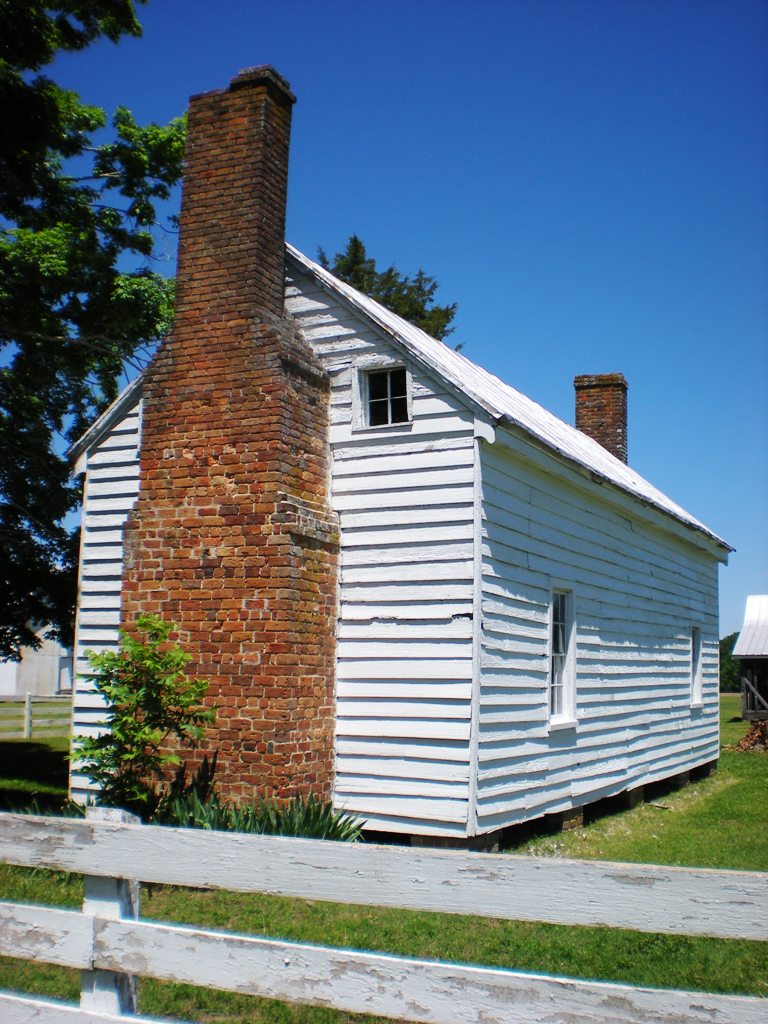
That inheritance is what put the house in the path of history. In the middle of September 1676, a number of the rebel followers of the frontiersman Nathaniel Bacon seized Major Allen’s brick house and fortified it. The garrison, commanded at various times by William Rookings, Arthur Long, Joseph Rogers and John Clements, held the house for more than three months while the rebellion around them collapsed.
Three Months as a Rebel Fort
Bacon himself died in October 1676, leaving his forces to Joseph Ingram, who proved unsuited to command. Ingram scattered his army into small garrisons, the demoralized troops began plundering indiscriminately, and the condition of the colony became deplorable. Royal Governor Sir William Berkeley then picked off the isolated posts one at a time, some by force and some by persuasion.
On December 29, a loyal force aboard the vessel Young Prince captured an unidentified “fort” that many historians have identified as the Allen house. After withstanding a brief siege in early January 1677, the loyalists used the fortified house as a base for the last engagements of Bacon’s Rebellion, which was over before the month ended.
Worth stating plainly, because the folklore says otherwise: Nathaniel Bacon never lived here and is not even known to have visited. He was the proprietor of Curles Neck Plantation in Henrico County, roughly 30 miles upriver on the north bank of the James. Many historians believe the name “Bacon’s Castle” was not in use until many years after the rebellion. It appears in print in 1769, when the Virginia Gazette in Williamsburg published several articles about the uprising.
The Hankins Family, a Confederate Poet, and a Duel
The nineteenth century gave the house its most human tragedy, and none of it is legend. During the Civil War, Private Sidney Lanier of the 2nd Battalion, Macon Volunteers, later counted among the “Poets of the Confederacy,” was stationed with the Confederate signal corps at nearby Burwell’s Bay from May 1863 to October 1864. He and his brother Clifford became devoted friends of the Hankins family, then the owners of the house, and visited often while on duty.
Virginia Hankins, called Ginna, turned down Lanier’s proposal of marriage in May 1867, solely because of the obligation she felt toward her motherless younger brothers and sisters. The two remained lifelong friends. Her brother, James DeWitt Hankins, had been a law student at the University of Virginia and a member of the Jefferson Society when the war broke out. Commissioned on June 22, 1861 as a first lieutenant of artillery in the Fourth Regiment, Virginia Militia, he rose to captain of the Surry Light Artillery and served through Appomattox.
He survived the war and was killed by William Underwood in a duel on October 18, 1866, at Isle of Wight Courthouse, over insults the two men had exchanged earlier while drinking in a tavern. The killing caused intense excitement across the Virginia Tidewater, where both families were prominent, and began a long running feud between the Hankinses and the Underwoods. Dueling had been outlawed in Virginia in 1810, and the encounter was in any case less a duel than a shootout, but Underwood pleaded not guilty at his murder trial on May 16, 1867, and on May 30 the jury voted unanimously to acquit. At Ginna’s request, Sidney Lanier wrote “In Memoriam” for his dead friend.
Like other James River plantations, the estate struggled after the war with the loss of enslaved labor following emancipation and with insurmountable debt. Ginna’s father, John Hankins, had mortgaged the property before his death in 1870. Unable to raise the money, Virginia Hankins sold the 1,200 acre estate in 1872 to the mortgage holder, clearing the debt and paying for her siblings’ education. She moved to Richmond, taught school, read Latin, French and German, wrote poetry and an unpublished novel, never married, and died on December 24, 1888. She is buried in Hollywood Cemetery.
From Warren Family Home to Preservation Virginia Museum
William Allen Warren bought the estate in 1880 and sold it to his son Charles Allen Warren in 1909. When Charles died in 1931 the property passed to his son Walker Pegram Warren, who had been born in the house. Walker and his wife used it as a second home until both were killed in an automobile accident in 1973. They had no children, and the mansion, its outbuildings and 40 acres were acquired from their estate by the Association for the Preservation of Virginia Antiquities, now Preservation Virginia, which restored the house in the 1970s. The remaining 1,130 acres went to Virginia State Senator Garland Gray, later to his son Elmon T. Gray, and are still farmed. In 2015 the Virginia Outdoors Foundation received a grant of $257,996 from the Virginia Land Conservation Foundation toward a conservation easement on 1,260 acres of privately owned farmland surrounding the site, permanently protecting it from residential and commercial development.
Triple Stacked Chimneys and Compass Roses
Architecturally the building is a survivor of a kind almost nothing else is. It is the only surviving “high-style” American house from the seventeenth century and one of only three Carolean great houses left west of the Atlantic; the other two, Drax Hall Estate and the Great House at St. Nicholas Abbey Plantation, are both in Barbados. Look for the triple-stacked chimneys, the shaped Flemish gables, and the carved compass roses decorating the cross beams in several of the public rooms.
The house was altered between the middle and late nineteenth century. A one story service wing was replaced with a taller Greek Revival wing, the entrance was moved from the center of the main block to the hyphen between the old house and the addition, and the diamond-pane casement windows were swapped for double-hung sash. Moving the door left a scar where the original pedimented surround had been. The restoration kept all of those changes rather than erasing them, so what visitors walk through is a layered building rather than a reconstruction of 1665.
What People Report Inside Bacon’s Castle
The house turns up regularly on lists of the most haunted places in Virginia. The accounts are anecdotal and none of them are verified, but they are consistent enough to be worth setting down. Visitors and staff have described apparitions in period clothing, unexplained noises with no obvious source, and sudden cold spots in rooms that were not cold a moment before. Others have come away with photographs containing orbs or unexplained mists.
None of this appears in the documentary record of the Allens, the Hankinses or the Warrens. What the record does contain is 350 years of occupation, a three month military siege, enslaved people who lived and worked on the property, a young captain shot dead in 1866, and a couple killed on the road in 1973. Whether that history explains the reports or simply primes people to expect them is a judgment each visitor can make standing in the hall.
Planning a Visit to Bacon’s Castle
The site is open for guest visitation as a historic house museum, with preservation work continuing while guests are on the grounds. Beyond the house itself the 40 acres include barns, slave and tenant quarters, smokehouses, and a rare surviving example of a seventeenth-century English formal garden, which is reason enough to come even for visitors indifferent to ghosts. The interior is seen by guided tour, so check Preservation Virginia’s current hours and seasonal schedule before making the drive to Surry County.
Anyone hoping to conduct a paranormal investigation should contact Preservation Virginia first and go through the proper channels. This is a National Historic Landmark and a working preservation project, not an abandoned building, and access for that kind of activity is granted at the organization’s discretion and under its conditions. Turning up unannounced after dark is a good way to get nothing but a trespassing problem.
Sources
- Virginia Landmarks Register (Virginia (official))
- Bacon's Castle
- Sidney Lanier: A Biographical and Critical Study
- Daily Press: Hampton Roads News, Virginia News & Videos
- Bacon's Castle – the Letters of Virginia Hankins and Sidney Lanier » Preservation Virginia
- Wikipedia: Bacon's Castle
Frequently Asked Questions
Where is Bacons Castle located?
Bacons Castle is located at 465 Bacon’s Castle Trail, Surry, VA 23883.
Can you visit Bacons Castle?
Bacons Castle is accessible by guided tour only. Always follow posted rules and respect private property.
Reader sightings
Nobody has reported anything here yet. If you have been, you would be the first.
Report your own visit to Carolean Brick and a Rebel Garrison: Bacon’s Castle, Virginia
How haunted is this place?
Be the first to rate
Leave a Reply