
Reviewed by Josh N · Updated August 6, 2026 · How we verify
Reported Phenomena
- Phantom Civil War column
- Drum and fife sounds
- Woman with child apparition
- Hostile male figure
- Child's screams
- Disembodied voices
Reported by visitors & local legend. Stories, not verified claims.
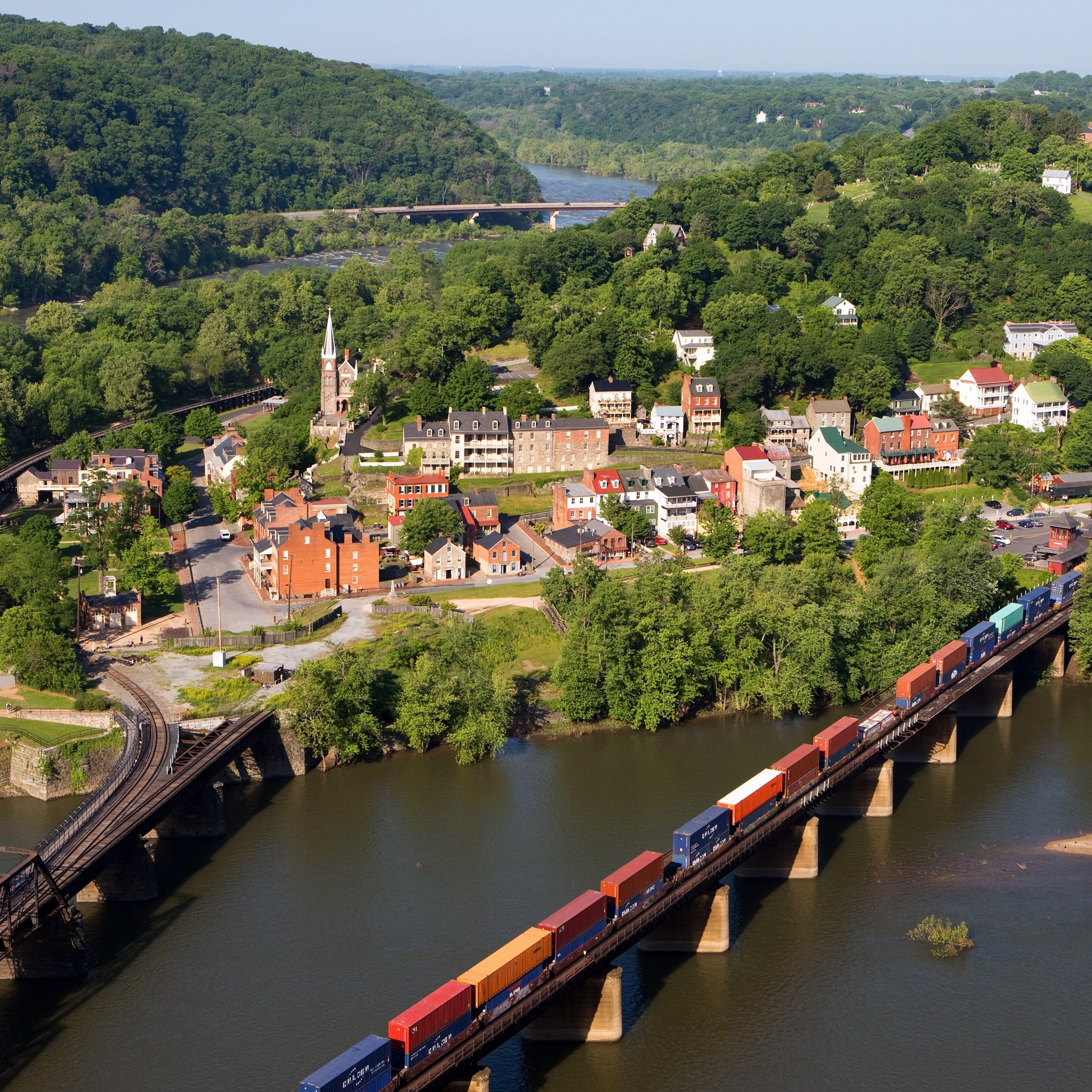
Two rivers collide at a rocky point where three states almost touch, and the town wedged into that gap has been shelled, burned, flooded and rebuilt more times than most places survive once. That is the raw material behind haunted Harpers Ferry: a West Virginia town of a few hundred residents that once held a federal armory, absorbed five Civil War battles, and spent the middle of the twentieth century decaying into what one newspaper called a rotted ghost town. Whether the dead walk its streets is not something anyone has demonstrated. Whether the town has earned the reputation is another question entirely.
Harpers Ferry at a Glance
- Jefferson County, West Virginia, at the confluence of the Potomac and Shenandoah Rivers in the lower Shenandoah Valley, where Maryland, Virginia and West Virginia meet.
- Population 269 at the 2020 census. It is the easternmost town in West Virginia and its lowest point above sea level.
- Five Civil War battles were fought here, and the town changed hands eight times between 1861 and 1865, with one account putting the figure at twelve.
- John Brown’s Fort, the old armory fire engine house, is West Virginia’s most visited tourist site.
- Much of the lower town is preserved by the National Park Service. The Appalachian Trail Conservancy has its headquarters here.
Robert Harper’s Bargain and the Guns of the Federal Armory
A squatter named Peter Stephens settled at the river confluence in 1733 and ran a ferry across the Potomac. Robert Harper, a builder and millwright travelling to the Shenandoah Valley in 1747 to put up a Quaker meeting house, saw what the two rivers could power. He paid Stephens 30 guineas for his squatting rights, then bought 126 acres from Lord Fairfax in 1751. The Virginia General Assembly granted him ferry rights in 1761 and established the town of “Shenandoah Falls at Mr. Harpers Ferry” in 1763. Harper died in October 1782 and lies in the Harper Cemetery above the town.
Thomas Jefferson stopped here on 25 October 1783 and looked out from the outcrop now called Jefferson’s Rock, calling the view “perhaps one of the most stupendous scenes in nature.” George Washington, familiar with the area through the Potomac Company, proposed the site for a new armory in 1794. The federal government bought land from Harper’s heirs in 1796 and began construction in 1799. It was the second such facility in the country after Springfield, Massachusetts, and between 1801 and 1861 it turned out more than 600,000 muskets, rifles and pistols. Captain John H. Hall pioneered interchangeable parts at his rifle works here between 1820 and 1840.
Industry crowded in. Virginius Island, formed by mill debris in the early 1800s, filled with cotton and flour mills and housed around 180 people at its antebellum peak, workers packed into a boarding house and row houses. Canals came, then railroads: the Chesapeake and Ohio Canal in 1833, the Baltimore and Ohio Railroad the following year, and in 1836 the first railroad junction in the United States.
October 1859: The Siege of the Fire Engine House
On 16 October 1859 the abolitionist John Brown led 22 men, himself included, in a raid on the armory, intending to seize the weapons and arm enslaved people across the South. Five of the raiders were Black. Brown had brought a thousand steel pikes forged in Connecticut, weapons requiring no training, and they were never used, because no rising materialised.
The first shot of the raid mortally wounded Heyward Shepherd, a free Black baggage porter for the Baltimore and Ohio Railroad. That shot woke Dr. John Starry after 1 am. He walked over, was stopped by Brown’s men, told them he was a doctor and could do nothing more for Shepherd, then rode out to alert the surrounding towns. Local citizens and militia pinned the raiders down until they took refuge in the armory fire engine house, later known as John Brown’s Fort, where they held out for more than two days.
Eighty-six United States Marines under Lieutenant Israel Greene were sent from the Washington Navy Yard. Lieutenant Colonel Robert E. Lee, on leave at his home in Arlington, was given command and led the unit in civilian clothes because none of his uniforms were available, with Lieutenant J. E. B. Stuart as aide-de-camp. When negotiations failed the troops stormed the building. A few raiders were killed and the attackers lost one man, twenty-four-year-old Marine Private Luke Quinn. Brown was tried at Charles Town for treason against Virginia, murder and fomenting insurrection, convicted on all counts partly on Starry’s testimony, and hanged on 2 December.
Five Battles and a Town Reduced to Foundations
Harpers Ferry was easy to seize and hard to hold. High ground surrounds it on three sides, Bolivar Heights to the west, Loudoun Heights to the south and Maryland Heights to the east, and whoever held the heights held the town. Secessionists took the federal arsenal on 18 April 1861, before Virginia’s convention on secession had even been called together.
By March 1862 an observer wrote that the town “presents quite a gloomy picture. The best buildings have been shelled to the ground, and nothing now remains but their foundations to mark the spot where they once stood.” Before the war it held close to 3,000 inhabitants. In September 1862 Stonewall Jackson’s columns closed on the town, bombarded it on the 14th and 15th, and forced the federal garrison to surrender. Jackson took 12,419 prisoners, the largest surrender of United States military personnel until the Battle of Bataan in 1942. Some 1,500 people who had escaped slavery and gathered around the federal garrison that summer were returned to slavery when the town fell. The delay at Harpers Ferry pushed Lee to regroup at Sharpsburg, and two days later he fought at Antietam, the bloodiest single day in American military history.
The armory was never rebuilt. “The larger portion of the houses all lie in ruins and the whole place is not actually worth $10,” a Massachusetts soldier wrote home in 1863. A visitor in 1878 found the town “antiquated, dingy, and rather squalid.” The population never returned to antebellum levels.
Storer College and the Long Decay
Storer College opened in 1868 to train teachers for freedmen, over the objections of residents who petitioned the legislature to revoke its charter. Frederick Douglass spoke there in 1881. In August 1906 W. E. B. Du Bois led the first meeting on American soil of the Niagara Movement, forerunner of the NAACP, on the Storer campus, a three-day gathering he later called “one of the greatest meetings that American Negroes ever held.” Attendees walked out to the Murphy family farm, where John Brown’s Fort then sat, and the building was soon moved to the college. Storer closed in 1955.
The Hill Top House Hotel opened in 1888 as the only hotel in Harpers Ferry that would accept African American guests. It burned in 1911, was rebuilt larger, burned again in 1919, was rebuilt smaller, and closed in 2008.
Floods finished what artillery started. Every structure on Virginius Island was destroyed in the twentieth century, and a 1936 flood left the lower town “shabby and almost uninhabited.” Harpers Ferry National Monument was authorised in 1944 but nothing was done until the war ended. In 1957 The Baltimore Sun described the lower town as “a sagging and rotted ghost town.” The Park Service stabilised the Shenandoah Street buildings, removed most post-1859 construction, and the monument became Harpers Ferry National Historical Park on 29 May 1963. A fire in July 2015 destroyed eight or nine businesses and two apartments in two historic downtown buildings.
What People Report on High Street and in the Lower Town
None of the following is documented in the historical record. These are accounts passed on by residents, park staff, visitors and ghost tour guides, and they should be read that way.
- The park guest house. Used as lodging for National Park Service staff, it is the most frequently named location in local ghost talk. Reported sightings include a well-dressed woman accompanied by a child, and a hostile man in period clothing.
- A phantom column. Visitors describe hearing what sounds like a Civil War army on the move: drums and fife, marching feet, most often reported along High Street with no source in sight.
- Screams on the street. Two recurring voices appear in the stories, a drummer boy and a young girl, both said to have died during the town’s occupations.
- John Brown’s men. At the restored farmhouse identified locally as Brown’s headquarters, people report hearing voices and movement attributed to the raiders. A handful claim to have seen Brown himself in the town.
The obvious point in favour of the reports is that this is a place where an enormous amount of violent history happened in a very small footprint, and where almost every building either witnessed it or replaced something that did. The obvious point against is that the same is true of dozens of towns in the Shenandoah Valley, and Harpers Ferry has had a tourist industry with a financial interest in atmosphere since the Baltimore and Ohio Railroad started running excursion trains here in 1878.
Visiting Harpers Ferry National Historical Park
The lower town is a national historical park and open to the public. Parking in the lower town is prohibited, so most visitors leave their cars at the visitor center and take the Park Service shuttle bus down. John Brown’s Fort now stands at Arsenal Square, as close to its original site as the Park Service could manage. Trails lead out to the ruins on Virginius Island and up to Jefferson’s Rock. Swimming and fishing on the Shenandoah shore, once common, are no longer permitted.
Getting here without a car is unusually easy for a small mountain town. Amtrak stops twice a day on the Floridian line between Chicago and Washington, once in each direction, and MARC commuter trains serve the town on the Brunswick Line. The station sits at the West Virginia end of the historic B&O railroad bridge. The Eastern Panhandle Transit Authority runs bus service on Route 20, and U.S. Route 340 is the only significant highway in. The Appalachian Trail passes directly through town and crosses the Potomac on the Goodloe E. Byron Memorial Pedestrian Walkway, which was damaged by a CSX derailment in December 2019 and reopened in July 2020.
Most of the surviving homes above the flood plain are historic and privately occupied. They are part of the separate Harpers Ferry Historic District, not the park, and are not open to visitors.
See Harpers Ferry for Yourself
Sources
- West Virginia Blue Book, 2017-2018 (Wvlegislature (official))
- 2019 U.S. Gazetteer Files (Census (official))
- U.S. Census website (US Census Bureau)
- The history and operation of the ferry formerly at Harper's Ferry
- Apostrophe Cops: Don't Be So Possessive (The New York Times)
- Wikipedia: Harpers Ferry, West Virginia
Frequently Asked Questions
Can you visit Harpers Ferry?
Harpers Ferry is open to the public. Always follow posted rules and respect private property.
Reader sightings
Nobody has reported anything here yet. If you have been, you would be the first.
Report your own visit to Phantom Drums on High Street: Haunted Harpers Ferry
How haunted is this place?
Be the first to rate
Ghost Tours Nearby

Affiliate links: BeyondHaunted may earn a commission, at no extra cost to you.
Leave a Reply