
Reviewed by Josh N · Updated July 30, 2026 · How we verify
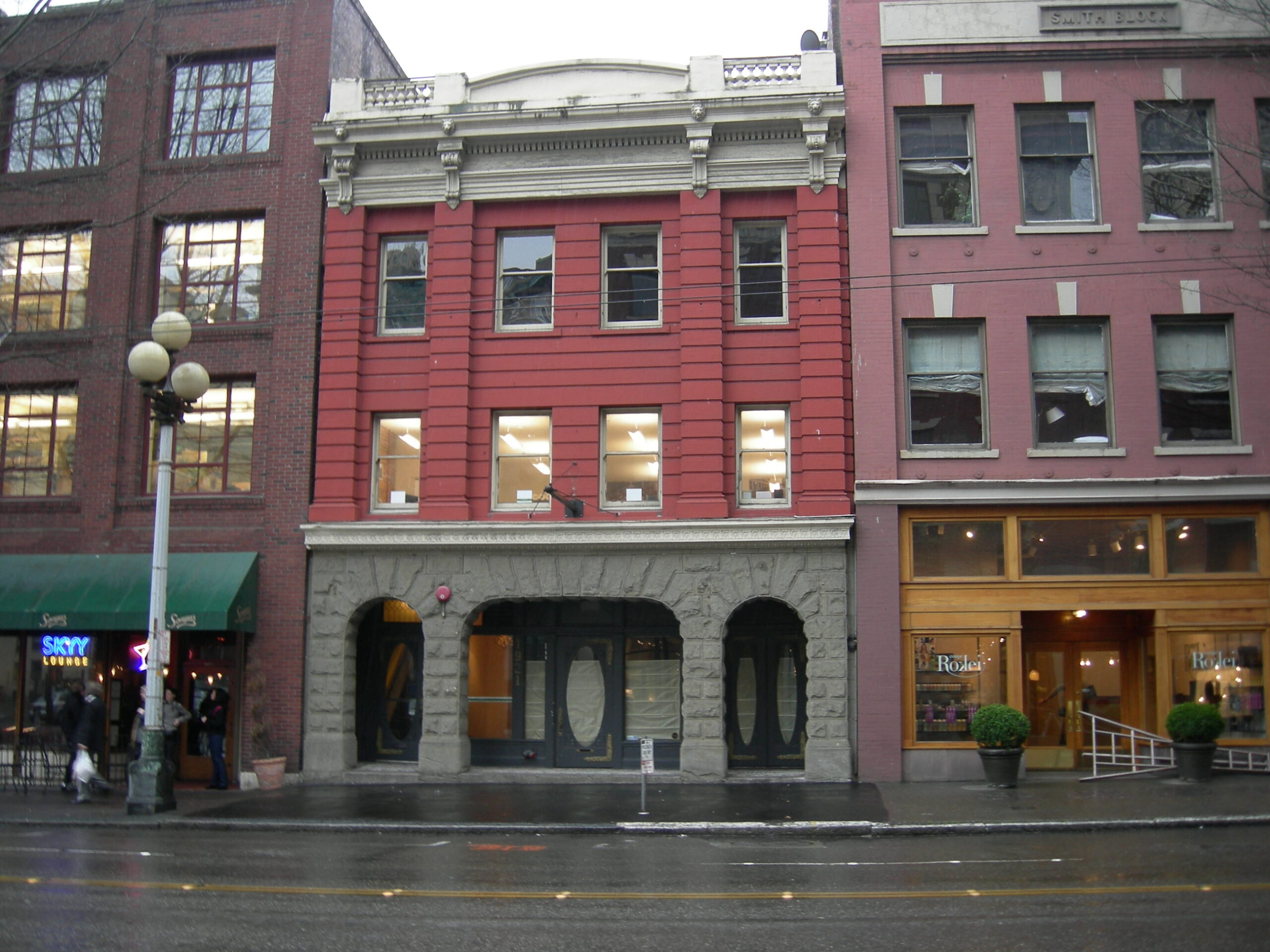
Order a pint in the basement bar beneath 1921 First Avenue and you are drinking inside the oldest purpose-built funeral home in Seattle, Washington. The haunted Butterworth Building has a reputation that circulates through Pike Place ghost walks and one cable television episode, but the documented record underneath the legend is unusually detailed, right down to the 1904 price of a casket. Reading the two side by side is the most interesting thing about the place.
Quick Facts on 1921 First Avenue
The Butterworth Building, also called the Butterworth Block, sits at 1921 First Avenue in Seattle. It was built for the Butterworth & Sons mortuary, which moved in during 1903 and left for larger quarters in 1923. Because it stands on a steep hill, the building shows only three stories on the First Avenue side and five on Post Alley at the rear. It is listed on the National Register of Historic Places, falls inside the Pike Place Public Market Historic District, and has been owned by the McAleese family since 2005.
The City’s First Building Made for the Dead
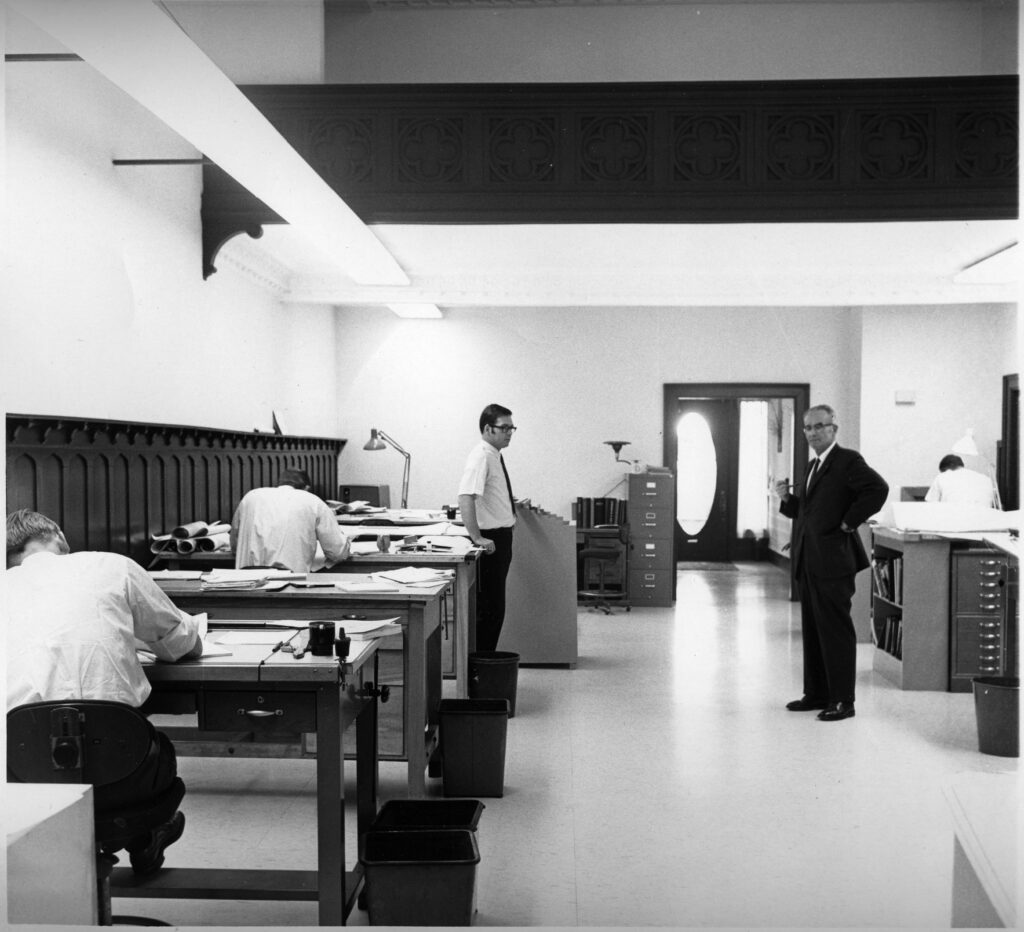
This was Seattle’s first purpose-built mortuary building. Writing in 2009, Jeannie Yandel described it as “The city’s first place for comprehensive death-related services from corpse retrieval to coffin sales.” It also held the first elevator on the West Coast of the United States, installed to move bodies between floors. A Seattle Mail and Herald account from August 1904, published soon after the building opened, called it “without question of doubt, the most complete establishment of its kind in the United States.”
The interior was not built cheaply. A 2008 Seattle Times article described the surviving fabric as “[b]eautifully appointed in stained mahogany, art glass, ornamental plaster and specially designed brass and bronze hardware.”
Floor by Floor in 1904, From Flats to Fireproof Vaults
The original layout is documented well enough to walk through on paper. The upper floor held three flats for employees of the firm, reached by a separate entrance at the south end of the First Avenue facade. Below that was retail: a main showroom of coffins with a view out to Elliott Bay, a separate showroom of child-sized coffins, a room of women’s burial garments, and a private reception and consulting room. In August 1904 the 35 caskets on display ranged from twenty five dollars to two hundred, and garments from a four dollar robe up to items costing as much as one hundred and twenty five. The firm intended to serve everyone from the poor to the city’s wealthiest families, and families who wished to stay with their dead between encoffinment and the funeral could use the private rooms at no extra charge.
The main floor at First Avenue grade contained private offices, morgues, an embalming room, and a utensil room for canopies, pedestals, rugs and laying-out beds. A separate northern door opened onto a vestibule and a funeral chapel seating 150 on the main floor and 50 in the balcony, with its own choir balcony. A “best show room” on this floor displayed finer caskets, some priced as high as eight hundred and ninety dollars in 1904.
Below First Avenue grade but still above grade on Post Alley was the stock room, fitted with fireproof vaults where bodies could be stored more or less indefinitely. The 1904 account called these “so much needed in Seattle when people are undecided as to the disposition of the dead.” Nothing like them had existed in the city before.
The Embalming Room Claim, and What the 1904 Account Says
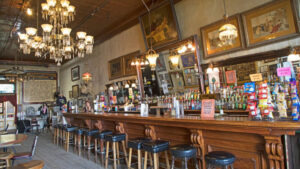
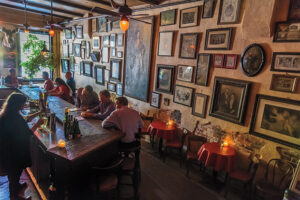
Several recent accounts state that the space now occupied by Kells Irish Restaurant & Pub was the mortuary’s embalming room and crematorium. That is worth flagging as legend rather than record. The 1904 description of the building says the basement, level with Post Alley, housed the heating plant, the stables, and storage for funeral wagons. The embalming room was upstairs on the main floor. Kells has occupied the basement and the former stock room, now a private banquet room, since 1983.
What the Ghost Stories Claim
The building is associated with several ghost stories, and in 2010 it appeared on an episode of Ghost Adventures. Beyond that, the specifics belong to oral tradition rather than anything documented, and they tend to lean on the misidentified embalming room. Visitors expecting a catalogue of verified incidents will not find one. What the building offers instead is a genuine and rather unsettling piece of civic history: the place where an entire growing city sent its dead for twenty years.
Visiting Kells and the Post Alley Entrance
The most straightforward way inside is through Post Alley at the rear, where Kells Irish Restaurant & Pub occupies the basement and the old stock room. The building sits adjacent to Pike Place Market, so it is easy to fold into a market visit. The upper floors are not a museum and are not open for general touring, so treat the exterior on First Avenue as a look-only proposition and the basement as the part of the old mortuary you can actually sit in.
Address: 1921 First Avenue, Seattle, Washington
See Butterworth Building for Yourself
Sources
- NPGallery Asset Detail (National Park Service)
- seattletimes.nwsource.com
- Kells Seattle
- GeoHack – Butterworth Building
- Wikipedia: Butterworth Building
Frequently Asked Questions
Where is Butterworth Building Seattle Mortuary located?
Butterworth Building Seattle Mortuary is located at 1921 First Avenue, Seattle, Washington.
Can you visit Butterworth Building Seattle Mortuary?
Butterworth Building Seattle Mortuary is open to the public. Always follow posted rules and respect private property.
Reader sightings
Nobody has reported anything here yet. If you have been, you would be the first.
Report your own visit to Seattle’s First Mortuary: The Haunted Butterworth Building
How haunted is this place?
Be the first to rate
Ghost Tours Nearby
 Sinister Sins, Scandal, and Shadows of Seattle Guided Ghost Tourfrom $26
 Haunted Seattle Booze and Boos Ghost Walking Tourfrom $39
 Seattle Terrors Spirits & Spirits Haunted Pub Crawlfrom $29
Affiliate links: BeyondHaunted may earn a commission, at no extra cost to you.
Leave a Reply