Reviewed by Josh N · Updated August 29, 2026 · How we verify
Reported Phenomena
- Phantom hallway rumbling
- Slamming doors
- Chairs changing places
- Snorting animal noises
Reported by visitors & local legend. Stories, not verified claims.
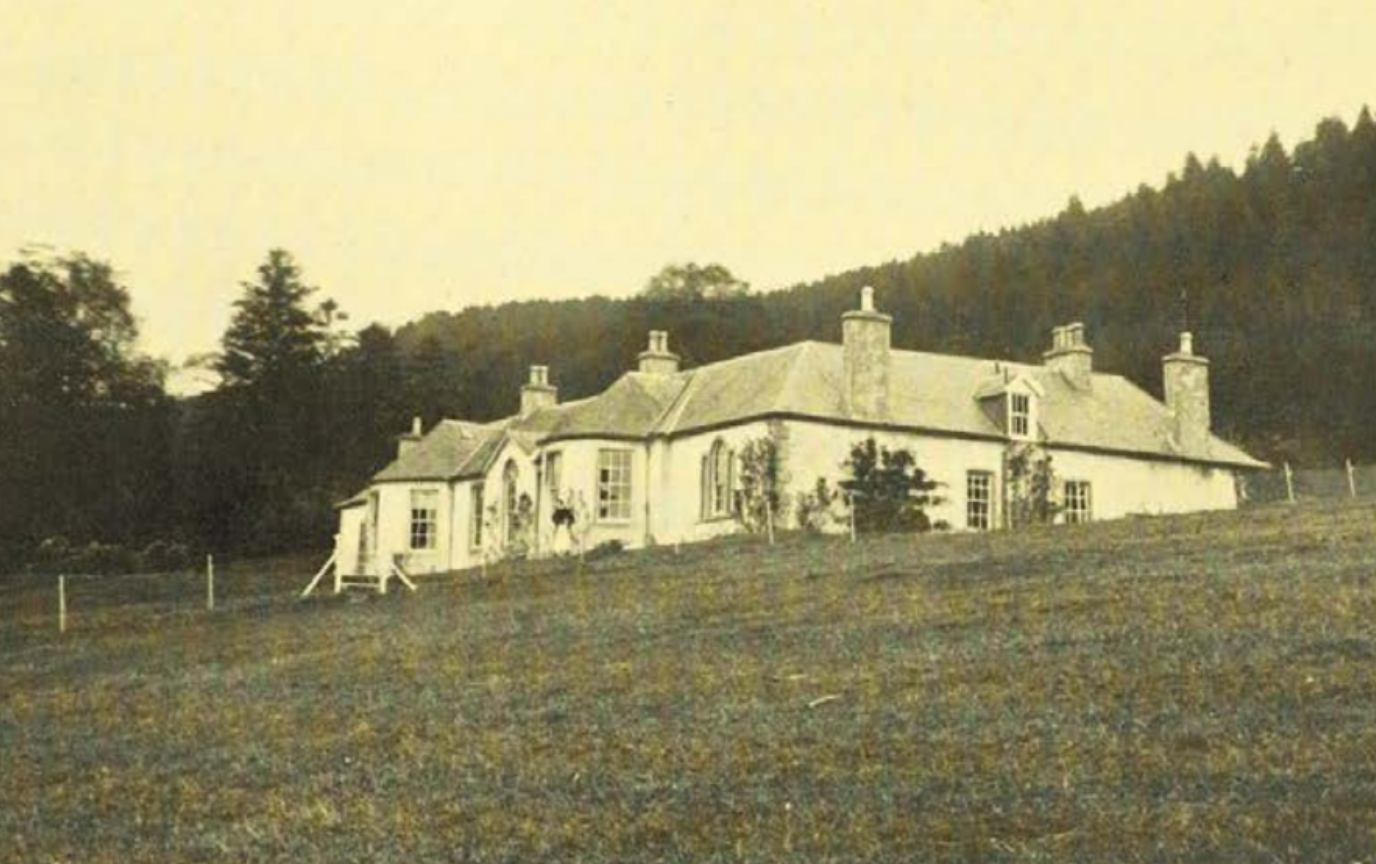
Few private homes in Britain carry a reputation quite like Boleskine House, the low manor standing above the south-east shore of Loch Ness in the Scottish Highlands. It has been an occultist’s oratory, a rock guitarist’s folly, a hotel, a Dutch family’s holiday home, a burnt-out shell and, most recently, a restoration project reopened to the public. The stories attached to it are older than any of those things.
The house sits 21 miles south of Inverness, halfway between the villages of Foyers and Inverfarigaig, on the opposite side of the loch from Meall Fuar-mhonaidh. It is a Category B listed building, along with the adjacent stables and gate lodge.
The Kirk, the Graveyard and Minister Thomas Houston
The strange reputation of this stretch of shoreline predates its most famous resident by centuries. The parish of Boleskine was formed in the 13th century, and a kirk and graveyard were built around the same time. Local tradition holds that Minister Thomas Houston, who lived from 1648 to 1705, had the unenviable job of hastily returning animated corpses to their graves in Boleskine graveyard after a local wizard had raised the dead. That is folklore, not record, but it is worth noting that it circulated long before anyone thought of Boleskine as a haunted address.
Legend also has it that the kirk on whose site the house was later built caught fire during a congregation and killed everyone inside. Again, this is legend rather than documented event. A tunnel links the house to the graveyard.
Colonel Fraser’s Act of Spite, 1760s
The building itself began as a hunting lodge, constructed in the 1760s by Colonel Archibald Fraser. The choice of site was apparently deliberate provocation: Fraser is said to have picked it to irritate Simon Fraser of Lovat, whose land surrounded the spot, in retribution for his support of the Hanoverian side during the Jacobite rising of 1745. The Fraser family kept expanding the lodge until around 1830. Everything was on one floor: four bedrooms, a kitchen, a servant’s attic bedroom above the kitchen, a lounge, a drawing room and a library.
Aleister Crowley and the Abramelin Operation
Crowley bought the property from the Frasers in 1899, when it was known as the Manor of Boleskine and Abertarff. He was not looking for a country retreat so much as a stage set. He wanted to perform the Sacred Magic of Abramelin the Mage, taken from the grimoire known as The Book of Abramelin, and the ritual came with architectural requirements. In The Confessions of Aleister Crowley he wrote that “the first essential is a house in a more or less secluded situation. There should be a door opening to the north from the room of which you make your oratory. Outside this door, you construct a terrace covered with fine river sand. This ends in a ‘lodge’ where the spirits may congregate.”
He described adapting the building to suit: a “long low building”, of which he set apart the south-western half for his work, cutting a door into the largest room with its bow window and lining a wooden oratory with big mirrors brought up from London.
The stated purpose of the Abramelin working is to invoke one’s Guardian Angel. It demands at least six months of preparation, celibacy and abstinence from alcohol, and it also involves summoning the twelve Kings and Dukes of Hell in order to bind them and strip their influence from the magician’s life. Partway through, Crowley was called away to Paris by the leader of the Golden Dawn. According to legend, he never banished what he had summoned, and that unfinished ritual is the peg on which almost every subsequent Boleskine ghost story hangs.
Crowley became notorious for accounts of black magic conducted at the house, and used “Lord Boleskine” as one of his pseudonyms. His lodge keeper, Hugh Gillies, suffered a series of personal tragedies including the loss of two children. Crowley himself later said his experiments with black magic had simply got out of hand. He left in 1913 for a modest cottage at Dennyloanhead near Falkirk.
A Shotgun in Crowley’s Bedroom, 1960
After the Second World War the house belonged to a Major Edward Grant. On 9 November 1960 it was reported that Grant had killed himself with a shotgun in Crowley’s old bedroom. A newly married couple moved in afterwards; the wife was blind, and after a month the husband walked out, leaving her wandering the house unable to see. In 1969 the experimental filmmaker Kenneth Anger, who had his own interest in the occult, heard the house was on the market and rented it for a few months.
Jimmy Page, Charles Pace and the Caretaker Who Stayed
When Page heard about Anger’s stay, he bought the house in 1970. He was a collector of Crowley memorabilia who “had read a lot of Crowley and… was fascinated by his ideas”, and although the place was decaying he thought it would make good atmosphere for writing songs. In practice he spent little time there, leaving it in the hands of his friend Malcolm Dent, who lived from 1944 to 2011. Page did commission an artist, Charles Pace, to paint Crowley-esque murals based on those at Crowley’s Abbey of Thelema in Sicily, which Anger had found in 1955. Page’s fantasy sequence in the 1976 Led Zeppelin concert film The Song Remains the Same was shot on the Boleskine estate.
Dent’s account of arriving is unromantic: “it was a wreck… It had been more or less abandoned. There’d been at least one fire there, parts of the building were missing and it had been badly patched up.” He described himself as a sceptic of the paranormal. He also stayed for years, met his wife at Boleskine and raised his family there, which is the detail most retellings leave out.
What Malcolm Dent Reported Hearing
These are reported experiences, not verified events, and they come overwhelmingly from one long-term resident. Dent said that after a few weeks he heard strange rumblings from the hallway that stopped when he went to look and resumed once he shut the bedroom door again. Having read up on the house, he came to understand the rumbling as the head of Lord Lovat, despite Lovat having been executed in London. His reasoning was geographical: above Boleskine is a place called Errogie, said to be the geographical centre of the Highlands, and Boleskine was then the nearest consecrated ground to it.
What he called the “most terrifying night of my life” involved waking to what sounded like a wild animal snorting and banging outside his bedroom door. It continued for some time, and he did not dare open the door until morning, when there was nothing there. His verdict: “whatever was there was pure evil.” A friend staying at the house woke one night claiming she had been attacked by “some kind of devil”. Lesser incidents included chairs switching places, doors slamming open and closed for no reason, and carpets and rugs rolling themselves up.
The Owner Who Experienced Nothing At All
Boleskine went on the market for £250,000 in 1991 and was bought by Ronald and Annette MacGillivray in 1992. They found it in a very bad state, spent heavily stripping it back to the bare walls and re-roofing, and converted it into a hotel. Ronald MacGillivray died in 2002 and was said to hate any reference to the house’s Crowley years. Asked whether she had experienced anything mysterious there, Annette MacGillivray’s answer was flat: “absolutely none. I am a non-believer and didn’t listen to all that rubbish. We had a great time there.” Any honest account of Boleskine has to carry that alongside Dent’s. After 2002 new Dutch owners turned the house back into a private residence and used it as a holiday home.
Two Fires, 2015 and 2019
At about 1.40pm on 23 December 2015, a motorist on the A82 reported flames and smoke coming from the house. By the time fire crews arrived, an estimated 60 per cent of the building had already burnt, with flames reaching some 6 metres. Crews concentrated on the west wing. The owner’s business partner and daughter had been out shopping and came back to find the house ablaze; the fire was thought to have started in the kitchen, nobody was believed to be inside and there were no casualties.
The ruins and 22 acres went on the market for £500,000 in April 2019 and were bought by the Boleskine House Foundation SCIO, which intended to restore house and gardens and open the estate to the public. Then, on 31 July 2019, fire broke out in two buildings on the estate simultaneously in a suspected arson, destroying what remained of the interior. Police appealed for information. Clearance work and preparation for a new roof began in December 2019.
The Rebuild and Visiting Boleskine House
Restoration used traditional building techniques and materials, with the final cost expected to fall between £1.2 million and £1.5 million, supported by a £250,000 award from the National Lottery Heritage Fund. Inverness-based conservation accredited LDN architects worked with the foundation’s in-house volunteer design team, and local firm Simpson Builders oversaw the project.
From 2020, members of the public could visit through pre-arranged visits scheduled between renovation works, and the house twice earned Trip Advisor’s Travelers’ Choice Award. It closed in September 2024 for a final phase of work reimagining the interior across its Jacobean, Georgian and Victorian layers with a traditional drawing room, dining room and library. That phase was completed and the house reopened to the public in April 2026. Check with the Boleskine House Foundation for current opening arrangements before travelling.
Boleskine in Print and on Film
The house appears, recognisably, as “Skene” in W. Somerset Maugham’s 1908 novel The Magician. Crowley considered the book plagiarism and replied with an article in Vanity Fair written under the name Oliver Haddo, a character lifted from Maugham. More recently it plays a major role in Neil Spring’s 2019 novel The Burning House.
Address: Between Foyers and Inverfarigaig, Loch Ness, Scottish Highlands
See Boleskine House for Yourself
Sources
- Boleskine House: New fire rips through Aleister Crowley's former home
- House of the unholy
- For sale on Loch Ness: Aleister Crowley's centre of dark sorcery
- Celebrating Four Generations
- Aleister Crowley, The Beast of Boleskine
- Wikipedia: Boleskine House
Frequently Asked Questions
Can you visit Boleskine House Loch Ness?
Boleskine House Loch Ness is open to the public. Always follow posted rules and respect private property.
Reader sightings
Nobody has reported anything here yet. If you have been, you would be the first.
Report your own visit to The Demons Crowley Never Banished: Boleskine House
How haunted is this place?
Be the first to rate
Ghost Tours Nearby

Affiliate links: BeyondHaunted may earn a commission, at no extra cost to you.
Nearby Haunted Locations
- 1The Castle of Spite and the Carbisdale Castle Ghost, BettyScotland46mi
- 2Meggernie Castle GhostScotland47mi
- 3Ardblair Castle Green LadyScotland63mi
- 4Bandaged Eyes at the Foot of the BedScotland64mi
- 5The Yew Staircase and the Lochnell Castle BrownieScotland64mi
- 6The Green Lady of Stirling CastleScotland82mi
Leave a Reply