
Reviewed by Josh N · Updated October 7, 2025 · How we verify
Reported Phenomena
- Spectral figures
- Phantom footsteps
- Cold spots
- Slamming doors
- Objects moving
- Screams & cries
Reported by visitors & local legend. Stories, not verified claims.
Address: 21 Mechanic Street, Tenants Harbor, St. George, Maine
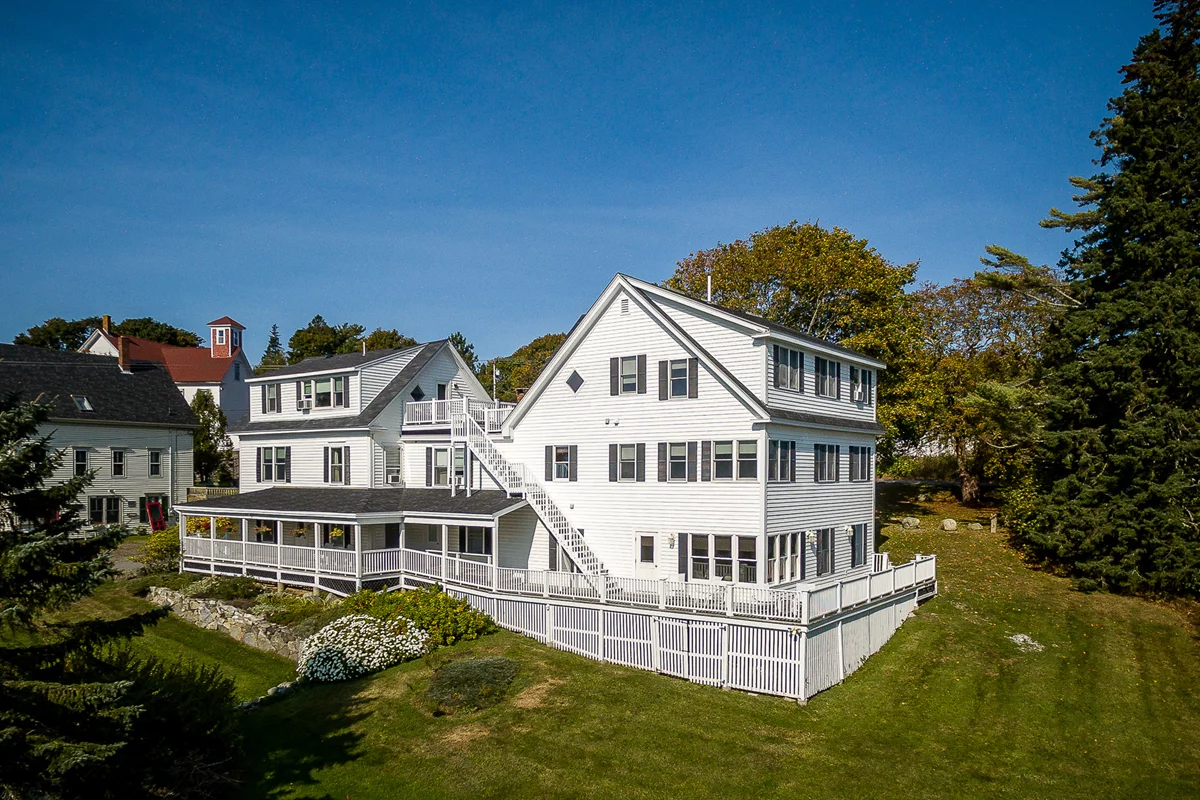
Season / operation: The East Wind Inn historically opens May through October, lodging in the Sail Loft and Captain’s House wings (as of modern operation)

Historical Foundation of the East Wind Inn
To evaluate haunting legends at the East Wind Inn responsibly, we begin with what is verifiable.
Construction & Early Use
- The Sail Loft (1860) was built by Robert Long. Its original design included a ship’s chandlery (ground floor), sail loft on the second level, and woodworking or storage in the attic. Wikipedia
- The village of Tenants Harbor was an active shipbuilding area from about 1820 to 1870. Over 70 coasting schooners were built in the region, contributing to local maritime commerce. Wikipedia
Because of that heritage, the building carried layers of commercial, craft, and community use, a typical profile for many haunted lore sites.
Later Adaptations & Inn Conversion
- At some point in the early 20th century, the building began to host lodging operations (a name often cited is “Wan-e-set”). The specifics of ownership and continuous use are less well documented in public archives.
- The structure fell into disrepair mid-20th century and was reportedly vacant from the 1950s through the early 1970s.
- In 1974, a local (Tim Watts) bought and restored the property, reinvigorating it as the East Wind Inn.
- Over time, adjacent buildings (a former boarding house / captain’s house) were integrated into the property.
These facts form the architectural and business backbone upon which ghost stories later accumulate.
Investigating Death Records & Court Documents
A key test of haunting claims is whether any violent or unusual death is documented in local records. Here’s what archival and governmental sources reveal (or fail to reveal):
Vital Records / Death Certificates
- In Maine, vital records (birth, death, marriage, etc.) since 1892 are held by the State’s Vital Records office, not by counties. Maine
- For Knox County (which includes Tenants Harbor), death records are accessed through the Maine Department of Health and Human Services or via requests to the state, not via the county courts.
- Some older burials, cemetery records, or death indexes (particularly pre-20th century) appear in digitized collections — e.g. FindMyPast has Knox County cemetery records from 1800–2007 in image archives. Findmypast
From these, one might search for names associated with the property or area in those cemeteries, but no public outcome surfaced showing a verified violent death or murder inside the East Wind Inn property itself.
Court & Probate Records
- The Knox County Probate Court handles estates, guardianships, name changes, etc. Its records are public unless sealed. mainecourtrecords.us
- No accessible record was found indicating a homicide, inquest, or criminal proceeding tied specifically to the East Wind Inn (or the Sail Loft address) in searchable public indexes.
Summary of Archival Findings
- Positive: We have architectural, use, and ownership history; cemetery record indices exist for Knox County; court and probate infrastructure is transparent in Maine.
- Negative: We find no verified archival record of a stabbing, murder, or violent death in that building or lot in available death certificate indexes or court dockets.
- To press further would require deep archival work: examining old newspapers, death indices by name/census crosswalk, local historical society archives, or probate decedents’ files tied to that property.
Ghost Lore & Reported Phenomena
With archival data as the grounding, let’s look at the lore that has grown around East Wind Inn, noting where it aligns (or doesn’t) with documented facts.
Common Allegations at the East Wind Inn
Many ghost-tour and paranormal sites report:
- Room 12 & 14, upper floors: Guests say they felt pressure on their chests or hands pushing them down in bed; they claim it was impossible to move.
- Cold spots, temperature drops, feeling watched: Especially in the attic or hallway areas.
- Shadows / apparitions: A gray figure ascending stairs, or peering out windows toward the harbor.
- Objects moving, doors slamming, footsteps, moans: Especially at night, in empty rooms or hallways.
- Stories of violent death (e.g. stabbing, strangulation): Some versions allege a woman was murdered in the building in the 1800s.
These accounts appear in ghost-directories, local storytelling sites, and traveler anecdotes. Their appeal is strong, but their evidentiary weight is weak in comparison to archival records.
Analysis of Lore vs History
- The lore around violent death lacks archival support in public death indices or court records.
- Many reported effects—cold spots, pressure sensations, footsteps—are common features of haunted storytelling across many historic inns, and may also stem from natural causes (settling structures, drafts, ambient noises).
- Where a building has a known past of varied use, dormancy, and age, stories are more likely to attach over time. The Sail Loft’s layered use and long history make it a natural magnet for ghost tales.
Why the Legends Survive at the East Wind Inn
- Narrative appeal: The idea of a restless spirit in a picturesque coastal inn draws in visitors and storytellers.
- Ambiguity & gaps: The lack of definitive disproval leaves room for belief.
- Guest testimony amplification: One guest’s “I felt something” later becomes promotional lore.
- Atmospheric setting: Wind, sea, old wood, night silence — all predispose people to interpret ambiguous stimuli as paranormal.
- Historic structure context: Old inns often attract ghost claims as part of branding or folklore.
Field Suggestions for Further Verification
If one wanted to push deeper than online repositories, here’s a plan:
- Search local newspapers (microfilm or digitized) from Rockland, St. George, Tenants Harbor for reports of homicide, inquests, suicides associated with the address.
- Consult Knox County probate files for decedents whose estate may reference “Sail Loft” or the property address.
- Examine old land deeds / conveyance records in the Knox County Registry of Deeds (they go back to 1760) to trace ownership and any annotations.
- Visit Town or Village historical societies or libraries in St. George / Tenants Harbor for vertical files or local oral histories.
- Use cemetery indexes (e.g. those via FindMyPast) to see if any unusual burial names correspond with the property address or occupant family names.
Final Assessment of the East Wind Inn
East Wind Inn is a historically rich, architecturally significant building with layered pasts and strong aesthetic appeal. The ghost stories that surround it are numerous and compelling, but archival research so far fails to verify the core claims of violent death or murder at the site.
That doesn’t mean the stories are false; it means that until documentation emerges, they remain in the realm of folklore and experience, not confirmed haunting. For serious exploration, combining historical research with careful, respectful investigation is the best path forward.
Reminder: Never trespass on private property without permission. Always approach ghost exploration with caution and respect for the living.
Frequently Asked Questions
Where is East Wind Inn Haunted located?
East Wind Inn Haunted is located at 21 Mechanic Street, Tenants Harbor, St. George.
Can you visit East Wind Inn Haunted?
East Wind Inn Haunted is a place where you can stay overnight. Always follow posted rules and respect private property.
Reader sightings
Nobody has reported anything here yet. If you have been, you would be the first.
Report your own visit to The Haunting of the East Wind Inn
How haunted is this place?
Be the first to rate


Leave a Reply