
Reviewed by Josh N · Updated July 28, 2026 · How we verify
Reported Phenomena
- Spectral figures
Reported by visitors & local legend. Stories, not verified claims.
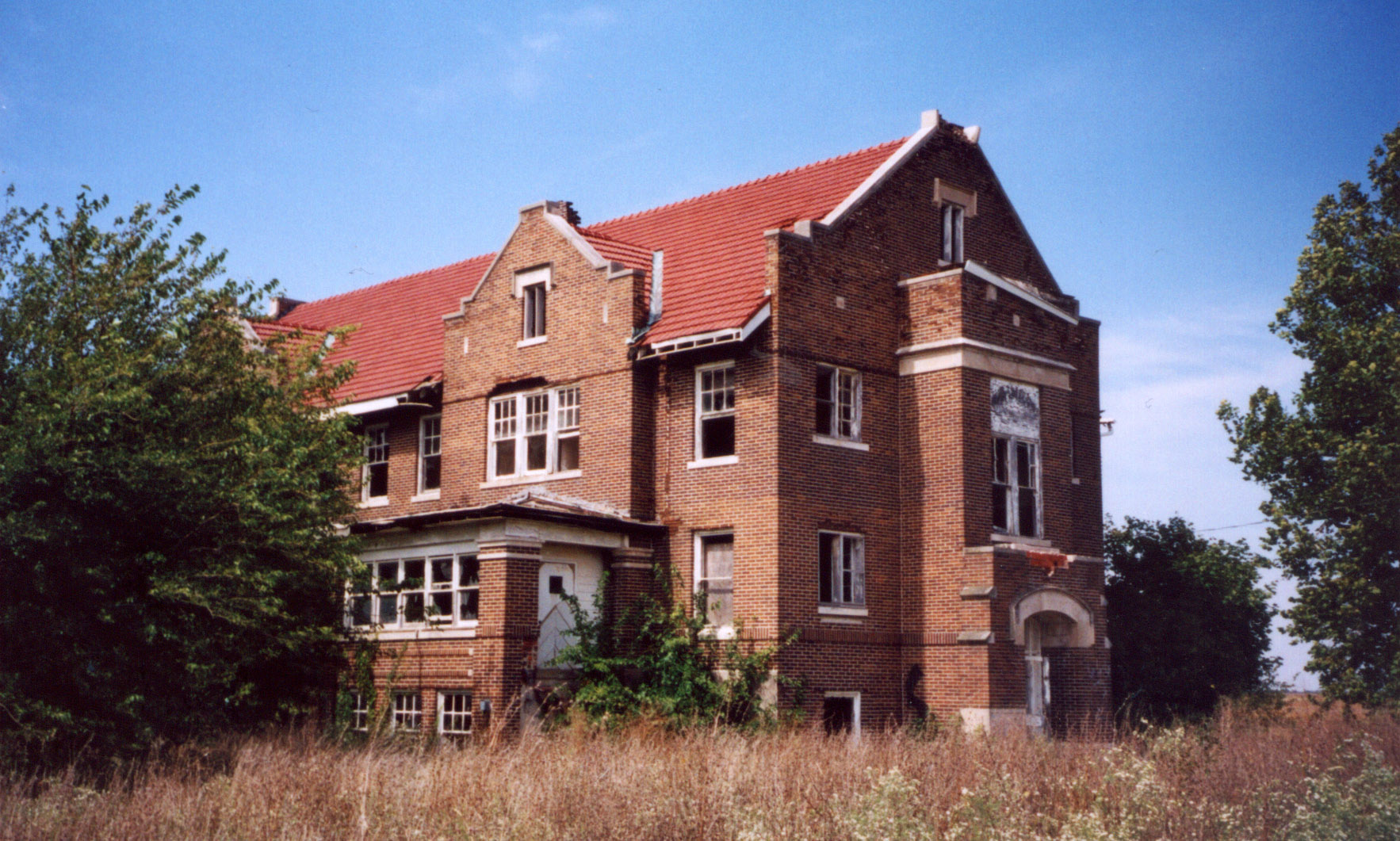
Most buildings with a haunted reputation earn it through a single grim event. Haunted Ashmore Estates, standing in farmland outside the village of Ashmore in east central Illinois, earned its through decades of ordinary institutional hardship: a county poor farm, a condemned almshouse, a psychiatric hospital that ran out of money twice, and two burial grounds full of people whose names were not always written down.
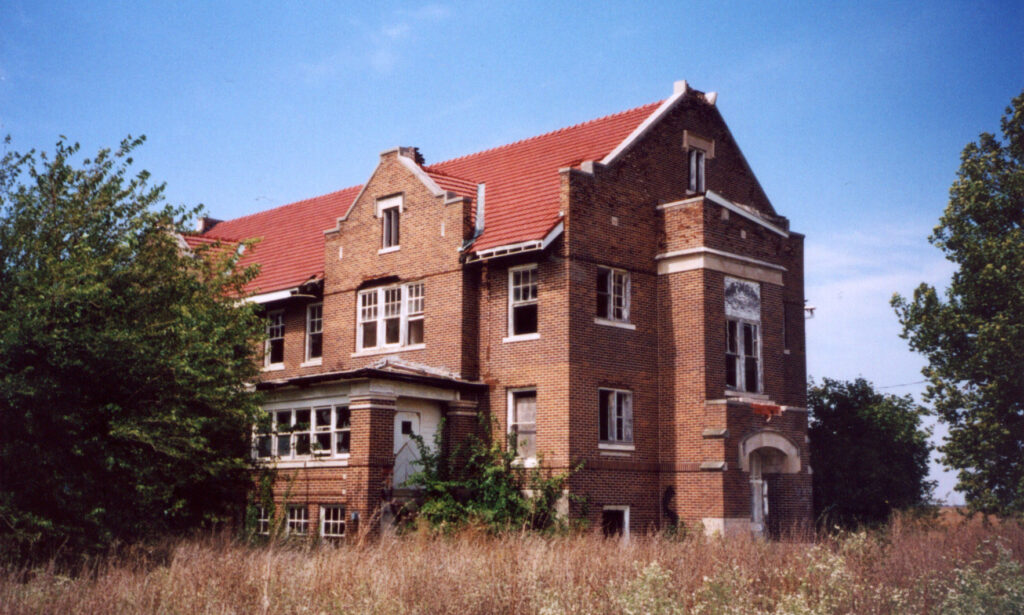
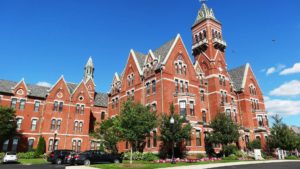
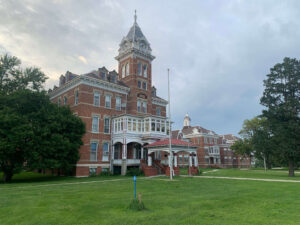
Quick orientation. The three storey brick building went up in 1916 as the second almshouse on the Coles County Poor Farm property. The county complex ran until 1959. From 1959 to 1986 it operated as a private care facility called Ashmore Estates, which is where the name comes from. It sat abandoned from 1986 until 2006, became a commercial haunted attraction, lost its roof in a 2013 storm, and has been under repair since 2014.
From Loxa to Section 35: How the Poor Farm Got Here
Coles County first ran its poor farm in Charleston Township near Loxa, from 1857 until 1869. In 1870 the county bought 260 acres from A. N. Graham in Section 35 of Ashmore Township, land crossed by the Indianapolis & St. Louis Railroad. The first building on the new site was a modest timber and brick structure put up by H. B. Truman, 38 by 58 feet, two storeys, with a kitchen attached. Oliver D. Hawkins, who had come to Coles County from Kentucky in 1841, served as the first superintendent, or in the language of the day, Overseer of the Poor.
Two Pauper Cemeteries and the Deaths on the Books
People died at the farm, and the county kept a small burial ground north of the grounds for them. In 1879 superintendent Joshua Ricketts recorded 32 deaths among an estimated 250 inmates who had passed through between 1870 and 1879. A second pauper cemetery, opened a few years after that, lies south of Route 16 and is believed to hold between 60 and 100 graves. Those two cemeteries do more work in the site’s reputation than any single ghost story attached to the building itself.
What State Inspectors Wrote About the Old Almshouse
The record of conditions here is unusually blunt. The Board of State Commissioners of Public Charities inspected in 1902 and noted that heating was by stove and sufficient, that there was no regular ventilation system though fresh air was easy to come by, that there was no plumbing, and that there was no fire protection. On the mentally ill residents the board wrote that there was no special provision for them, and that none were locked up or in restraint.
By 1911 the Auxiliary Committee of the State Board of Charities had turned on the place, condemning it for vermin infected walls, rough floors, small windows and improper ventilation, and reporting that flies swarmed everywhere and were especially noticeable on the poor food prepared for dinner. In January 1915 an Almshouse Committee led by John Goodyear, Ivory W. Merritt Jr., E. N. Carter, W. R. Zimmerman and William Knollenberg took bids for a new fireproof building.
The first contractor, S. C. Sailor of Oakwood, backed out in late February 1916. J. W. Montgomery took the job in March for $20,389 and the cornerstone was laid on May 17, 1916. A full time caretaker and his family lived either in the almshouse or in a white farmhouse that once stood on the property.
Nancy Swinford’s Version of the Poor Farm
Not every account of the place is bleak. Nancy Swinford, daughter of Leo Roy and Lura Andrews Swinford, lived at the home for eight years across the 1940s and 1950s. Speaking to the Times-Courier in 2009, she said the farm did a lot of people a lot of good, that residents were warm and had good food on the table, and that they loved working and earning their keep. She described a self sufficient operation: growing their own food, butchering, smoking bacon and hams in the smoke house, dressing their own chickens, making their own butter. Anyone reading the site purely as a house of misery is reading only half the paper trail.
The Private Hospital Years, 1959 to 1986
Coles County kept most of the farmland but sold the almshouse and the nearby ground to Ashmore Estates, Inc. in February 1959. The corporation opened it as a private psychiatric hospital under that name. It closed in October 1964 after five years, in debt, then reopened in 1965 with a different model, taking patients from state mental institutions that were then being broken up. By 1968 the shelter care facility housed 49 residents, ten of whom had epilepsy.
Paul Swinford and Galen Martinie bought the institution in July 1976. Their plan for a new single storey building for up to 100 patients was refused by the state planning committee, so they spent more than $200,000 on a modern addition and system upgrades instead, starting construction in 1977 and finishing in the 1980s. Barbara Jean Clark became director on December 12, 1981, telling the facility’s eight page in-house publication The Ashmore Review that they had the opportunity to be one of the best facilities of their kind in the area.
The end came fast. In February 1986 Swinford entered a limited partnership with Convalescent Management Associates, Inc. of Peoria to manage finances. When the departments of Public Aid and Public Health went nearly a year without issuing the required licenses and certificates, Swinford asked the Illinois Health Facility Planning Board for permission to close. Losses had passed $1.5 million. By the end of April all residents had been moved to area homes and Ashmore Estates shut.
Twenty Years Empty, and a Halloween Fire
Nobody tried to reopen it for three years. In 1990 Paul Swinford and the Tennessee based Corrections Corporation of America proposed converting it into a mental health facility for teenage boys in the justice system. The Ashmore Village Board rejected the zoning permit unanimously on December 18, citing fire safety and public opposition.
On Halloween night in 1995 a fire destroyed an outbuilding across the lawn from the main entrance, on the site of the old poor farm superintendent’s house. That outbuilding had been used to teach motor skills to developmentally disabled residents before the facility closed. In 1998 Arthur Colclasure of Sullivan paid $12,500 for the property meaning to renovate it as his own home, and gave up on the idea after repeated vandalism.
How Ashmore Estates Became a Haunted Attraction
Scott Kelley and his wife bought the building from Colclasure in August 2006. Kelley described it as a wreck, saying it took seven weeks of 40 hour weeks to clean out and that the windows were mostly broken. To pay for the work the Kelleys sold flashlight tours of the interior, and by their account locals and self-styled paranormal investigators lined up quickly. Signs went up and the couple moved onto the property to deter trespassers.
The commercial haunted house opened on October 13, 2006. Out of season, Kelley ran overnight stays billed as a Night of Insanity, with speakers, movies and guests including psychic medium Cari Stone.
What the Record Actually Says About the Ghosts
This is worth stating plainly, because it is where a lot of writing about the building overreaches. The documented history of Ashmore Estates is thoroughly recorded: contracts, inspection reports, death counts, licensing disputes. The ghost stories are not. The verifiable part of the paranormal side of the story is commercial and cultural: flashlight tours that funded a renovation, a haunted attraction, overnight events with a medium on the bill, a 1997 satirical piece in The Daily Eastern News by Mike Rice and Matt Fear about turning the place into a highly illegal Halloween escapade, and a 2004 collection of short historical fiction by Michael Kleen. Specific apparitions and encounters circulate locally and among visiting investigators rather than in any documented account. Treat what you hear on site as a reported experience, not an established event.
The 2013 Storm and the Owners Rebuilding It
In January 2013 a storm with winds of 80 to 100 mph struck the Ashmore area. The building’s roof was blown off and its support gables destroyed. Dan Ensign, director of the Coles County Emergency Management Agency, said it appeared damaged beyond repair. The Kelleys’ adjacent home came through largely undamaged.
The Kelleys auctioned the building in April 2013 for $12,700 to Robert Burton and Ella Richards, who sold it in May 2014 to Robbin and Norma Terry, owners of the R Theater in Auburn, Illinois. The Terrys replaced the roof and added bathrooms, a shower and a kitchenette along with other work aimed at safety and structural preservation.
Planning a Trip to Ashmore Estates
The Terrys, working with volunteers, have said their aim is to preserve the building as a historic structure and a site for paranormal investigation, which means organised access rather than open grounds. The building sits on private land outside Ashmore in Coles County, near Route 16, and the vandalism that wrecked a previous owner’s plans is a reminder that unauthorised visits are not welcome here. Check ahead for scheduled investigations or events before making the drive, and remember this is a structure still recovering from having its roof torn off.
Address: Ashmore, Coles County, Illinois
See Ashmore Estates for Yourself
Sources
- Haunted house history revealed
- Student author gets creative with Coles history
- Ashmore Estates
- Wikipedia: Ashmore Estates
Frequently Asked Questions
Where is Ashmore Estates Coles County Almshouse located?
Ashmore Estates Coles County Almshouse is located at Ashmore, Coles County, Illinois.
Can you visit Ashmore Estates Coles County Almshouse?
Ashmore Estates Coles County Almshouse is accessible by guided tour only. Always follow posted rules and respect private property.
Reader sightings
Nobody has reported anything here yet. If you have been, you would be the first.
Report your own visit to Inside Haunted Ashmore Estates, the Coles County Almshouse
How haunted is this place?
Be the first to rate

Leave a Reply