
Reviewed by Josh N · Updated July 30, 2026 · How we verify
Reported Phenomena
- Roadside apparitions
- Sudden vehicle malfunctions
- Phone and radio interference
- Unexplained noises
- Ghostly lights
- Back seat voices
Reported by visitors & local legend. Stories, not verified claims.
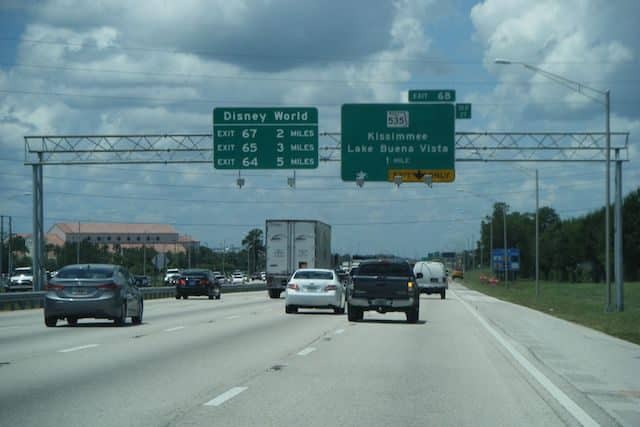
Somewhere between Orlando and Daytona Beach, on a highway that carries commuters, tourists and citrus trucks in equal measure, drivers slow down for reasons they cannot always explain. The I-4 Dead Zone is the name attached to a short section of Interstate 4 in Florida where motorists report figures at the shoulder, radios that swallow themselves, and phones that go dead within sight of the St. Johns River. The stories are old enough now that they have hardened into local fact. The record underneath them is thinner, stranger, and worth separating out.
Getting Your Bearings on the Dead Zone
- The road: Interstate 4 runs 132.30 miles across Central Florida, from an interchange with I-275 in Tampa to a junction with I-95 in Daytona Beach.
- The stretch in question: the section between Daytona Beach and Orlando, generally pinned by storytellers to the ground near where I-4 crosses the St. Johns River.
- The bridge: north of Sanford, I-4 is carried by the St. Johns River Veterans Memorial Bridge over the river at the mouth of Lake Monroe, entering Volusia County.
- Access: a live interstate. There is nothing to tour and nowhere to stop.
St. Joseph’s: The Colony That Fever and Fire Emptied
The legend begins with a settlement, not a highway. In 1877 the businessman Henry Sanford established St. Joseph’s, a Catholic farming community along the St. John’s River, and for a decade it held on. A serious fire and an outbreak of yellow fever finished it. By 1887 the site had been abandoned, and the land passed on to Dutch settlers and then to whoever would work it.
That much is the story as it is told locally and by the tour companies that trade on it. What matters for the ghost story is what the fever left behind: burials on open ground, unmarked, with nobody remaining to remember exactly where.
Albert Hawkins and the Graves He Left Alone
In the early 1900s, according to the accounts, a man named Albert Hawkins bought the property and found unmarked graves on it. He is said to have left them undisturbed and to have discouraged anyone else from touching them. Even so, the tellers say, the unexplained arrived anyway: noises with no source, lights moving over the field at night, and consequences for anyone who ignored the warnings.
Treat all of this as folklore rather than record. There is no verified documentation offered for the phenomena Hawkins reportedly witnessed, and the moral shape of the tale, respect the graves or pay for it, is the shape of a hundred other American roadside legends. What gives this one unusual staying power is that the graves are supposed to be still there, beneath or beside the pavement.
When the Interstate Arrived
Interstate 4 was one of the first Interstate Highways built in Florida. Construction began in 1958, the first section opened between Plant City and Lakeland in 1959, and the highway was finished in 1965. The Lake Monroe to Lake Helen stretch, including the original St. Johns River bridge, opened around 1960. The legend holds that the roadbed was laid directly across the old burial ground, and that every fatal wreck since has been the graves collecting.
North of Sanford the highway is genuinely lonely by Central Florida standards. A 9.6 mile stretch with no exits at all runs northeast from SR 44 near DeLand toward Daytona Beach, crossing wetlands at Deep Creek Swamp and Tiger Bay. Dark, exitless, flanked by swamp: it is the kind of road that invites a story even without one already attached.
What the 2010 Crash Analysis Found
This is the part of the Dead Zone story that most retellings skip, and it is the most interesting. In 2010 the East Central Florida Regional Planning Council used geographic information system technology to test whether the identified zone actually had an elevated crash fatality rate. The analysis compared the section against several other dangerous stretches of I-4.
The result cuts both ways. The Dead Zone did not have the highest accident rate or the highest fatality rate on the highway. But the study did find that the ratio of fatalities to accidents was significantly higher there than in the comparison sections. In plain terms: fewer crashes than the worst spots, but a greater share of them killing someone. That is a finding about a rural, high-speed, exit-free segment as much as anything else, and the study did not claim a cause. It is not proof of a curse. It is also not nothing.
Worth noting too: multiple hurricanes have tracked over this same ground, including three category 4 storms, Donna in 1960, Charley in 2004 and Ian in 2022. Charley is sometimes called the “I-4 Hurricane.” People who believe the land is cursed cite this. People who look at a map of Florida generally do not.
Where I-4 Is Actually at Its Worst
If the highway were being judged purely on carnage, the Dead Zone would not top the list. The deadliest documented single incident on I-4 happened well to the southwest: on January 9, 2008, near Polk City, 70 vehicles piled up when unexpected thick morning fog mixed with a scheduled and approved environmental burn, dropping visibility to near zero. Four people were killed and 38 injured, and the road did not reopen until the following day.
That corridor, through the fog-prone Green Swamp between SR 33 and US 27, is now watched by ten variable-message signs plus dozens of cameras and vehicle detection systems, installed because of several large and deadly pileups. Meanwhile the single most accident-prone section of I-4 is the notorious Fairbanks Curve south of Fairbanks Avenue in Orlando, reworked during the I-4 Ultimate project to reduce the curve radius and improve sightlines. None of these places has a ghost story. They just have fog, geometry and traffic.
What Drivers Report in the Dead Zone
The reported phenomena are consistent enough to summarise, and consistently anecdotal. Motorists describe sudden vehicle malfunctions with no mechanical cause found afterwards. Figures are reported at the roadside and, in the more dramatic accounts, inside the car. Unexplained noises, taps and voices are said to come from the back seat.
Electronic interference is the single most common claim: cell phones losing signal, radios drifting or filling with sounds that do not belong to any station. Some drivers attribute the area’s fatal wrecks to whatever is causing all of the above. It should be said that a dark rural interstate at 70 miles an hour, crossing swampland with no exits and patchy coverage, produces most of these effects on its own. That does not make the accounts dishonest. It does mean nothing reported here has ever been verified as paranormal.
Driving the I-4 Dead Zone
There is no site to visit, no marker, no gate, no ghost tour that walks you onto the ground. The Dead Zone is experienced from behind a windshield, driving the Orlando to Daytona Beach leg of I-4 and crossing the St. Johns River Veterans Memorial Bridge north of Sanford. If you want the atmosphere, drive it after dark, when the exitless stretch toward Daytona feels genuinely remote.
Do not stop on the shoulder to look for graves. This is a six-lane interstate with heavy truck traffic and no scenic pull-offs in the relevant section; the nearest rest areas are a considerable distance away, near Longwood to the south and Polk City much further southwest. The most likely hazard on this road is not a spirit. It is fog, rain, and the driver behind you.
Sources
- Table 1: Main Routes of the Dwight D. Eisenhower National System of Interstate and Defense Highways (Dot (official))
- Overview: I-4 Ultimate
- Florida's Governor Rejects High-Speed Rail Line, Fearing Cost to Taxpayers (The New York Times)
- Florida's I-4 corridor: Where presidents get picked
- Interchange
- Wikipedia: Interstate 4
Frequently Asked Questions
Where is Interstate 4 Dead Zone located?
Interstate 4 Dead Zone is located at 4 crosses the St.
Can you visit Interstate 4 Dead Zone?
Interstate 4 Dead Zone is open to the public. Always follow posted rules and respect private property.
Reader sightings
Nobody has reported anything here yet. If you have been, you would be the first.
Report your own visit to The I-4 Dead Zone: Unmarked Graves Under a Florida Highway
How haunted is this place?
Be the first to rate
Leave a Reply