Reviewed by Josh N · Updated March 17, 2026 · How we verify
There are few forms of divination more unusual, or more unsettling, than oomancy. The word refers to divination by eggs, and historical reference works describe it as a practice in which a person interprets the outer or inner form of an egg, especially the shapes made by egg white in water. That alone is enough to make it memorable. Unlike tarot cards, crystal balls, or spirit boards, oomancy feels domestic and uncanny at the same time. It takes one of the most ordinary objects in a kitchen and turns it into a possible doorway to hidden knowledge.
That eerie contrast is one reason oomancy has endured in folklore and paranormal storytelling. Eggs have long carried symbolic weight in many cultures because they are associated with life, fertility, rebirth, and creation. Museums and scholarly sources alike note that eggs have appeared in burial customs, spring rituals, and religious symbolism for centuries. When an object already feels charged with meanings like life, death, renewal, and destiny, it is not hard to see why people once believed it could reveal the future.
What is oomancy?
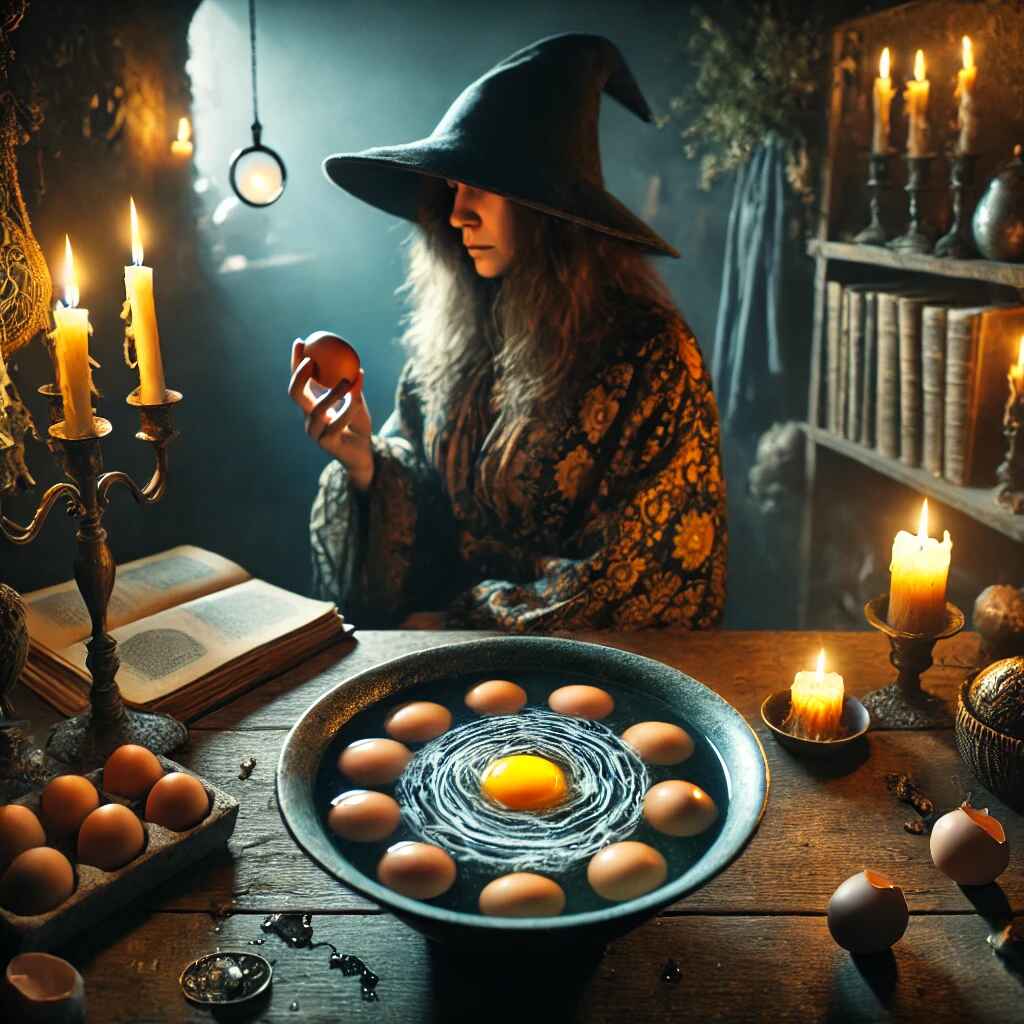
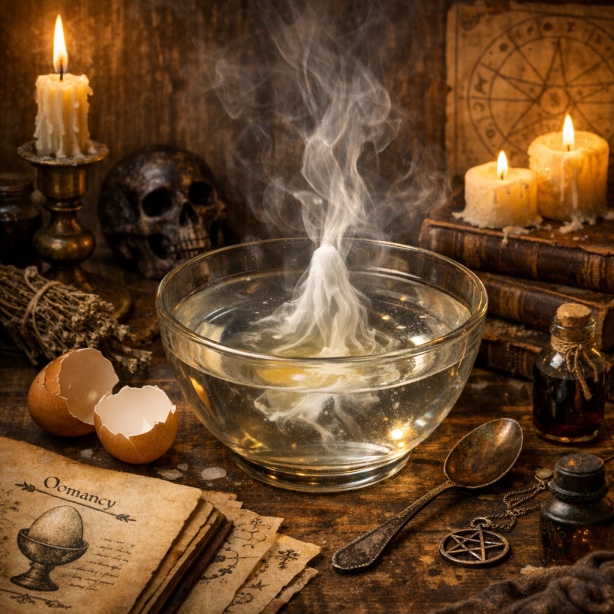
At its core, oomancy is a type of fortune telling. Reference sources define it plainly: it is divination through the use of eggs. One of the best-known methods involves cracking an egg into a glass or bowl of water and reading the shapes formed by the white. The result is visually ambiguous, which is exactly what gives the ritual its mystique. One person may see a veil, another a bird, another a warning sign. The power of the practice is not in precision, but in interpretation.
That interpretive quality places oomancy alongside other symbolic reading traditions, such as tasseomancy, wax reading, or mirror divination. The meaning does not come from a fixed scientific result. It comes from resemblance, association, and belief. In other words, the reading depends on what the observer thinks the shape looks like and what that image is understood to mean. That is one reason oomancy fits so easily into paranormal culture: it sits on the boundary between ritual, intuition, and fear.
Why eggs became objects of mystery
Eggs are symbolically powerful before any ritual even begins. They contain life, but from the outside they appear sealed, silent, and unreadable. That combination has made them potent symbols in folklore for generations. Alimentarium notes that eggs became symbols of life, rebirth, and rejuvenation, while Cambridge’s Antiquity editorial explains that eggs were associated with new life and fertility long before their Christian connection to Easter became familiar in the West.
For paranormal believers, that symbolism matters. Haunted folklore often revolves around thresholds: life and death, visible and invisible, body and spirit, omen and event. The egg fits those themes almost too perfectly. It is closed, fragile, organic, and full of possibility. In folk imagination, it can represent birth, but it can also represent fate waiting to break open. That symbolic tension helps explain why egg divination feels older and darker than many other fortune-telling practices, even when the ritual itself is simple.
How oomancy was practiced
Historical summaries of oomancy describe a few recurring approaches, but the most widely cited one is the “egg in water” method. An egg is broken, often carefully, and the shapes made by the white are observed and interpreted. Depending on the tradition, readers might look for symbols connected to marriage, danger, travel, prosperity, illness, or death. Reference works describe this as a system of divination using the inner and outer forms of eggs.
What makes the method so compelling is that it creates forms that appear half-random and half-intentional. Egg white spreads, stretches, curls, and clouds in ways that can seem almost designed. A thin strand can resemble a rope, a veil, or a snake. A rounded cluster can suggest a face, a flower, or a coffin. When a person approaches the ritual already hoping for insight, those shapes can feel uncannily personal. The ritual does not need complex tools. It only needs a receptive mind and an image vague enough to invite meaning.
Oomancy and the Salem witch trials
One reason oomancy still appears in paranormal writing is its connection to Salem lore. The practice is often linked to the “egg and glass” fortune-telling stories surrounding the Salem witch trials. Historical discussion of Reverend John Hale’s account notes that he was “credibly informed” that one of the afflicted persons had tried using an egg and a glass to learn her future husband’s calling. According to that tradition, a coffin appeared in the vision instead. That image has helped cement oomancy’s reputation as a form of divination with a particularly ominous edge.
The Salem Witch Museum in Massachusetts also notes that an unnamed afflicted girl confessed to fortune-telling with an egg and glass, and that some later interpreters have wondered whether guilt over such forbidden practices contributed to the outbreak of fear and accusation. Whether one accepts that interpretation or not, the association is historically important because it shows that egg divination was known in colonial New England and was serious enough to be remembered in the wider story of Salem.
This is where oomancy becomes especially compelling for paranormal audiences. In Salem’s orbit, it is no longer just a folk ritual. It becomes part of a darker narrative about forbidden knowledge, ominous visions, and the fear that seeing the future might invite consequences. The image of a coffin appearing in an innocent love-divination exercise is exactly the kind of detail that keeps a folklore practice alive for centuries.
Why oomancy feels convincing
From a modern psychological perspective, oomancy is easy to understand even if one does not believe it predicts anything supernatural. Humans are intensely pattern-seeking. Psychology and neuroscience sources describe apophenia and pareidolia as the tendency to perceive meaningful patterns in vague or unrelated stimuli. Scientific American has specifically noted that pareidolia helps explain why people can experience accidental shapes or stimuli as strikingly meaningful.
That matters because egg readings produce exactly the kind of ambiguous imagery the brain loves to decode. The white stretches into lines, folds into shadows, and gathers into floating forms that invite symbolic interpretation. Once a reader identifies one image, confirmation bias can do the rest. A person worried about illness may notice a shape that looks threatening. A person thinking about marriage may focus on a veil, ring, or bouquet. The experience feels personal because the interpretation often reflects what the observer already fears or hopes.
That does not make the experience meaningless. It simply means the meaning may come from the human mind rather than an external force. In that sense, oomancy can still be revealing, just not in the literal “the egg predicted the future” way believers might claim. It can reveal anxiety, desire, cultural symbolism, and the stories a person is ready to tell themselves. That psychological depth is part of what keeps older divination practices fascinating even in skeptical times.
Oomancy in modern paranormal culture
Today, oomancy survives less as a mainstream practice and more as a recurring subject in occult writing, folklore discussions, social media spirituality, and paranormal content. Modern articles often present it as “egg divination,” while historical references preserve the older term. That split helps explain why many readers have encountered the idea without knowing its formal name. The ritual may feel obscure, but the underlying concept remains recognizable: use an egg, study the result, search for a message.
It also persists because it photographs and films well. A cracked egg in water is visually dramatic. It looks ritualistic even before anyone begins interpreting it. In an age shaped by visual media, that matters. Old folk practices that create eerie images often get new life online, especially when they can be framed as mysterious, forbidden, or connected to haunted history. Oomancy has all of those qualities.
What history can prove, and what it cannot
History can tell us that oomancy is real as a documented form of divination. Reference works define it, historical discussions place it in older folk practices, and Salem-related sources preserve a memorable example of egg-and-glass fortune telling in colonial New England. Those points are grounded in documented sources.
What history cannot prove is that oomancy genuinely reveals the future. The shapes in egg white are real. The symbolic systems built around them are real. The emotional impact of a reading can be very real. But a scientific explanation based on pattern recognition is enough to explain why people so often find vague forms persuasive. That leaves oomancy in a familiar paranormal category: historically authentic as folklore, psychologically powerful as experience, and unverified as supernatural fact.
Conclusion
Oomancy endures because it sits at the perfect crossroads of folklore, fear, and imagination. It is simple enough to feel ancient, strange enough to feel forbidden, and visually ambiguous enough to invite endless interpretation. Eggs already symbolize life, rebirth, and hidden possibility. Once those meanings are combined with ritual and expectation, an ordinary kitchen object can begin to feel like an oracle.
For paranormal readers, that is the real power of oomancy. It does not need to be scientifically proven to remain haunting. Its appeal comes from the way it transforms the familiar into the uncanny. A glass of water. A cracked egg. A shape that looks a little too much like a warning. And suddenly the oldest question in all ghost lore returns: was that just a pattern, or was something trying to tell you something?
Sources
- Oomancy entry, Encyclopedia.com.
- Eggs as a symbol of life, Alimentarium.
- J. M. Murrin, Coming to Terms with the Salem Witch Trials (PDF), quoting John Hale on the “egg and glass” episode.
- Psychology Today, Apophenia.
- Scientific American, The Brain Sees Faces Everywhere.
- PMC article on pareidolia as perceiving familiar forms in vague stimuli.
Reader sightings
Nobody has reported anything here yet. If you have been, you would be the first.
Leave a Reply