
Reviewed by Josh N · Updated March 17, 2026 · How we verify
A strange knock in the hallway. A freezing-cold room that never feels right. A shadow in the corner of your eye when the house is finally quiet. These are the moments that make people wonder whether something in their home is more than old wiring, shifting wood, or an overactive imagination.
The truth is that experiences people describe as “haunted” often feel intensely real. But the smartest place to begin is not with assumptions. It is with documented explanations. Sleep paralysis can produce vivid intruder-style hallucinations. Carbon monoxide exposure can cause headache, dizziness, confusion, and other symptoms that make a home feel deeply wrong. Drafts, dampness, mold odors, tinnitus, and electrical faults can all create sensations that are easy to interpret as paranormal.
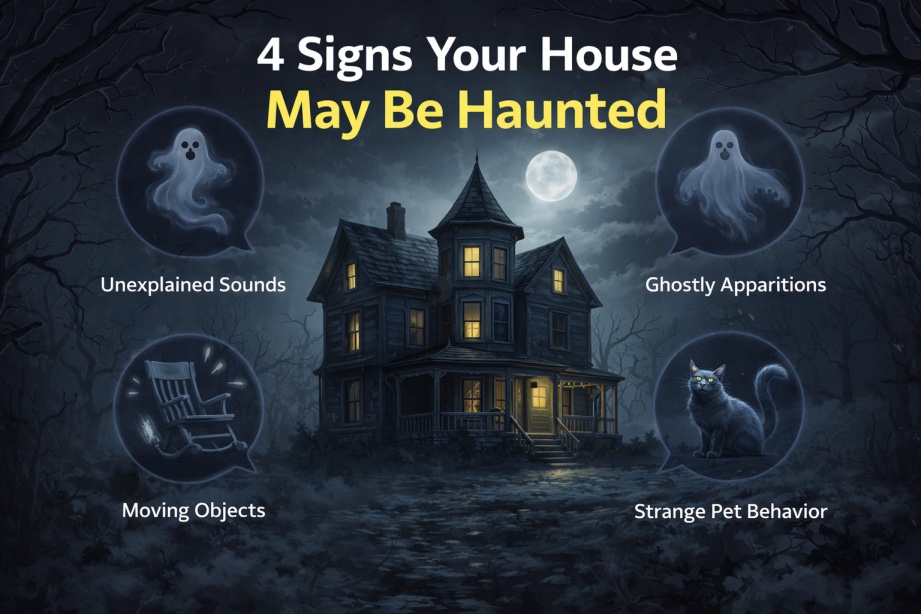
That does not make the experience any less unsettling. It does mean that if you believe your house may be haunted, you should investigate it the way a good investigator would: look at the pattern, rule out the dangerous explanations first, and pay attention to what is happening physically in the home as well as emotionally inside it. Below are four of the most common signs people associate with hauntings, along with the verified issues worth checking before you call it supernatural.
1. You hear unexplained footsteps, knocks, whispers, or movement
For many people, haunting stories begin with sound. It may be footsteps overhead when no one is upstairs, a repeated knocking inside the wall, or a soft hiss that seems to move from one room to another. Sounds are especially unsettling at night because the house is quieter, your attention is sharper, and every small noise feels amplified.
Some of these sounds have well-documented non-paranormal explanations. A home maintenance guide published by a municipal community development office explains that popping sounds can come from the expansion and contraction of building materials, and that these noises often seem more noticeable at night as the structure cools and the house becomes quieter. Not every strange sound is external, either. The National Institute on Deafness and Other Communication Disorders says tinnitus can sound like ringing, buzzing, roaring, clicking, hissing, or humming even when no outside source is present.
That matters because the classic “I heard whispering” or “something was hissing in the room” story does not always begin in the room itself. It can begin in the ear, in HVAC movement, in ductwork, or in ordinary building materials reacting to temperature changes. If the sound appears at the same time every evening, starts when the heat or AC kicks on, or happens more during weather changes, you may be dealing with the house rather than a haunting. That pattern-based approach is much more useful than asking whether the noise felt creepy.
What to check first
Listen for whether the noise lines up with HVAC cycles, outside temperature swings, or specific rooms. If the sound is more like a buzz, hiss, click, or hum than an actual footstep, consider whether an ear-related cause could be involved. If the noise is paired with cold air movement, use draft-detection methods around windows, doors, outlets, and other common leak points. The U.S. Department of Energy notes that cool drafts can often be detected by feel and by checking common leak sites around the home.
2. You see shadow figures, feel a presence, or wake up unable to move
This is one of the most frightening experiences people report. You wake in the dark and feel certain that someone is in the room. You cannot move. Your chest feels heavy. A shadow figure seems to be standing at the foot of the bed or in the doorway. For centuries, people in different cultures have interpreted this kind of episode as a supernatural visitation.
Modern medical literature offers a powerful explanation for at least some of these events: sleep paralysis. Recent reviews in the medical literature describe sleep paralysis as a state in which a person awakens but remains temporarily unable to move or speak, often while experiencing vivid hallucinations. Researchers describe common patterns including an “intruder” sensation, pressure on the chest, and other intensely realistic experiences. Sleep paralysis is also associated with sleep disruption and irregular sleep patterns.
This does not mean every eerie feeling at night is sleep paralysis. It does mean that one of the most famous “haunting” experiences has a well-documented medical explanation. If the event happens during sleep or in the moments just before waking, sleep should be one of the first things you investigate.
There is also a safety reason not to dismiss disorientation, dread, and “something is wrong in this house” feelings. The CDC says carbon monoxide poisoning symptoms commonly include headache, dizziness, weakness, nausea, chest pain, and confusion, and warns that carbon monoxide cannot be seen or smelled. In other words, if strange sensations in the house come with headaches, mental fog, or nausea, especially around fuel-burning appliances, fireplaces, generators, or attached garages, the priority is not paranormal research. It is getting to fresh air and treating the situation as an emergency.
What to check first
Look at timing. Does the “presence” happen only when you are drifting off or waking up? Does it follow poor sleep, stress, or an irregular schedule? Also check your home’s carbon monoxide protections. CDC and CPSC guidance says homes should have CO alarms near sleeping areas and on home levels as recommended, because carbon monoxide is impossible to detect with human senses alone.
3. Certain rooms feel unnaturally cold, heavy, damp, or foul-smelling
Cold spots are one of the oldest haunting claims in popular culture. People walk into one part of a house and feel the temperature drop. Sometimes it comes with a musty smell, stale air, or a sense that the room is somehow “off.” In ghost stories, this often becomes the strongest evidence that something paranormal is attached to the space.
In real homes, cold spots and bad smells are often linked to airflow, moisture, and indoor air quality. The Department of Energy says sealing cracks and openings helps reduce drafts and cold spots, and notes that air leaks can often be detected around common openings in the building envelope. ENERGY STAR also lists hot and cold spots, drafts, mold, and moisture issues among signs that a home is not performing as it should.
Odors matter too. EPA guidance says a musty or moldy smell can be a sign of mold growth and should be investigated. The EPA and CDC also note that damp and moldy environments can irritate the eyes, skin, nose, throat, and lungs, and that if you see or smell mold, you should address the moisture problem rather than ignore it.
That means a cold, oppressive room may be telling you something real, but not necessarily supernatural. It may be a leaky window, poor insulation, hidden moisture, a ventilation problem, or mold growth inside walls, around trim, or in a basement or crawl space. In other words, “this room feels haunted” can sometimes translate into “this room has an indoor-air or moisture problem.”
What to check first
Feel for drafts around windows, doors, outlets, attic access points, and baseboards. Look for condensation, peeling paint, discoloration, water stains, or persistent musty odor. EPA guidance recommends controlling indoor moisture and investigating moldy odors rather than masking them. If the room is consistently damp, fix the water source first.
4. Lights flicker, outlets buzz, and electronics behave strangely
A lamp flickers in the hallway. A switch crackles. A bulb burns out too fast. An outlet feels warm. These are some of the easiest house problems to turn into a ghost story because they feel active, unpredictable, and strangely personal, especially if they happen in the same room where other unsettling things have occurred.
They are also among the signs you should take most seriously. NFPA guidance on electrical home fire safety lists frequent breaker trips, warm or discolored outlets, and other warning signs of electrical trouble. CPSC materials also identify flickering lights, circuits that do not work properly, and the smell of burning plastic as signs of electrical system problems.
That does not mean every flicker is dangerous. Sometimes the cause is minor. But when unexplained electrical behavior becomes part of a broader “haunted house” narrative, people can make the mistake of romanticizing what is actually a repair issue. If lights flicker repeatedly, outlets feel hot, breakers trip, or a buzzing sound comes from a switch or wall plate, the correct response is to treat it like a home safety concern.
What to check first
Replace the bulb if the issue is isolated to one fixture. If the problem continues or affects multiple rooms, stop treating it like a mystery and start treating it like maintenance. A licensed electrician should inspect repeated flickering, warm outlets, buzzing switches, or burning smells. Those are documented warning signs, not harmless atmosphere.
What to do before deciding your house is haunted
The phrase “haunted house” can make a problem feel dramatic, but the smartest investigation is usually a practical one. Start with the explanations that affect health and safety first.
1. Check carbon monoxide alarms
CDC and CPSC both recommend CO alarms in the home, especially near sleeping areas and on home levels as directed. If a CO alarm sounds, leave the home and seek emergency help. Carbon monoxide cannot be seen or smelled, which is exactly why it can become part of a haunting narrative before anyone realizes there is a real hazard.
2. Investigate moisture, mold, and drafts
Musty odor, cold zones, condensation, and visible water damage are all clues worth following. EPA guidance is straightforward: mold and moldy odors should not simply be tolerated, and the key to mold control is moisture control.
3. Pay attention to sleep-related patterns
If the most disturbing experiences happen in bed, while waking, or during periods of poor sleep, sleep paralysis belongs near the top of your list of explanations. That does not make the experience less frightening. It does make it more understandable.
4. Do not ignore electrical warning signs
A haunted-story atmosphere is not a reason to delay a repair. Buzzing, hot wall plates, repeated flickering, or burning smells justify professional attention.
5. Keep notes
Write down what happened, where it happened, what time it happened, the weather, whether the HVAC was running, and whether anyone in the house had symptoms like headache, nausea, confusion, or poor sleep. A pattern often reveals more than a single frightening moment. This is an investigative habit rather than a supernatural one, and it often turns a mystery into a solvable home problem.
FAQ: Signs your house may be haunted
Can a cold spot really mean a haunting?
It can feel that way, but documented building issues are a better first explanation. Drafts, air leaks, insulation gaps, and moisture problems can all create cold or uncomfortable zones in a home.
Why do strange house noises seem worse at night?
Building materials can expand and contract as temperatures change, and normal sounds feel more pronounced when the home is quiet. Some “unexplained” sounds may also be internal, such as tinnitus.
Can carbon monoxide make a house feel haunted?
It can create symptoms like headache, dizziness, weakness, nausea, and confusion, and because it cannot be seen or smelled, people may not realize there is a hazard until symptoms are already affecting them.
What should I check first if I think my house is haunted?
Start with the basics: carbon monoxide alarms, electrical warning signs, drafts, moisture, mold odors, and sleep-related timing. Those are the most documented and actionable places to begin.
Final thoughts
If you believe your house may be haunted, you are not irrational for taking the experience seriously. Strange sounds, cold rooms, shadowy figures, and unexplained electrical behavior can be deeply unsettling. But the most responsible conclusion is rarely the fastest or most dramatic one. It is the one reached after you rule out the things that are known, documented, and potentially dangerous.
In that sense, the best haunting investigation starts with facts. Check the air. Check the wiring. Check the moisture. Check your sleep. The answer may still be unsettling, but it is far more likely to protect your home, your health, and your peace of mind.
Sources
- CDC, Carbon Monoxide Poisoning Basics
- EPA, Mold and Health
- NIDCD, What Is Tinnitus?
- PMC review, A Review on Sleep Paralysis
- Municipal home maintenance guide, The Spooky Sounds Homes Make!
Reader sightings
Nobody has reported anything here yet. If you have been, you would be the first.
Leave a Reply